Reactive-dog equipment has one job before anything else: keep everybody safe without adding more conflict to the dog’s experience.
I am extremely boring about safety gear. I like strong hardware, sensible redundancy and equipment I trust. I have had dog gear break on me once. That was enough.
And no, using robust equipment does not mean your training failed. I still use a muzzle with Indie in situations where I think it is sensible. He is confident wearing it, I own it, and the extra safety costs us essentially nothing.
My Reactive-Dog Gear Philosophy
Keep the system simple, comfortable and strong.
- A secure, well-fitted harness
- A strong leash
- A properly fitted basket muzzle where bite risk justifies it
- An optional collar or backup connection where appropriate
- A long line for controlled freedom in suitable environments
You do not need to hang every available piece of equipment from your dog. You need the pieces that solve the actual risks in front of you.
1. A Secure Harness
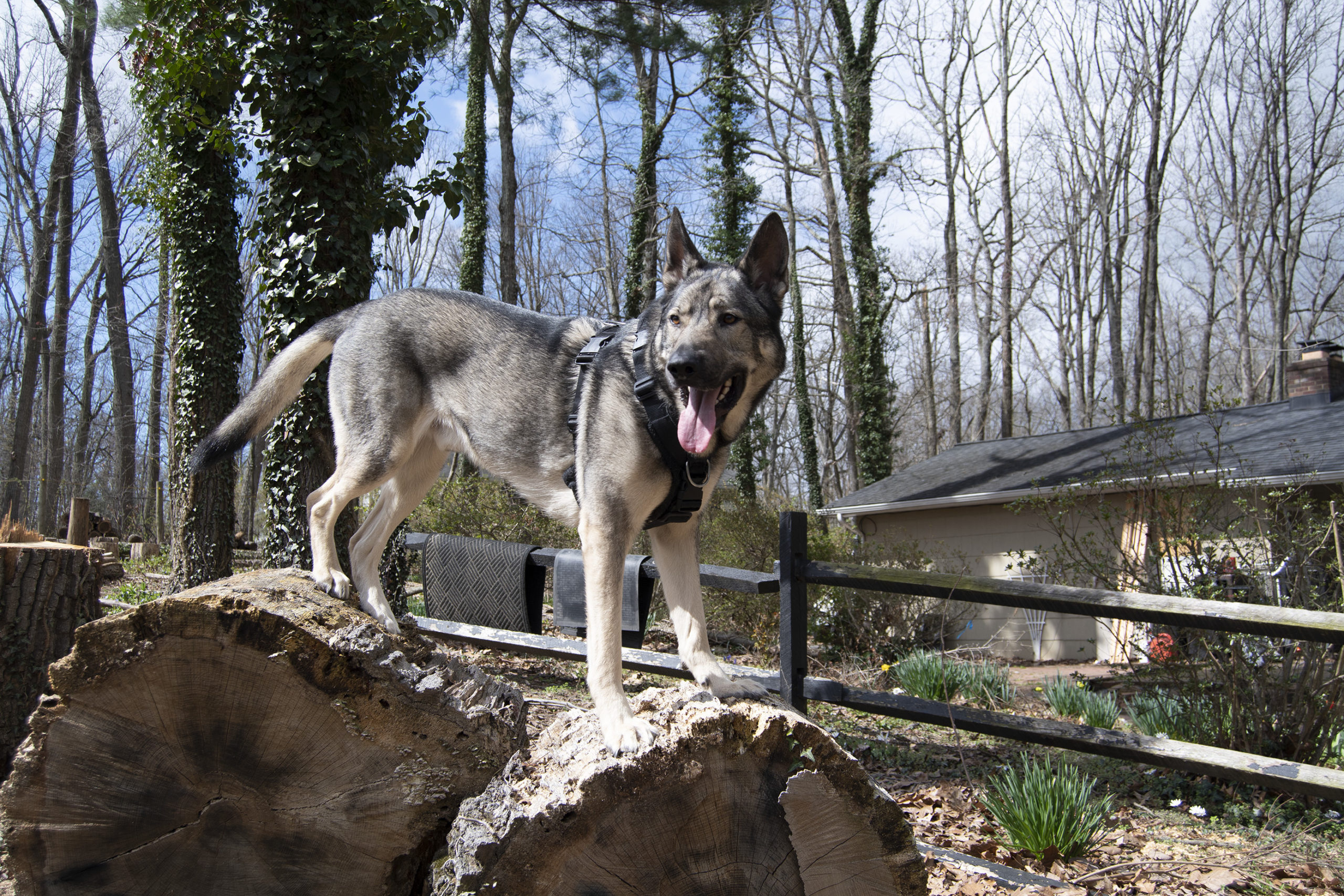
For reactive dogs, I generally prefer a Y-shaped harness that allows normal shoulder movement and gives me a secure primary attachment point.
If the dog is an escape risk, I want a third belly strap behind the rib cage. A frightened dog reversing out of a two-strap harness is not the moment to discover that “pretty secure” was not secure enough.
For product recommendations you can use now, see my escape-proof harness guide and broader best dog harnesses guide. I’ve also built a dedicated reactive-dog harness guide, which I’ll link here once it’s live.
2. A Strong Leash
I like simple leashes because fewer moving parts means fewer failure points.
For a large, powerful reactive dog, pay attention to the clip, stitching, webbing and attachment hardware rather than assuming every “large dog” leash is built the same.
I do not recommend retractable leads as the main tool for reactive-dog walking. They give you less predictable handling in exactly the situations where quick, clean distance matters.
3. A Basket Muzzle
If there is a realistic bite risk, muzzle training is one of the best safety skills you can teach.
The muzzle should allow adequate pant room, drinking and normal breathing, and the dog should be conditioned to wear it comfortably before you need it in a difficult situation.
A muzzle is not permission to push a dog beyond threshold. It is a safety layer.
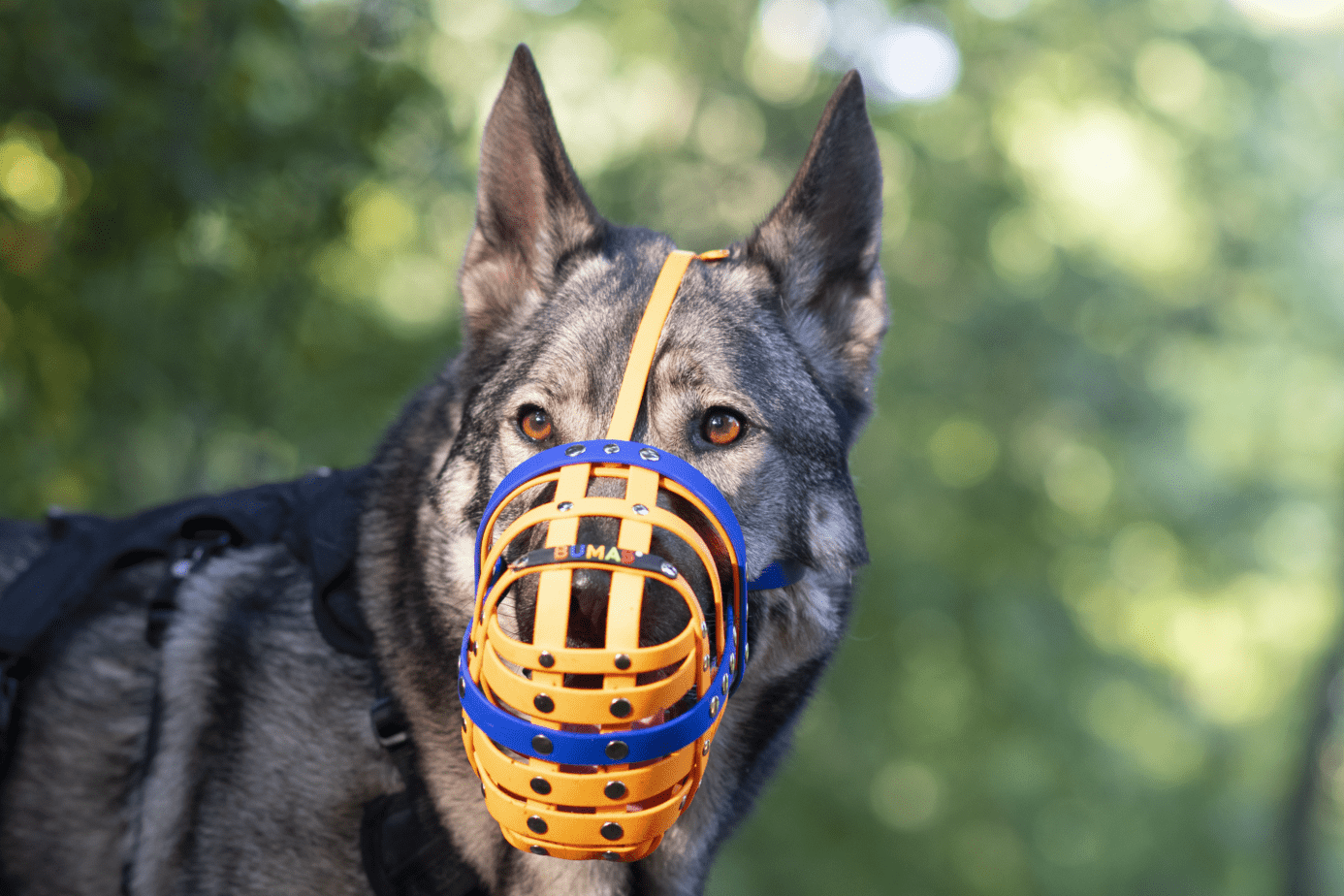
See my tested muzzle recommendations and muzzle fitting guide.
4. Backup Connections
If losing the dog would be catastrophic, redundancy is sensible.
A safety strap between harness and collar, or a double-ended leash used appropriately, can give you a second connection if one component fails.
I do not add backup gear because I expect failure. I add it because the consequence of failure is high.
5. A Long Line
Reactive dogs still need freedom, sniffing and opportunities to move naturally.
In open, appropriate environments, a long line can give a dog more choice without giving up safety. It is not the right tool for squeezing past triggers on a pavement, but it can be brilliant for decompression and controlled exploration.
What I Don’t Use For Reactivity
Prong collars
I do not want the sight of a trigger paired with pain or discomfort. If a dog is already frightened or conflicted, adding punishment does not address the emotion I actually want to change.
E-collars
The same principle applies. Interrupting a reaction is not the same as changing the dog’s underlying response. I explain this in detail in Reactive Dogs & E-Collars.
Headcollars as a reactive-dog control system
I do not like putting the leverage of a barking, lunging dog through their head and neck, and many dogs find headcollars aversive in their own right.
Flags, Patches And “Needs Space” Gear
Use them if they help, but do not rely on strangers reading them.
In my experience, a muzzle often communicates “give us room” faster than a yellow ribbon ever will. Sometimes I have also resorted to simply telling people “contagious” when polite explanations were getting nowhere. Not technically true. Extremely effective.
Good Gear Should Reduce Your Mental Load
The whole point of an overbuilt system is that I do not want to be thinking about whether my leash clip can cope while I am trying to read my dog.
Once the equipment is secure, your attention belongs on body language, distance and the environment.
For the walking side and the full training process, start with Reactive Dog Training: How to Help a Reactive Dog. I’ll also link the dedicated reactive-dog walking guide here once it’s live.


0 Comments