How do you know whether your dog has a genuinely strong bond with you?
I’d actually start with a caveat, because I’m not convinced dogs think in terms of “prioritizing you above everything else.”
There will probably always be someone insisting that the ultimate proof of your relationship is whether your dog listens to you over every distraction or sees you as the leader of the household. But that starts drifting into the old alpha narrative, and honestly, veterinary behavior guidance has moved on from that too.
A dog isn’t showing you how much they love you because they ignore every squirrel in existence. They’re showing you that they’ve learned and practiced a behavior in the presence of squirrels—which is valuable, certainly, but it’s training.
For me, a strong bond isn’t about control or perfect compliance. It’s about trust, security and your dog voluntarily choosing to include you in their world.
And quite often, the strongest signs are much quieter than people expect.
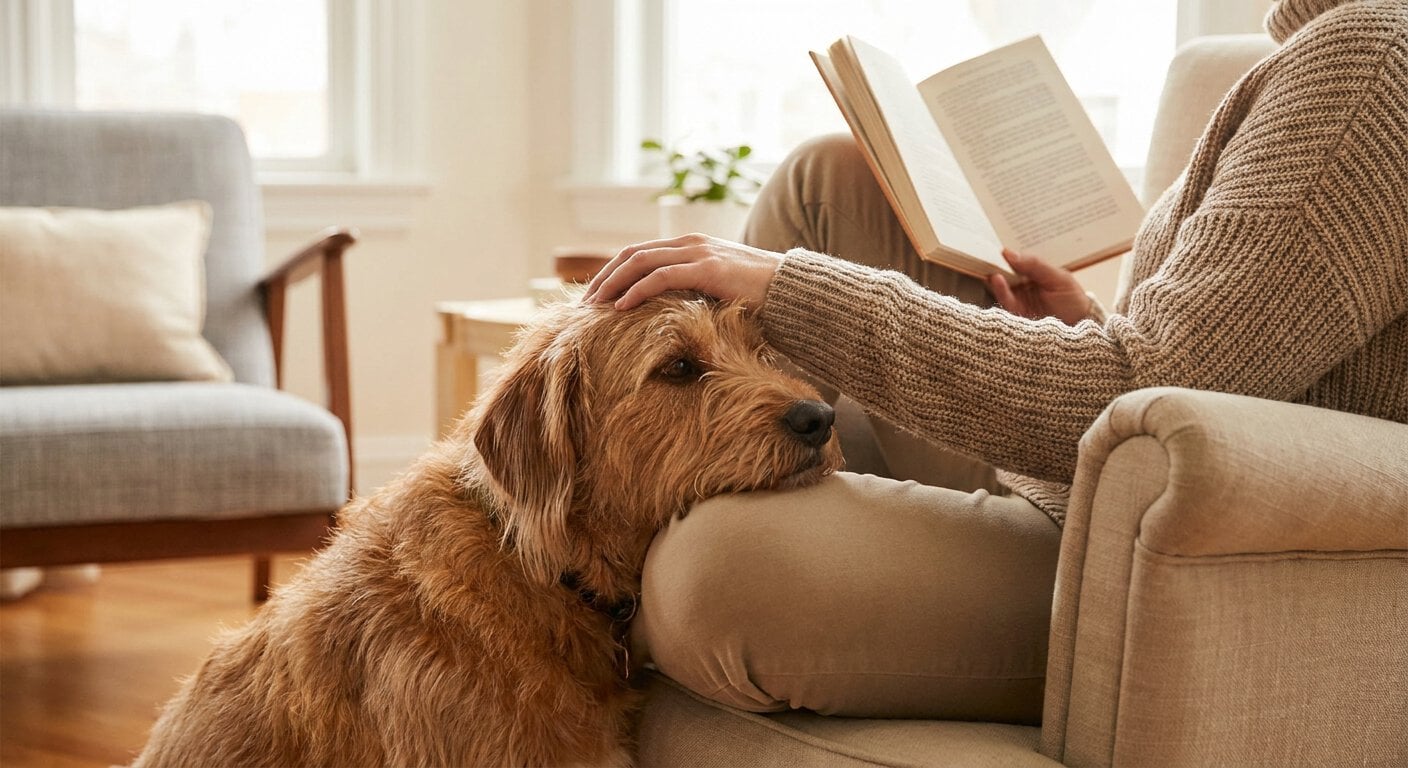
Obedience Isn’t the Same Thing as a Strong Bond
A dog can respond to a cue because they’ve practiced it a thousand times, because doing so has been heavily reinforced or because they’re worried about what will happen if they don’t.
None of those things automatically tells me how that dog feels about their person.

From Rebarkable
Want the training steps laid out for you?
My illustrated Core Skills guide turns positive-reinforcement training into clear, practical exercises you can follow at home.
Get the Core Skills GuideDigital download · Instant access via Etsy
Equally, a dog can be deeply bonded to someone and still temporarily forget that person exists because a rabbit has just bolted across the trail. If that particular skill needs work, my recall training guide breaks the process down properly. Dogs are dogs. Their noses, instincts, previous experiences and individual temperaments all influence how they respond to the world.
Of course, training matters. Being able to communicate with your dog and keep them safe is important. But I don’t think we should use obedience as a love test.
Instead, I look for patterns of voluntary behavior. What does the dog choose to do when nobody is asking anything of them?
1. They Choose to Check In With You
This is probably my favorite one.
You’re out on a walk, your dog is having the time of their life sniffing every blade of grass, and then they glance back at you. Perhaps they wander over for a second, touch your hand with their nose or simply pause to make sure you’re still there before returning to the extraordinarily important business of investigating a bush. That freedom to explore is one reason I’m such a fan of letting dogs sniff on walks.

They didn’t need to check in. You didn’t call them or wave a treat around. They simply chose to include you.
I think that’s a lovely sign that your dog sees you as part of the adventure, rather than just the person attached to the leash.
It doesn’t need to happen constantly, either. A dog who spends the entire walk staring at their person isn’t necessarily more bonded than one who explores confidently and checks in occasionally. In fact, I quite like seeing a dog feel secure enough to engage with the environment while still keeping their person somewhere on their radar.
2. They Look to You When They’re Unsure
When something unexpected happens, many dogs will look toward their person before deciding how to respond.
Perhaps they’ve spotted a strange object beside the road, heard an unfamiliar noise or noticed that the neighbor has committed the appalling crime of putting out a new trash can. They glance at you as if to ask, “You’ve got more life experience than me—is this something I should worry about?”
Obviously, I’m giving that behavior a playful human translation. But research into social referencing suggests dogs really can use our reactions as information when assessing an uncertain situation.
People sometimes interpret this behavior as clinginess. Often, though, it’s a dog who has learned that their person is a useful and relatively reliable source of safety and information.
That tells me more about the relationship than whether the dog can heel perfectly through a busy park.
There is some nuance here. One worried glance doesn’t prove that you have the world’s greatest human-dog bond, and a dog who constantly watches their person may be anxious rather than securely connected. Again, we’re looking for a broader pattern: your dog experiences something uncertain, checks in with you and is then able to process or recover from it.
3. They Genuinely Enjoy Doing Things With You
One thing I wish people talked about more is that affection doesn’t always look like cuddling. And even when dogs do enjoy physical affection, how we cuddle them matters.
Some dogs are Velcro dogs. If sitting inside your sweater were physically possible, they would attempt it. Other dogs aren’t particularly snuggly at all.
That doesn’t mean the less cuddly dog loves their person any less.
They might light up the second you pick up the training pouch, bring you a toy, bounce toward the door when you suggest a walk or happily join you while you potter around the yard. Their preferred form of connection may be shared activity rather than prolonged physical contact.
Breed, age, temperament and previous experiences can all affect how a dog expresses closeness. Some dogs enjoy being touched but dislike feeling restrained. Others prefer lying a few feet away to sleeping directly on top of you.
The important question isn’t, “Does my dog cuddle me enough?” It’s, “Does my dog appear to enjoy engaging with me?”
I always think the best relationships are the ones where both of you actually enjoy spending time together.
4. They Can Completely Relax Around You
Honestly, I think this tells me more than excitement ever does.
A dog who sprawls out asleep beside you, lets out one of those enormous theatrical sighs, rolls comfortably onto their side or quietly chews a toy while you work is telling you that they feel safe enough to switch off.
That’s a huge compliment.
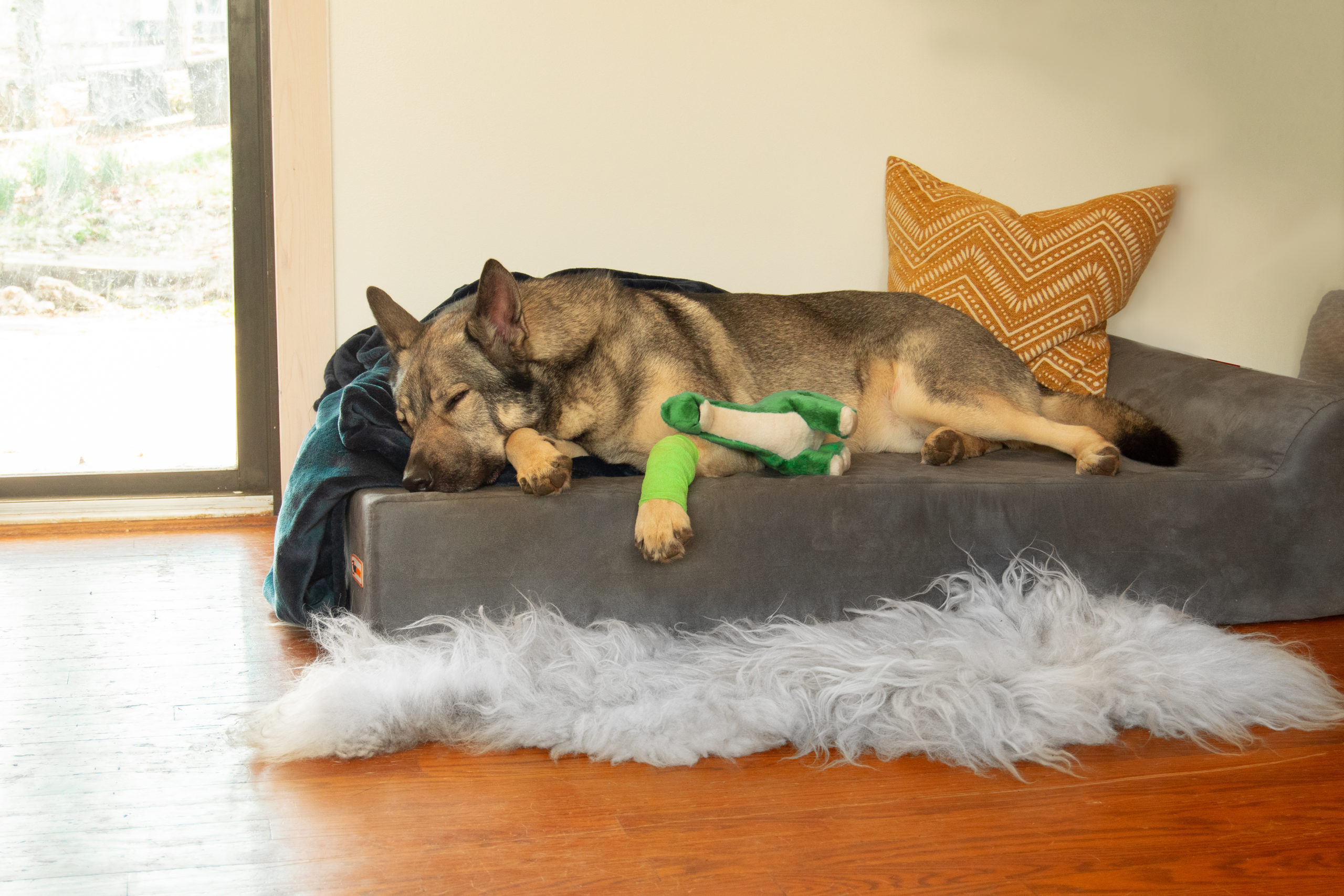
Sleep and rest require vulnerability. A dog who is constantly monitoring their environment, following every movement or startling at every sound may not yet feel able to settle fully.
This doesn’t mean your dog must sleep pressed against you. Some dogs will choose the other end of the couch, the cool kitchen floor or a bed positioned where they can keep a vague eye on proceedings without becoming directly involved.
Look at the quality of the relaxation rather than the distance between you. Learning to read your dog’s body language makes those quieter signs much easier to recognize. A soft body, easy breathing and the ability to remain settled while ordinary life continues around them can all be lovely indicators of security.
Want to Get Better at Reading Your Dog?
Lili Chin’s Doggie Language is one of the few dog books I recommend constantly. It turns those easy-to-miss signals into clear illustrations without making canine body language feel like a textbook.
This is an affiliate link. If you buy through it, Rebarkable may earn a commission at no extra cost to you.
5. They Choose to Be Near You—but Don’t Panic When You Leave
This is the one I’d really love people to understand.
There’s a big difference between a dog who wanders into your office because they’d rather hang out with you than somewhere else and a dog who cannot cope when you shut the bathroom door.
The first can be a lovely bond.
The second may be separation-related distress.
I don’t think we should aspire to have dogs who cannot function without us. A healthy relationship isn’t about dependence; it’s about security.
Ideally, your dog enjoys spending time with you and voluntarily seeks your company, while still feeling safe enough to rest, play or carry on with their day when you aren’t immediately available.
Of course, dogs with separation anxiety can still have wonderful, trusting relationships with their people. If you’re dealing with a young dog, I’ve explained the early signs and next steps in my guide to separation anxiety in puppies. Their distress doesn’t mean the bond itself is bad or that somebody has “loved the dog too much.” Separation anxiety is a welfare and behavior issue, not proof that your dog simply adores you more than other dogs adore their people.
If your dog becomes unusually clingy or suddenly struggles to be apart from you, pay attention. Changes in proximity-seeking behavior can sometimes be connected to pain, illness, fear or another change in the dog’s life. A sudden behavioral change is worth discussing with your veterinarian rather than automatically interpreting it as affection.
Look for a Pattern, Not One Perfect Sign
No single behavior can prove exactly how your dog feels about you.
A dog might check in because they expect a treat. They might sleep beside you because that happens to be the warmest spot in the room. They may follow you into the kitchen because you are notoriously unreliable around cheese.
That’s why I look at the overall pattern.
Does your dog voluntarily engage with you? Can they relax in your presence? Do they use you as a source of information without feeling that they must monitor you constantly? Do they enjoy your company while remaining capable of coping when you’re unavailable?
Those quieter, repeated choices tell us far more than one dramatic display of affection—or one perfectly executed recall.
Ultimately, I don’t think the strongest bond is measured by whether your dog listens to you above everything else.
I’d much rather share my life with a dog who trusts me, feels safe with me and genuinely enjoys doing things with me. Personally, I think that’s a much nicer goal.



0 Comments