If you’ve found yourself asking, “Is my dog reactive?”, there is a decent chance something has changed enough that you’re worried.
Maybe your dog barks and lunges at other dogs. Maybe they freeze when a stranger approaches. Maybe they lose their mind at bicycles, visitors, runners, wildlife or anything that moves too quickly.
Or maybe, like me with Indie, you had a wonderfully obedient, well-socialised puppy who suddenly seemed to become a completely different dog.
Indie hit his second fear phase and went from cool, calm and collected to uncertain, aggressive-looking and unpredictable around unfamiliar dogs. His trusted friends could practically T-bone him at full speed and he’d be fine, but a new dog could be a problem whether it was an eight-week-old Golden Retriever puppy or a fully grown Tibetan Mastiff.
That experience is what eventually made me a dog trainer.
So this isn’t a page about labelling dogs for the sake of it. It’s about helping you understand what people mean when they say a dog is “reactive”, what the signs can look like, what may be driving the behaviour and what your next steps should be.
What Is A Reactive Dog?
A reactive dog is a dog who has an unusually intense response to a particular stimulus or situation.
That stimulus is usually called a trigger.
The important part is that reactivity describes a pattern of behaviour, not a diagnosis and not a personality type.
A reactive dog may bark, lunge, growl, freeze, stare, whine, spin, pull, pace, become frantic or struggle to disengage from whatever has caught their attention.
Those behaviours are the visible part. Underneath them can sit fear, frustration, uncertainty, over-arousal, territorial behaviour, pain, conflict, restricted access or several things at once.
Reactive Does Not Automatically Mean Aggressive
This is one of the most important distinctions to get right.
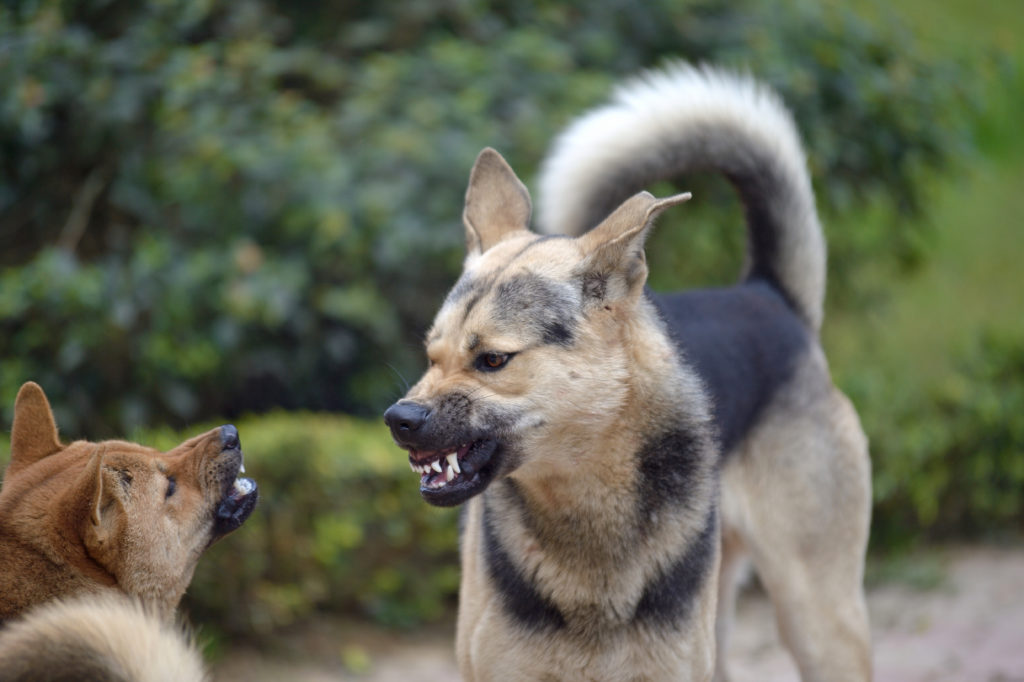
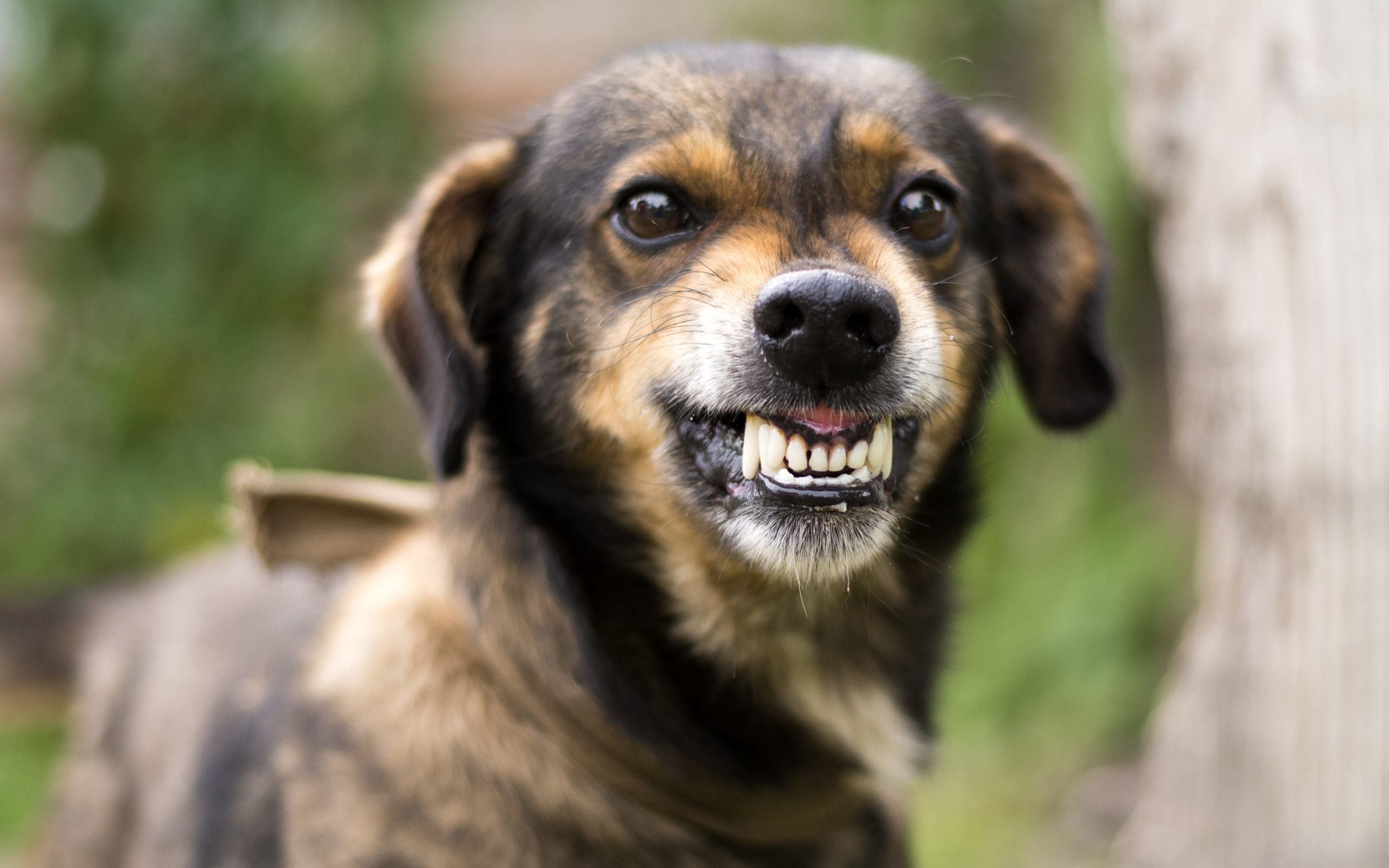
Reactive dogs can display behaviour that looks aggressive. Barking, lunging, hard staring, growling, snarling and showing teeth are all behaviours that can be part of an aggressive display.
But seeing one of those behaviours does not tell you exactly what the dog is feeling or what they intend to do next.
A fearful dog may bark because they want another dog to go away. A frustrated greeter may bark because they desperately want to get closer. A dog who feels trapped by a leash may escalate because one of their usual options — moving away — is unavailable.
At the same time, I don’t like the opposite extreme either: “they’re reactive, not aggressive” should never become shorthand for “there’s no bite risk”.
Some reactive dogs absolutely can bite, redirect or escalate when pushed too far. If your dog has a bite history, has attempted to bite or you are unsure what they would do during a close encounter, take that seriously and manage accordingly.
I have a separate guide on reactivity vs aggression because the distinction deserves more nuance than a single paragraph.
What Does Reactivity Look Like?
The dramatic signs are usually easy to spot:
- barking
- lunging
- growling
- snarling
- hitting the end of the leash
- spinning or frantic movement
- raising hackles
- hard, sustained staring
But honestly, those are often the least interesting signs from a training point of view because by then the dog may already be over threshold.
The subtle signs that happen earlier are usually far more useful.
The Subtle Signs People Often Miss
I used to think Indie went from 0 to 100.
He didn’t. I just couldn’t read the 10, 20 and 40 yet.
Indie is a particularly subtle communicator, and the hardest part for me as his guardian was learning what his early discomfort actually looked like.
His signs included:
- hyper-focusing on another dog
- squaring his body up
- tension around his lips
- small “hoof-hoof” warning barks before the big reaction
Other dogs might close their mouth, freeze, stop sniffing, shift their weight forward, lip lick, turn away, lower themselves, pin or prick their ears, raise their tail, become suddenly frantic or stop being able to take food.
Context matters. A lip lick after eating peanut butter does not automatically mean stress. A yawn when your dog has just woken up is probably a yawn. You are looking for changes from your dog’s normal behaviour in the presence of a trigger.
My ladder of canine aggression and communication can help if you’re starting to learn those earlier signals.
What Can Dogs Be Reactive To?
Almost anything.
Common triggers include:
- other dogs
- strangers
- men, women, children or particular types of people
- visitors entering the home
- bicycles, scooters and runners
- cars, trucks or motorcycles
- wildlife or livestock
- dogs behind fences
- handling or grooming
- particular locations
- sounds or sudden movement
Dogs can also be very specific.
Indie was not equally reactive to every unfamiliar dog. His stronger triggers tended to include large dogs, intact males, black dogs, extremely energetic dogs such as Labradors and Golden Retrievers, and long-haired dogs whose coats made their movement look different.
That specificity is useful information. “My dog reacts to dogs” is a starting point. “My dog copes reasonably well with calm small dogs but struggles with fast, direct, high-energy dogs” gives you far more to work with.
Why Do Dogs Become Reactive?
Usually, there isn’t one satisfying answer.
Reactivity can be influenced by genetics, early development, learning history, social experiences, physical health, stress and the environment the dog lives in now.
Often several of those things are interacting.
Genetics And Temperament
Dogs do not arrive as blank slates.
Temperament has a heritable component, and generations of selective breeding have created dogs who vary enormously in vigilance, sensitivity to movement, suspicion of strangers, persistence, sociability and how quickly they respond to changes in their environment.
That does not mean a German Shepherd, Border Collie, livestock guardian or terrier is destined to become reactive. It means breed tendencies and individual genetics can influence the starting point.
Any breed, mix, size or sex of dog can develop reactive behaviour.
Early Development And Socialisation
Socialisation matters, but I want to kill one particularly unhelpful idea here:
A reactive dog does not automatically mean somebody failed to socialise their puppy.
Indie was exceptionally well socialised as a puppy. Strangers complimented me on him. That did not magically override every other influence on his temperament and development.
Equally, socialisation is not just meeting lots of dogs and people. Good socialisation is about safe, controlled, positive exposure and learning that not everything in the world requires interaction.
Neutrality is valuable. Being able to watch another dog and carry on with your day is a social skill too.
If you’d like to go deeper on that distinction, read my guide to teaching neutrality.
A Bad Experience
Sometimes there is a clear event.
A dog gets attacked. A puppy is repeatedly overwhelmed by rude dogs. Someone handles them roughly. They become frightened in a particular location.
One event can matter, but don’t assume there must be one dramatic trauma hiding somewhere if you cannot identify it.
Pain Or Medical Problems
Pain can absolutely change behaviour.
If moving hurts, being bumped by another dog may feel more threatening. If your dog feels chronically unwell, their tolerance for everyday stress can change. Neurological, sensory and other medical changes can also affect behaviour.
This is particularly important if reactivity appears suddenly in an adult dog or your dog’s behaviour changes significantly without an obvious environmental explanation.
In that situation, I would put a veterinary check fairly high on the list rather than assuming this is purely a training problem.
Stress And Trigger Stacking
A dog’s ability to cope is not identical every day.
Poor sleep, a stressful car journey, visitors, a vet appointment, repeated dog encounters and a noisy environment can all add pressure.
Then something your dog might normally handle becomes the final straw.
That is why owners often say, “But they were fine with that exact same thing yesterday.”
They may genuinely have had more capacity yesterday.
Can The Second Fear Phase Cause Reactivity?
The adolescent period is a common time for owners to first notice behaviour changes, including increased uncertainty or stronger responses to things a dog previously handled well.
That is exactly what happened with Indie.
It felt incredibly abrupt. One minute I had the puppy everyone complimented; the next, unfamiliar dogs were suddenly a serious problem.
But I would be careful about treating “second fear phase” as a complete explanation for every reactive adolescent. Development is one influence among many, and a persistent behavioural problem deserves proper assessment rather than simply waiting for the dog to grow out of it.
Why Is My Dog Fine With Some Dogs But Reactive To Others?
Because dogs are individuals and context matters.
Indie is a perfect example.
His established friends had enormous social credit with him. They could behave in ways he would never tolerate from a stranger.
Humans do this too. A close friend can walk into your kitchen, open the fridge and steal a drink. If a stranger wandered in and did the same thing, your reaction would probably be different.
Dogs also care about approach style, movement, body shape, eye contact, energy level, familiarity, location, leash restriction and their own stress level at that moment.
“Fine with dogs they know” and “reactive to unfamiliar dogs” can coexist very easily.
Is Leash Reactivity Different?
It can be.
Some dogs react much more strongly on leash because the leash removes choice. They cannot create distance as naturally, greetings are often more direct and the handler may unintentionally add tension as a trigger approaches.
Other dogs are reactive in multiple contexts and the leash is simply where the behaviour is most visible.
I’m building a dedicated guide to leash reactivity because it deserves its own explanation rather than being squeezed into this page.
Is Reactivity Always Fear?
No.
This is something I would phrase differently now than I did in some of my earliest writing about reactive dogs.
Fear is incredibly common, and understanding Indie’s behaviour as fear was the breakthrough that changed everything for me personally.
But some dogs are reacting primarily from frustration. Others have territorial or movement-related patterns. Pain may lower tolerance. A dog can also experience fear and frustration together.
That is why I care more about understanding the individual dog than forcing every reactive dog into one neat category.
Does A Reactive Dog Need More Socialisation?
Not necessarily, and definitely not if by “socialisation” you mean pushing them into more interactions.
A dog who already feels overwhelmed by other dogs does not usually need strangers repeatedly marching into their personal space to prove that dogs are safe.
They may need carefully controlled exposure at a distance where they can cope, alongside counterconditioning and gradual desensitisation.
That is very different from flooding them.
If your dog is struggling, avoid forcing greetings or deliberately putting them into situations where you already know they are likely to explode. My guide to flooding in dog training explains why.
Can Reactive Dogs Get Better?
They can absolutely make meaningful progress.
I just don’t think “better” has to mean becoming a dog who loves everybody.
After years of work, Indie can pass dogs in the street and in parks, go places with me and be safely introduced to carefully chosen dogs.
He is still intolerant of dogs with particularly bad manners, and he can escalate quickly if another dog ignores his communication.
So I am selective.
I do not need him to love the dog park. I need him to be safe, functional and able to enjoy his life.
Those are very different goals.
What Should You Do If You Think Your Dog Is Reactive?
Start with three things.
- Reduce avoidable blow-ups. Create space, change routes and stop treating every encounter as a training opportunity.
- Learn your dog’s early signs. The reaction starts before the barking and lunging.
- Get a proper training plan. You want to change the emotional response, not simply suppress the visible behaviour.
My full reactive dog training guide walks through the framework I use: management, threshold, distance, counterconditioning, desensitisation, stress and realistic progress.
And if your dog’s behaviour has changed suddenly, there is a bite history, you are struggling to keep everybody safe or something simply feels wrong, involve a qualified force-free behaviour professional and your veterinarian rather than trying to power through alone.
Want Help Turning This Into A Plan?
If you’re reading this because you’ve just realised, yes, this sounds exactly like my dog, you do not need another vague list of tips.
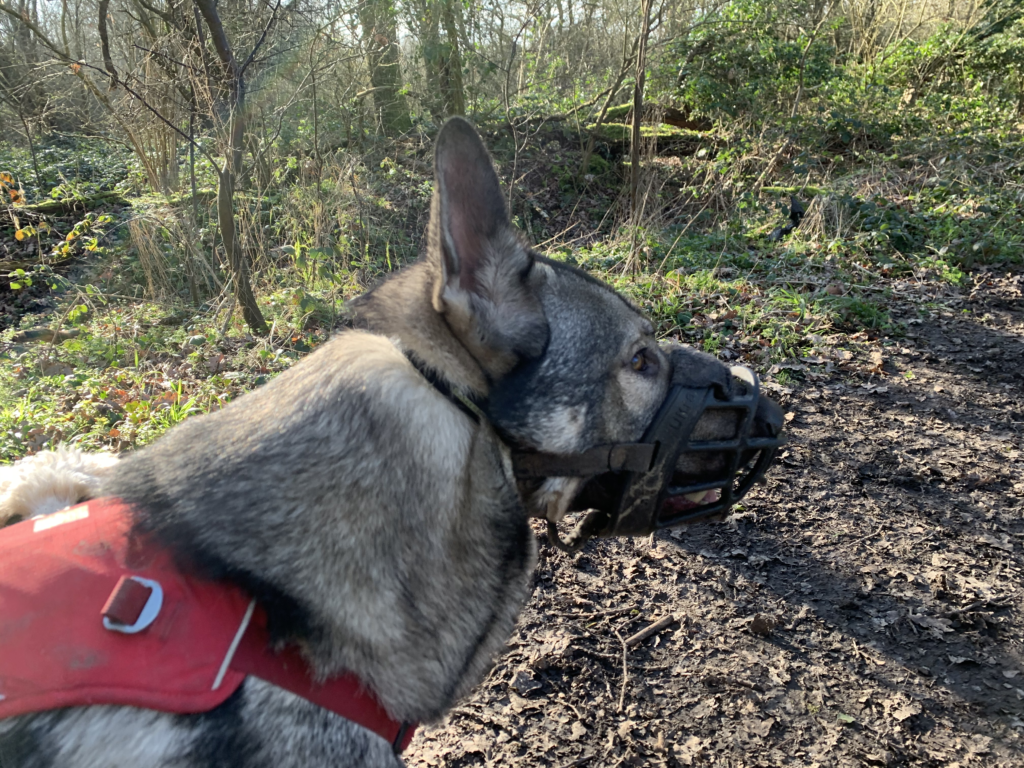
The Rebarkable Reactivity Guide is my step-by-step system for actually working through reactivity. It includes trigger and stress tracking, body-language work, finding your dog’s bubble, choosing rewards, safe equipment, muzzle training, counterconditioning and desensitisation, decompression, trigger stacking, setbacks and practical skills for getting out of difficult situations.
It’s designed for both the person who already knows their dog is reactive and wants a proper plan, and the person standing where I once stood with Indie thinking, I genuinely don’t know what I’m supposed to do next.

0 Comments