With a growth in behaviour issues, and muzzle stigma finally leaving, so knowing what are the best muzzles on the market is becoming increasingly important. And it’s a growing thing for even non-aggressive dogs to be muzzle trained to avoid a pain response.
Even though there’s a lot of stigma associated with muzzles, as behavior modification techniques progress, and behavior issues worsen with time, muzzles are becoming a larger part of living life with a dog, and many pet parents muzzle train without a behavioral issue already existing! (Which is wonderful!) But, with so many to choose from, it’s really hard to know where to start. Whether you’re looking for your first muzzle or a new muzzle, for small dogs or large dogs! There will be an option for you in here.
Whether your dog is reactive, whether they scavenge, or they get nervous at the vets or groomers, or maybe you’re just super cautious! Having a dog muzzle trained is one of the single most practical pieces of training you can do.
Table of Contents
How I’m Comparing The Muzzles In The Best Dog Muzzles For This Year.
- Value – Not all muzzles are made equal, this metric is to describe how valuable these muzzles are vs others in their price point.
- Bite-Proofness – Surprisingly, not all muzzles are biteproof! This is a way to show you how secure the muzzle is if your dog is a bite-risk.
- Comfort – Whilst I can’t ask my testers (Aka Indie!) how comfortable it is, I can get an idea of how comfortable it is for him.
- Robustness – is the muzzle able to take a hit? Is it brittle? Is your dog likely to chew through it?
- Security – Can it be slipped easily? Is it secure? Or is it likely to fail you? High stars means it’s secure!
- Weight – Is it heavy? Ideally we want it to be lightweight so that we can intrude upon our dogs in a minimal fashion.
- Treat Delivery – It’s important as a part of training that we can deliver treats to our pups!
- Mouth Movement – the ability to pant, drink and vomit is critical when looking at muzzles for safety reasons.
- Airflow – the ability to breath is … not really an option is it? But some designs can be more restrictive than others.
If you want to read more into these and how I’m structuring these scoring points? Check out 9 Considerations To Make When Buying A Muzzle For Your Dog.
This said, there is also an element of personal preference that’s hard to nail down, per se. So it’s important to remember that we’re looking for the right muzzle for you.
But, let’s do the little bit of housekeeping that I like to do before we plough into the rankings!
Want the rankings instead?

What Is A Muzzle?
A dog muzzle is a term we use for a man-made device that is secured around a dogs head that is made to restrict the use of their mouth. Sometimes it’s very easy to forget that our wonderful dogs are animals and their last line of defence? Is their teeth.
Normally I’m training we encourage resilience and management to avoid getting into situations where using their teeth is not a possible outcome. But when it comes to some stressful situations? That cannot be avoided.
And that’s when I will always suggest using Basket muzzles – these are your best option when it comes to muzzles.
A Basket type of muzzle is a ‘cage’ around the dog’s mouth, secured around the head, usually with durable nylon or adjustable straps that secure the muzzle around the back of your dog’s head. Often these muzzles will have a nose pad that sits on your dogs snout and prevents chaffing. Some will also have a head strap that goes between the eyes and secures to the strap that goes around the back of your dog’s head to secure your dog’s muzzle and prevent it slipping over their nose.
These create a cage around the mouth and ensure safety at all times. The right muzzle will (here’s a guide on fitting them too). These are always preferable to the cone-shaped “Emergency” muzzles or groomers muzzles that hold your dog’s mouth shut which isn’t a good idea – these are dangerous for a number of reasons.
What Does A Dog Muzzle Do?
A dog muzzle prevents the full use of a dogs mouth by securing a cage to their face and ‘caging’ your dog’s snout. The “bitey end” is a risk and for some dogs it’s a big risk. So, a muzzle may be used to ensure safety. They’re designed for short term use, as a training aid or a preventative for consuming random items.
Usually, they’re a training aid for long term behavior adjustment. Behaviour adjustment may take a long time, and a muzzle simply keeps your dog from making an error.
They are not designed to stop barking and are not a suitable tool for this.
Tried and Tested
These are all muzzles I’ve tried out with Indie. Unlike a lot of lists online of the best muzzles or whatever product – this one isn’t based on amazon reviews, or whether I’m getting sponsored, but actual hard testing and facts and experience! It’s not limited by the fact that I have sponsors, or by who will pay me a commission
Ever seen those listicles that only list stuff on their own site? Or only on Amazon? Yeah, that’s not me! I’m your independent! I test everything with the goal of safety, and ensuring that I highlight why they may, or may not work for you.
This is based on my genuine experiences with these products. It’s also made with a knowledge of canine behaviour, understanding of motion, training etc.
Note: If you have a severely flat faced (brachycephallic) breed like french bulldogs, this list won’t work for you!! I cannot test these as I don’t have a suitable breed to do testing, I’m sorry! But I do hear good things about the mesh-faced options that cover the entirety of your dog’s face.
The Goal Of These Rankings
Is to give you an unbiased viewpoint of how I find these muzzles. We (Indie, my german shepherd & I) give them an incredibly thorough testing, and will continue to adjust the reviews and this list with our findings together.
How should you use it? Take my learnings and find the most appropriate muzzle for you and yours. Just because I love a product, doesn’t make it ideal for you! But it does give you a benchmark to work from. That’s my goal. Let’s make informed decisions!
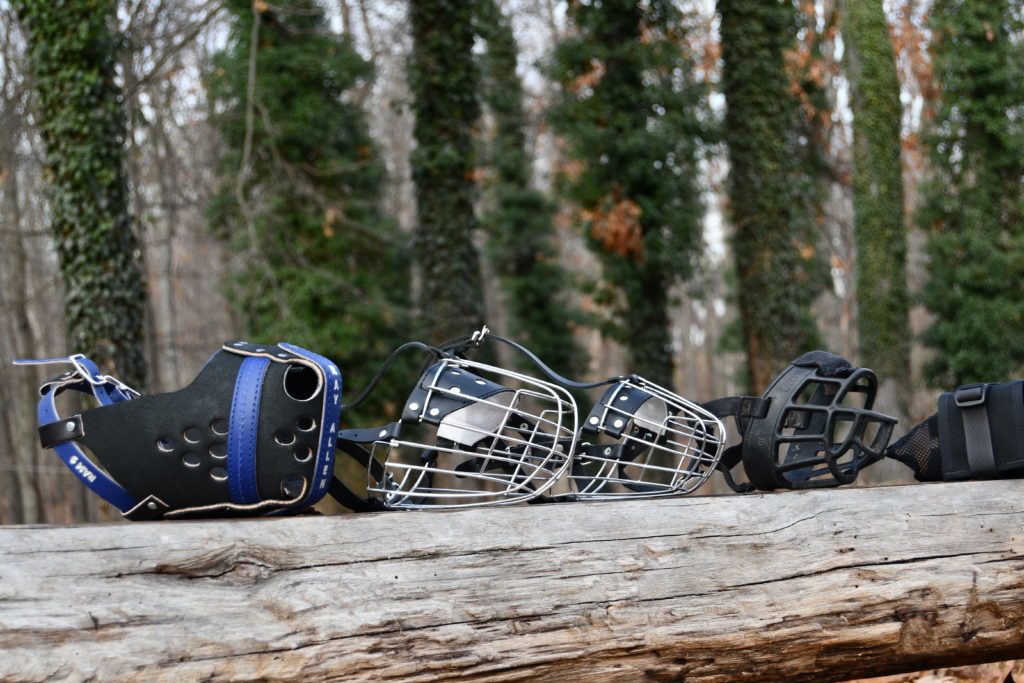
All of the muzzles in the best of muzzle rankings are Basket muzzles, or basket style muzzles, they use varying materials including leather, vinyl, metal and biothane (and silicone, but they’re really not for broad use). They clasp in different ways with buckles or plastic pinch clips typically.
Note! This is a live document! I’ll be adding things in and changing ranks on a regular basis with every Muzzle review that I add to the list. Which means that if you go away and come back? It may have changed.
Whilst I’m doing the note-thing, some of these will be affiliate links – because I deserve a little payback for all the work I do on this blog haha! But you can see that I’ve already tried all of these! These are genuine thoughts. None of these rankings have been bought, none of them are paid for. I have not been swayed or influenced in any way – which is why as many of these as are affiliate links, aren’t affiliate links.
Muzzle Considerations
When you’re looking at a muzzle it’s good to know what you’re intended purpose is. How are you envisioning it to work, what environment etc.
For example,
- is your dog an active bite risk or are you looking for a bite deterrent? If the former you want a significant bite-proof muzzle. If the latter, then you may want to consider something lighter.
- Will you be training in this muzzle? If so, then treat delivery is really important!
- Are you likely to encounter other dogs? If so then you may want to make sure that the muzzle has visibility for the other dogs to see what your dog is communicating with their mouth, but limit or remove their ability to bite.
- If they’re scavengers, the right design depends on what they’re actually picking up. General scavenging may only need a well-fitted basket, while poop eaters need much more front coverage. I’ve broken that down in my guide to why dogs eat everything on walks.
- If it’s just a case that your dog has to be muzzled in public places, then you’re not going to be too concerned about strength.
- If it’s purely prevention, and they’ll always be guided, a lighter muzzle may work really well, and make sure it has some good visibility so that your dog can clearly communicate with other dogs.
- Is your dog going to be in humid environments? you might want to focus in ventilation.
- There are a lot of things to think about when you’re shopping for a muzzle, which is why I’ve tried a large number at varying different price points to ensure there is something here for all of you!
It’s really important to know that muzzles are not designed for extended, unsupervised usage.
What Are The Different Types Of Muzzles?
Let’s quickly run through the different types of muzzle that are on the market! The main types of muzzles are;
Leather Muzzles
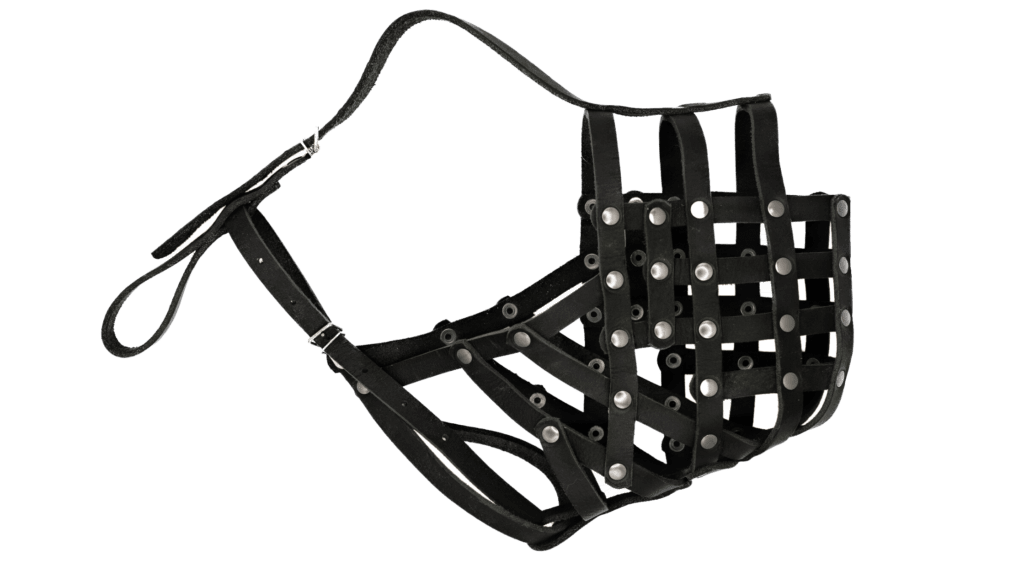
Leather Dog Muzzles are the first thing most people consider as a muzzle is leather, typically. Genuine leather muzzles do take upkeep, they’re also not great with water, but they are super durable and usually quite flexible. This style of muzzle (usually) allows for good air flow and are really secure.
Wire Muzzles/Metal Basket Muzzles
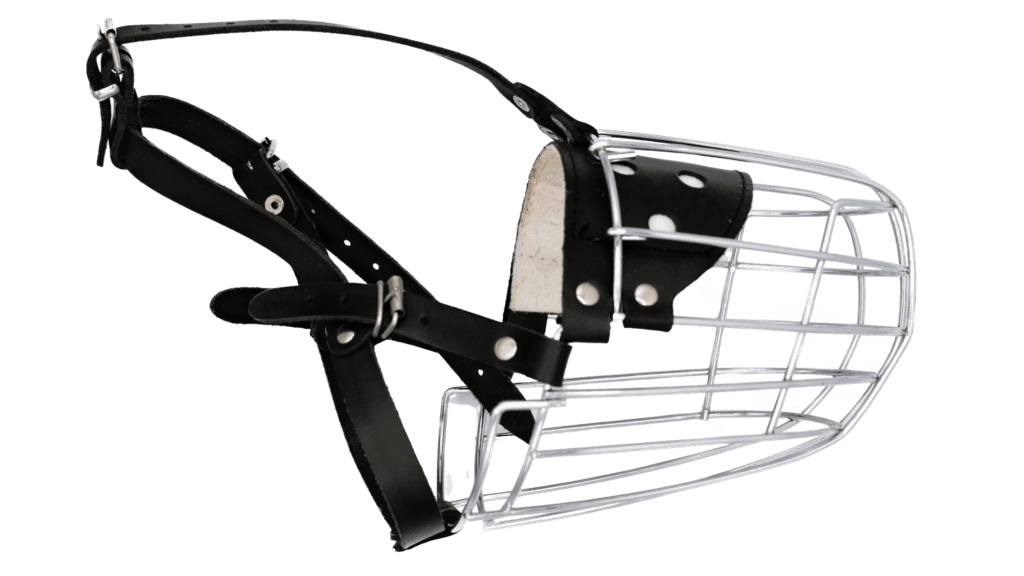
I love wire basket muzzles, though, they do look quite intimidating and can be off putting. However, please do consider these. Because they’re really durable, really strong, and usually appropriate for all sorts of situations.
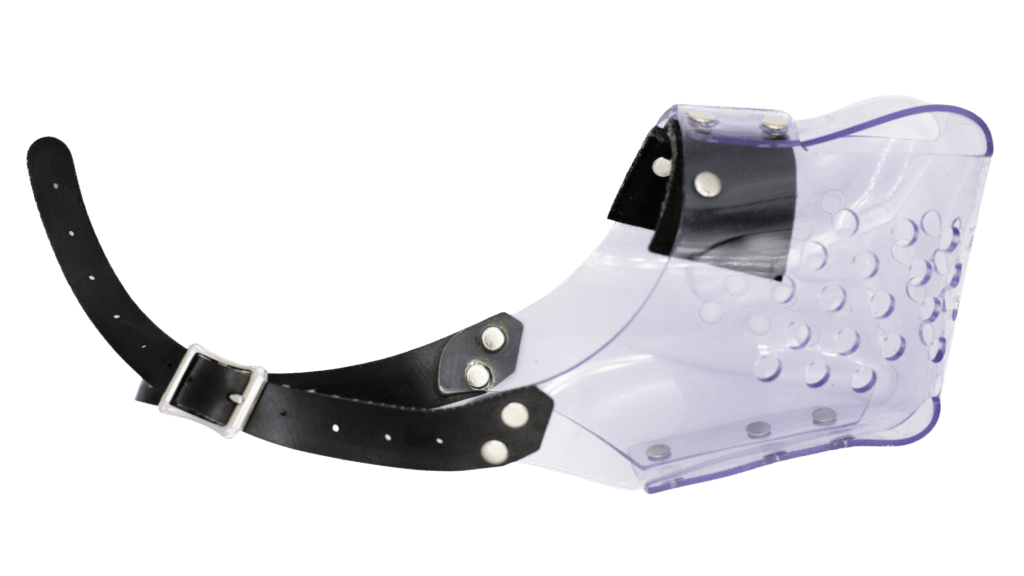
Vinyl Muzzles
Vinyl muzzles are really trendy at the moment. Because they give full visibility on your dog’s face (or can), they are a great choice to allow for thorough communication (intra and interspecies), and they’re usually a very safe option – particularly for bite-risk dogs.
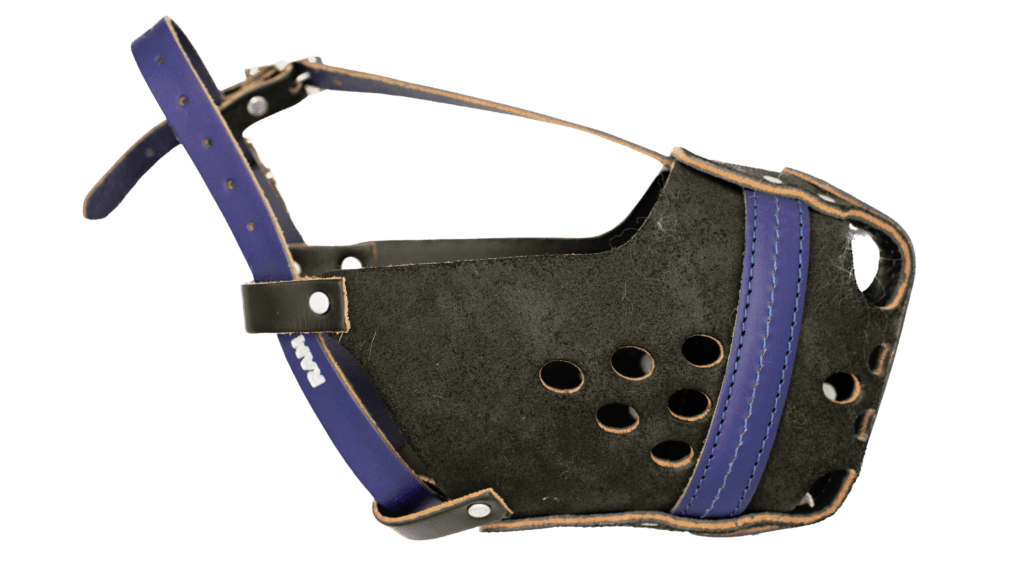
Agitation Muzzles
These are typically used in bitework and bite sports, which means they often have a very limited audience (usually German shepherds, belgian malinois etc), and can be not an appropriate choice for other breeds, but, these are very much the “paramount” of your dog will not be able to bite.
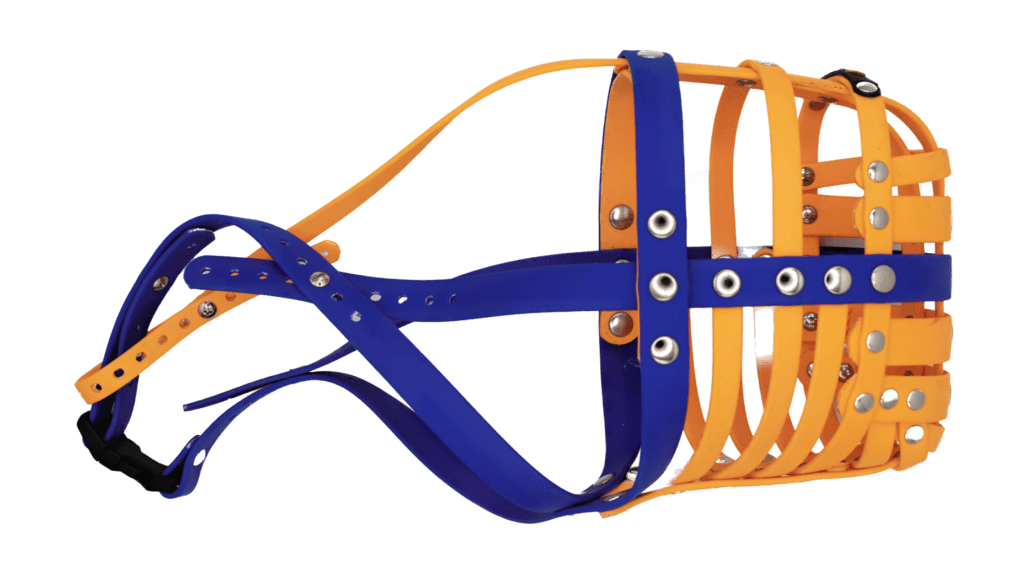
Biothane Muzzles
Biothane muzzles can come in some really vibrant tones and colours! Which is why they’re beloved by the muzzled dog community (yes, there is one! Go find them on Facebook and instagram, they’re there!). This is a synthetic material too, which makes it really easy to clean.
They can be very “friendly” looking and for small breeds of dogs they can be affordable and are a great choice for DIY. But these will scale in price depending on the size of your dog. These are usually my top choice for everyday wear.
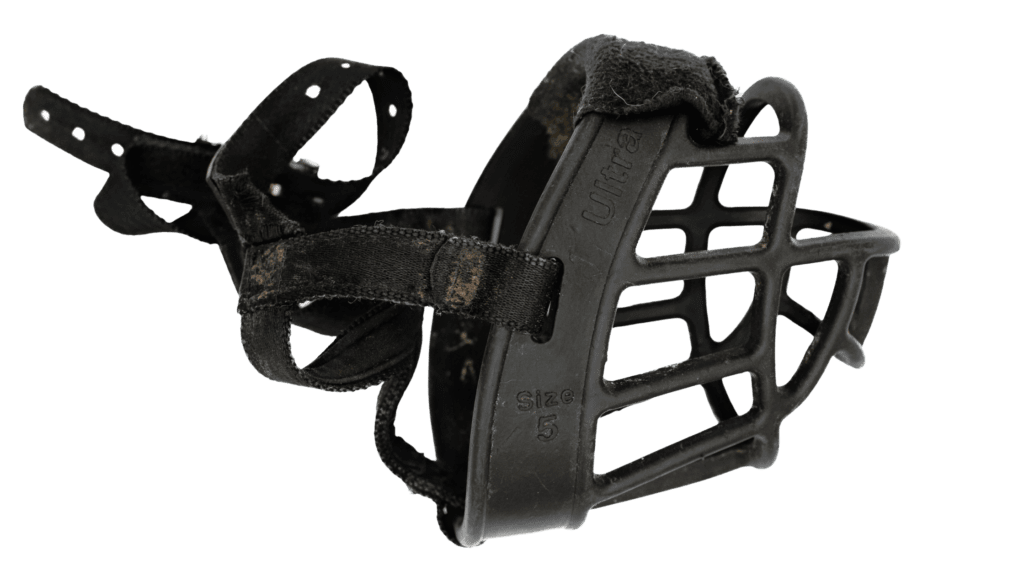
Hard Plastic/Rubber Muzzles
These are usually very affordable, and it’s a market that Baskerville have rather dominated (for good reason!), they’re strong and durable, but it’s good to note they can be shattered and often can be negotiated around if your dog is clever enough.
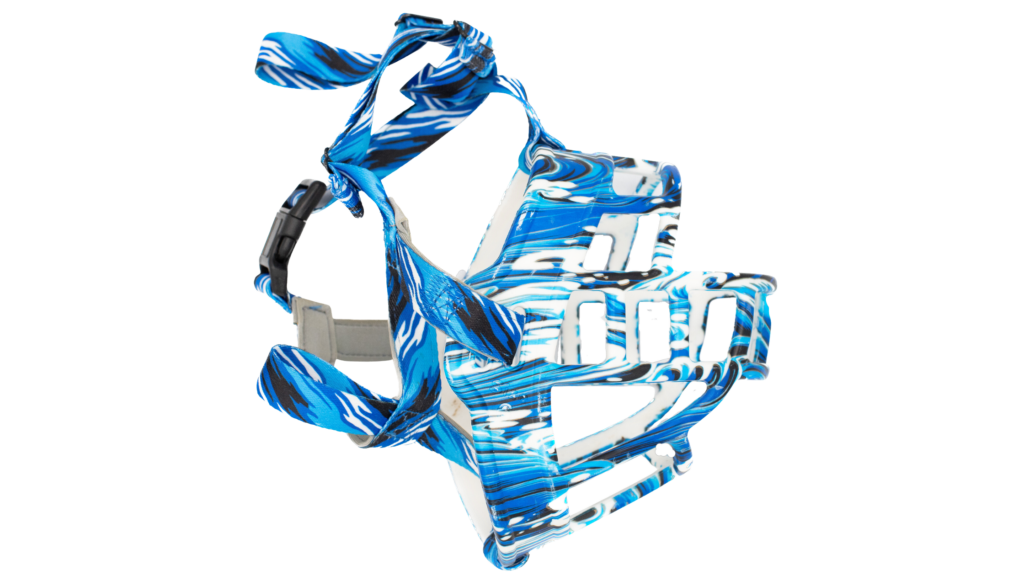
Silicone Muzzles
These, I have yet to find a good option, or a time when silicone can be used for a safe muzzle. Currently, I’m of the opinion that the only time I would permit someone to use this would be for BSL (breed specific legislation) that dictates your dog must be muzzled in public places — but – I will entirely say that because they aren’t at all biteproof that I can’t imagine it would hold up in any sort of legal situation and (to my mind) would not be worth the risk of someone seizing my dog.
So…. yeah I don’t see a reason for Silicone muzzles.

Fabric Muzzles
Cloth muzzles (or fabric muzzles) are … really limited in their efficacy. Your dog can still nip, but they cannot pant, they cannot really take treats, they cannot vomit and they put your dog at risk of overheating.
Buyer’s Guide To The Best Dog Muzzles 2026
Let’s dive into these different styles! I’ve tried my best to think their use through for as many of your dog’s breed as possible during this, but there are always obscure dog breeds out there, so remember to apply these for you! And if you have questions, I own all of these muzzles and have genuinely tested these, so I can absolutely help bridge the gap.
1. Best Overall: BUMAS Biothane Muzzle — 9.8/10
Why I like it: Bespoke to your dog, colorful, light, easy to clean and made for everyday dog life. The Biothane construction is flexible but surprisingly strong, with a fit that makes it a very good option for dogs who need to wear a muzzle regularly.
It gets expensive for larger dogs, but if your dog will wear a muzzle for long periods during training or behaviour work, this is still my overall pick.
- Pros: Flexible, durable, light, strong.
- Cons: Expensive.
2. Best Agitation Muzzle: Ray Allen Wire Basket Muzzle — 9.5/10
This is the heavy-duty option for a genuine bite risk. It is reinforced with steel bands and is much closer to truly biteproof than most everyday muzzles. The trade-off is weight and a fit that mostly suits larger, longer-nosed dogs.
- Pros: Strong, finely made, genuinely bite-resistant, reinforced with steel.
- Cons: Heavy; limited to larger dogs with longer noses.
3. Best Wire Basket Muzzle: Ray Allen Wire Basket Muzzle — 9.2/10
Excellent finishing, strong construction and very good ventilation make this one of my favourite places to start with muzzle training. There are no obvious sharp edges, and the shape is designed with comfort in mind. It can run a little small, so check sizing carefully and consider sizing up where appropriate.
- Pros: Strong, finely made, quality materials.
- Cons: Limited space if sizing is too tight.
4. Best for a First Aid Kit: Ray Allen Mesh Muzzle — 8.7/10
This is the muzzle I keep as an emergency backup. It is highly adjustable and very secure, but it is not a long-wear training muzzle. It is better suited to larger dogs than small breeds.
- Pros: Very secure, easy to adjust.
- Cons: Unsafe for extended wear.
5. Leerburg Polymer Coated Muzzle — 8.3/10
A roomy, sturdy polymer-coated muzzle with good pant room and better finishing than many similar designs. I was impressed by the quality during testing, although the sizing system takes some care to get right.
- Pros: Great pant room, strong, durable.
- Cons: Sizing is precise but not especially straightforward.
6. Best for Communication: JAFCO Clear Vinyl Muzzle — 8.6/10
The clear vinyl is the big advantage here because it keeps more of the dog’s facial communication visible. It is a sturdy, bite-resistant option I particularly like for vet visits and shorter, controlled situations. Ventilation is the limiting factor, so I would avoid extended wear.
- Pros: Bite-resistant, excellent facial visibility.
- Cons: Low ventilation.
7. Best for Poop Eaters: Birdwell Plastic Dog Muzzle — 8.5/10
A lightweight, affordable hard-plastic muzzle that works especially well for long-nosed dogs. The optional stool guard is the standout feature for scavengers and dogs with coprophagia.
- Pros: Well produced, colorful, optional stool guard.
- Cons: Awkward for wider noses; easier to damage than heavier-duty options.
8. Baskerville Ultra Dog Muzzle — 7.9/10
This was Indie’s first proper muzzle and remains an easy one to train with. It is lightweight, easy to clean and can be heat-shaped for a better fit. The trade-off is that it can be slipped, and the generous treat opening means it will not stop determined scavenging.
- Pros: Lightweight, easy to clean, sturdy.
- Cons: Can be slipped; not ideal for scavenging prevention.
9. Mayerzon Hard Rubber Muzzle — 7.2/10
A practical Baskerville-style option for many standard muzzle shapes. It is adjustable and very easy to clean, but it can run small and may rub on the nose during longer wear unless you add padding such as fleece or neoprene.
- Pros: Secure, adjustable, easy to clean.
- Cons: Sizes a little small; possible nose chafing.
10. Dean & Tyler DT Freedom Winter Muzzle — 7.5/10
A sturdy wire basket with very generous pant room, including for larger dogs. The optional winterising can help with slobber and rust, but I have had poor customer-service experiences with the brand, which materially affects whether I would recommend buying it.
- Pros: Sturdy, excellent pant room.
- Cons: Poor customer service; expensive for what it is.
11. BRONZEDOG Wire Basket Muzzle — 7.8/10
An affordable, strong and well-ventilated wire option for larger dogs. I did find some sharp edges during testing, so I would inspect the individual muzzle carefully before use.
- Pros: Affordable, strong, well ventilated.
- Cons: Some sharp edges.
12. Leather Basket Muzzle — 7/10
A lightweight and inexpensive leather option with decent ventilation. The leather quality is not exceptional and I would not assume long-term durability, although it held up during my testing.
- Pros: Affordable, nice design, well ventilated.
- Cons: Runs small; lower-quality leather.
13. Soft Mesh Muzzle — 6.9/10
The mesh gives excellent airflow, but I would not use this where a genuine bite is a realistic risk because a determined dog could bite through it. Treat it as a limited-use option, not a secure basket muzzle.
- Pros: Highly ventilated.
- Cons: Not reliably secure for bite prevention.
14. Barkless Silicone Muzzle — 6/10
Lightweight and easy to clean, but too flexible for me to consider it dependable for a genuine bite risk, particularly with larger dogs. This is the weakest option in the ranking.
- Pros: Lightweight, easy to clean.
- Cons: Not secure; too flimsy for serious bite prevention.
A note…
Muzzle purists or hardcore enthusiasts will tell you that some of these muzzles are not biteproof, and sure, when you see the situations they’ve mocked up, yeah, they’re not “biteproof” when you push a stick in at the perfect angle, allow your dog to deliberately destroy the muzzle, or allow your dog to puzzle them out.
In the vast majority of cases, you’ll know if your dog has worked something out, or you’re going to be alongside them guiding them and preventing your dog from going too far but disengaging your dog from the “problem” and removing them from the situation.
I raise this because picking the right tool for the job is important, but letting a militant person dictate that you change from your desired muzzle to a different muzzle because “That muzzle isn’t biteproof, rah!” is something that I hate. You make the decision that is right for you & don’t allow excessive exposure to potential problems, as a determined dog will resolve any problem.
How To Train Your Dog To Wear A Muzzle
With desensitisation and positive reinforcement, we never force our dog wear one, even a well-fitting muzzle.
Essentially you’ll slowly introduce the muzzle using food rewards (typically), to show your dog that the muzzle is a good thing, and not something to be scared of.
Break down the introduction into sections, many short sessions is better, and then build up to longer periods eg, the first time they see it, you may just leave it on the floor and allow them to explore. Next, you’ll cue the nose in, slowly add the weight, add in the duration, add in the straps etc. until there is no fear and we’re all happy with it on your dog’s nose!
But, a free course is in production for you and your furry friend.
“Muzzles” To Avoid
Despite my statement above, there are some things labelled as muzzles on the market that just aren’t and aren’t safe for use.
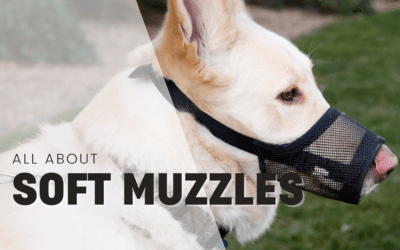
These are “Fabric” muzzles, soft muzzles, groomers muzzles, or emergency muzzles (at best), and:
- Should not be used long term (more than 5 mins)
- Should not be used for training
- Are not biteproof
- Are not secure
- Cause overheating
- Cause choking (in the instance of vomitting)
- Prevent drinking
You will see these suggested on other “best muzzle” lists, but please ensure you do not use them for your dog! Those lists have been compiled without actual practical use or understanding of muzzles and should not be adhered to. As an individual who works with muzzles every day in a professional capacity, the above are safe, the below are not. And have been included to show you why they’re not safe and highlight that they should not be used.
The only place for these? Is in the boot of your trunk or in a medical kit (even then, a non-stretchy bandage works way better!).
Why Is The Muzzle I Was Looking At Not On The List?
Well, likely because I’ve not gotten to it yet! One of the cruxes of testing all of these muzzles myself with my dog, means that we can only do so many at a time, but if you’re looking for anything specific, let me know! I’m always happy to take recommendations because goodness only knows there are a lot on the market and its hard to know everything that’s available at all times!
Your Muzzle Questions Answered
Muzzles are important!
Muzzles keep our dogs safe.
They’re a great thing to train for. They’re a fantastic back up plan. Remember, regardless of your dogs temperament, whether they have a history of aggression or not, a dog in pain is unpredictable and can be dangerous. Desensitising a muzzle, and having a muzzle that fits your dog ready, will make a potentially traumatic event just a little less stressful. Muzzles are often the best solution when safety becomes a concern.

Author, Ali Smith
Ali Smith is a professional, qualified, and multi-award winning trainer is the founder of rebarkable. She has always believed animals deserve kindness and champions force free methods. Believing that dog guardians will all choose the kindest options if proper information is provided, she aims to help all dog guardians who need it and make dog training as accessible as possible
Ali lives win Maryland, US with her husband and her three dogs.


0 Comments