If your dog bites, the first question is not “what muzzle should I buy?”
It is: why does your dog bite, and are you accidentally causing or contributing to it?
That may sound blunt, but it matters. A muzzle can give you more room for human error and more reaction time when something goes wrong. It cannot fix forced handling, ignored boundaries, poor timing or an owner who does not understand what their dog is trying to communicate.
So yes, a muzzle can be an incredibly responsible safety tool for a bite-risk dog. But the muzzle is not the whole solution.
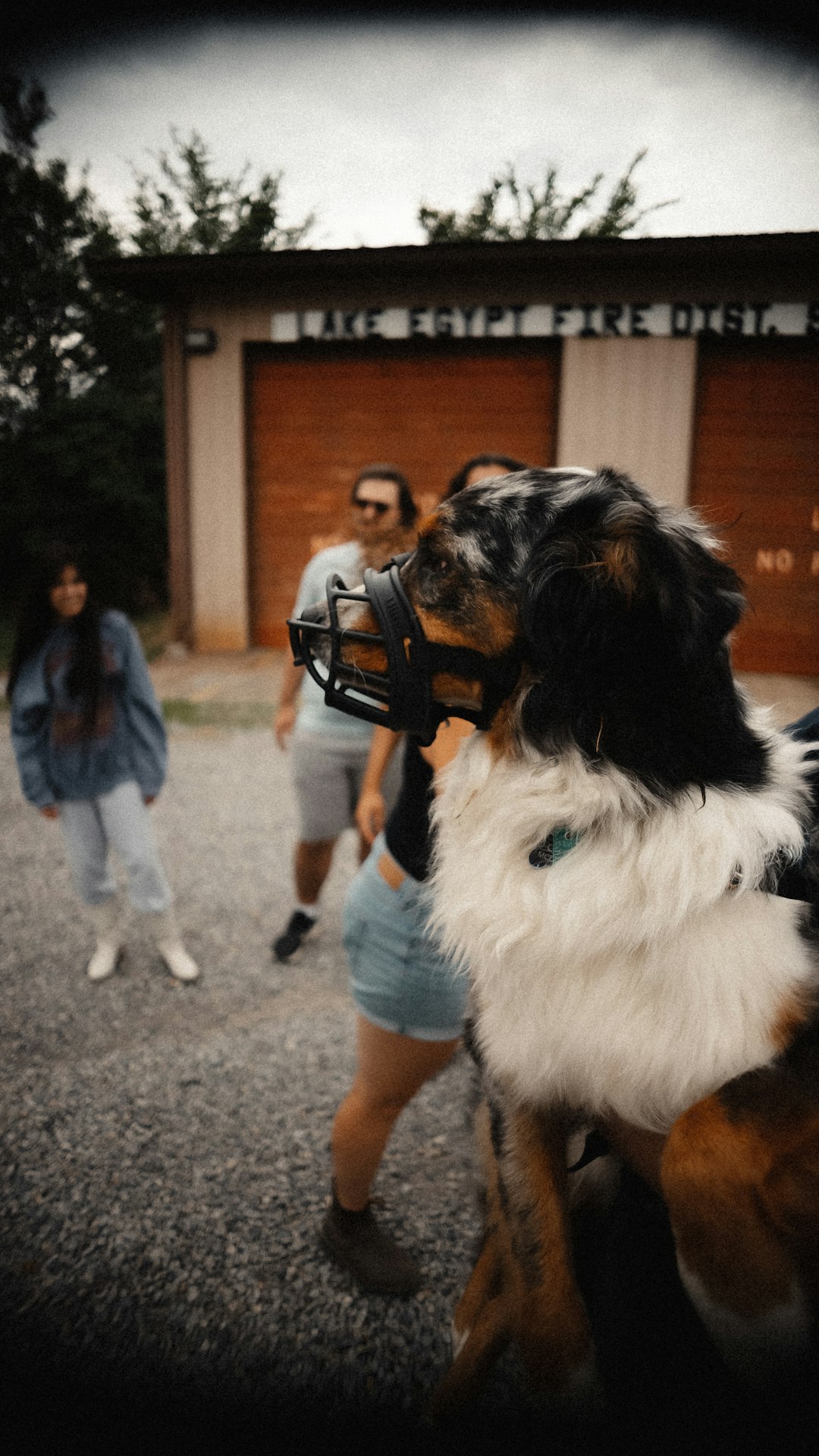
Start With Why Your Dog Bites
Before choosing a muzzle, look at the circumstances around the bite.
One of the biggest patterns I see is forced handling or owners repeatedly pushing past a dog’s boundaries. This can show up as:
- Continuing to handle a dog who is clearly uncomfortable
- Holding or restraining them when they are trying to move away
- Ignoring growling, freezing, turning away or other warning signals
- Pushing physical contact because the dog “should tolerate it”
- Describing bites as “out of the blue” or the dog as “unpredictable” without looking carefully at what happened beforehand
Very often, the problem is not that the dog gave no warning. It is that the warning was misunderstood, dismissed or overridden.
That is why the owner’s understanding of the dog matters so much. If you do not change the handling and thought process that contributed to the bite, buying a stronger muzzle will not resolve the real problem.
A Muzzle Gives You More Room For Human Error
This is probably the most important thing I want owners to understand.
A muzzle can reduce risk. It can give you more reaction time. It can give you those extra seconds to realise that your dog is struggling, intervene and get them out of the situation.
What it does not do is make the situation safe enough for you to switch off.
If your thought process is, “I have a biteproof muzzle now, so I can relax,” that expectation needs resetting immediately.
A bite-resistant muzzle does not mean you can relax.
No muzzle should be treated as permission to put a dog into situations where they are likely to make a determined attempt to bite. The muzzle gives you more room for human reaction time and human error. It does not solve the problem.
No Muzzle Is Truly Biteproof
People often search for a “biteproof dog muzzle,” but I do not like treating biteproof as an absolute.
Some muzzles are substantially more bite-resistant than others. That distinction matters, especially with a dog who presents a serious bite risk.
But a determined dog, enough time, poor fit or the wrong situation can defeat equipment. The muzzle should therefore be part of a safety system, not the entire safety system.
If you want to compare the designs I have personally used, start with my best dog muzzles, tried and tested.
For Handling Issues, A Good Basket Muzzle Is Often Enough
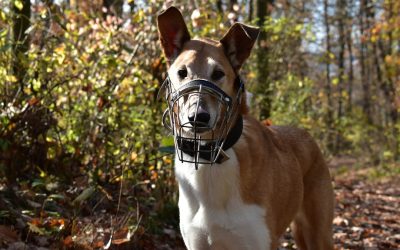
If the dog bites because of handling sensitivity, fear or discomfort around being touched, a properly fitted basket muzzle is often a very sensible option while you work on the actual handling problem.
The goal is not to use the basket so you can continue forcing the dog through the same experience.
The goal is to create enough safety that you can work more thoughtfully on cooperative handling, desensitisation and the dog’s comfort around touch.
That means changing how the owner approaches the dog, not simply making the dog’s teeth less accessible.
For fitting basics, use my complete guide to fitting a dog muzzle.
For A Genuine Serious Bite Risk, Choose More Protection
There is a difference between a dog who may snap during uncomfortable handling and a dog where you genuinely believe a bite could cause serious injury.
If I am dealing with a dog who is a serious bite risk — for example, a dog who could cause a vet significant harm — I want a more protective, more bite-resistant design.
That usually means looking at a more rigid basket or more substantial construction rather than a very flexible muzzle.
The exact answer still depends on the dog, the reason for the bite and the situation where the muzzle will be used.
If you are unsure which construction suits your dog, my guide to the different types of dog muzzles explains the main designs and what they are for.
What I Would Avoid For Bite-Risk Dogs
Soft and occlusion-style muzzles are not my default recommendation for ongoing bite-risk management.
Occlusion muzzles hold the mouth closed and are emergency tools. They are not appropriate for normal walks or extended training sessions because the dog cannot pant properly.
Soft muzzles also tend to be a poor choice for this job because they often compromise mouth movement and do not give you the same safe, practical everyday use as an appropriately fitted basket.
For ordinary ongoing use, I want the dog able to pant, drink where appropriate and move comfortably while still giving us the level of protection the situation requires.
You can read more about why emergency/soft muzzles are so limited in my guide to soft and emergency muzzles.
Do Not Use The Muzzle To Keep Pushing The Dog
This is where owners can accidentally make things worse.
If a dog is biting because their boundaries are constantly being ignored, putting on a muzzle and continuing to ignore those boundaries does not resolve anything.
You have simply removed one of the dog’s most effective ways to make you stop.
That can increase stress and conflict, particularly if the dog learns that wearing the muzzle predicts being restrained, handled or pushed through experiences they cannot cope with.
Use the safety the muzzle gives you to make better choices, not to demand more from the dog.

“The Dog Bit Out Of The Blue”
Whenever I hear phrases such as “it came out of nowhere,” “there was no warning,” or “my dog is unpredictable,” I want to look much more closely at what happened before the bite.
Dogs absolutely can give warnings that are extremely subtle, and owners can miss them. But very often there is a history of signals being overlooked or the dog’s boundaries repeatedly being pushed.
This is why learning to understand your own dog is such a central part of bite prevention.
A muzzle can help keep everyone safer while you learn. It cannot replace that learning.
Does A Bite-Risk Dog Need Professional Help?
I do not frame this as a point where the owner should hand the dog over and have a professional “fix” them.
You are still the person living with your dog. You are the person who needs to understand their signals, change your handling and make the day-to-day decisions that prevent problems.
Where I absolutely recommend help is professional oversight.
If you have a serious bite risk, you are not confident in what you are seeing, or you are struggling to make progress, work with an appropriately qualified trainer or behaviour professional who can guide you through the process.
The professional should help you understand and work with your dog, not replace you in the process.
Muzzle Training Still Matters
Even the perfect muzzle is not useful if your dog finds wearing it deeply stressful.
Introduce it gradually. Build comfort. Reward through the muzzle. Increase duration and fastening slowly, and pay attention to your dog’s body language throughout.
If you need the full process, follow my positive step-by-step muzzle training guide.
Choose The Muzzle For The Actual Risk
The right muzzle depends on why your dog bites and what you are asking the muzzle to do.
For a handling-sensitive dog, a properly fitted basket may provide exactly the safety you need while you change the handling plan and build trust.
For a dog who poses a genuine risk of causing serious injury, I want a more substantial, more bite-resistant design.
But in both cases, the principle is the same: the muzzle gives you more margin for human error and reaction time. It does not give you permission to stop paying attention.
The Bottom Line
If your dog bites, start with the dog — not the equipment.
Understand why the bite is happening. Look honestly at whether handling, pressure or ignored boundaries are contributing to it. Change the owner’s understanding and behaviour as well as the dog’s training plan.
Then use the muzzle for what it is genuinely excellent at: adding another layer of safety while you do that work.
No muzzle solves a biting problem by itself, and no bite-resistant muzzle means you can relax. It simply gives you more time and more room to make a better decision when something goes wrong.


0 Comments