Most dog muzzles do not fit flat-faced dogs properly.
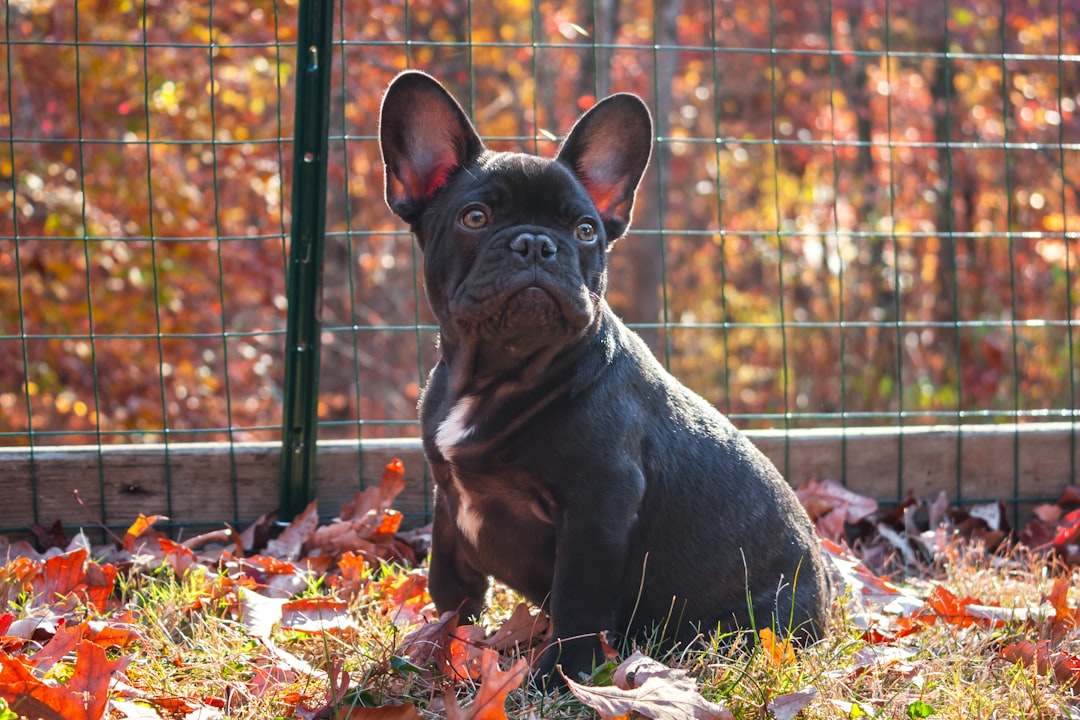
That is the most important thing to understand if you are trying to find a muzzle for a French Bulldog, Pug, English Bulldog, Boston Terrier or another brachycephalic dog. A conventional basket muzzle is designed around a dog having a reasonably substantial snout for the basket to sit on. Very flat-faced dogs simply do not have much nose to work with.
That does not mean brachycephalic dogs cannot wear muzzles. It means you need a muzzle designed for their anatomy rather than trying to make a standard basket fit a face it was never designed for. If you are new to muzzle types altogether, start with my guide to the different types of dog muzzles.

Why Normal Basket Muzzles Often Don’t Fit Flat-Faced Dogs
On a typical dog, the basket sits out in front of the mouth and is supported by the dog’s muzzle. With a brachycephalic dog, there may be very little muzzle length available.
Standard baskets therefore tend to be too big, sit incorrectly, or simply have nowhere sensible to rest.
This is why I would look at specialist brachycephalic designs first rather than sizing down a conventional basket and hoping for the best.
What Should A Flat-Faced Dog Muzzle Fit Like?
The basic fitting principles are actually the same as they are for any other dog.
Your dog needs a secure, comfortable fit with appropriate space around the face and enough room to use their mouth appropriately for the situation. The muzzle should not be rubbing, obstructing the eyes or sitting in a way that makes the dog uncomfortable.
Where brachycephalic dogs differ is not really in what good fit means. It is in how difficult that fit can be to achieve with ordinary muzzle shapes. My muzzle fitting guide explains the general fit criteria in more detail; the challenge here is finding brachy-specific hardware that can meet them.

If you are unsure about measurements, I strongly recommend contacting the manufacturer. Flat-faced dogs are one of the situations where getting knowledgeable sizing help is far more valuable than guessing from a size chart.
My First Choice: Specialist Brachy Muzzles
If your dog has at least some nose for a muzzle to sit on, specialist manufacturers can give you much better options.
Mia’s Muzzles makes some excellent choices for brachycephalic dogs and would be one of the first places I would look. Their more robust designs can also be a useful option where bite risk is part of the reason you are muzzling.
The Muzzle Movement also makes solid muzzle options for flat-faced dogs and is worth considering.
Do not get too attached to a particular brand before you know what fits your individual dog. Fit wins.
What About Extremely Flat-Faced Dogs?
Some dogs have so little muzzle length that even a specialist basket-style design has very little to anchor to.
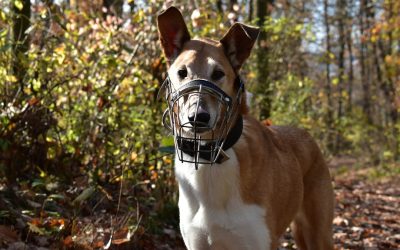
For these dogs, you may need one of the full-face designs that owners sometimes jokingly describe as a Hannibal-style mask.
They are not necessarily the prettiest option in the dog-equipment cupboard, but function matters more than aesthetics. If there is virtually no nose available to support a basket, a design that secures around more of the head can make considerably more sense.
Are Flat-Faced Dog Muzzles Biteproof?
No muzzle is truly biteproof.
Some muzzles are significantly more bite-resistant than others, and that distinction matters. A robust specialist design such as an appropriate Mia’s Muzzles option can provide substantially more protection than a lightweight flexible design when bite risk is a concern.
But I do not want owners interpreting the word “bite-resistant” as permission to put a dog into situations where they are likely to make a determined attempt to bite.
A muzzle is an additional layer of safety. In practical terms, I think of it as something that may buy you the extra seconds you need to realise something has gone wrong, intervene and remove your dog from the situation.
It is not a force field.
Management should still be doing the heavy lifting. If your dog is trying determinedly to bite someone, the answer is not to stand there testing how good the muzzle is.
Very flat-faced dogs may also have less ability to manipulate some muzzle designs than a longer-snouted dog, but I would never rely on that as the safety plan.
Why Might A Flat-Faced Dog Need A Muzzle?
For essentially the same reasons as any other dog.
- Bite-risk management
- Veterinary or handling situations
- Scavenging
- Eating poop or dangerous items from the ground
- An additional safety layer during behaviour work
- Legal requirements in places where particular dogs must be muzzled
I also see plenty of French Bulldogs who need additional management around other dogs. That is an observation from my own work, not a statement that Frenchies universally dislike dogs or that dog-dog intolerance is inevitable in the breed.
There can be many reasons a dog becomes less tolerant, including discomfort, handling sensitivity, frustration, previous experiences and individual temperament. If a dog’s behaviour changes suddenly, particularly if they become unexpectedly irritable or sensitive, I would not simply write it off as the dog being “grumpy.”
What If My Flat-Faced Dog Scavenges?
If your brachycephalic dog has enough nose to wear one comfortably, a specialist option such as Mia’s Muzzles can work well.
The exact design still needs to match what you are trying to prevent. A dog picking up general rubbish presents a different challenge from a committed poop eater, because soft material can push through surprisingly large gaps in an open basket.
If scavenging is your main problem, see my guide to the best muzzles for dogs who eat everything on walks for the difference between ordinary scavenging and poop eating.
Heat, Breathing And Brachycephalic Dogs
Yes, I am particularly conscious of heat and airflow when muzzling a brachycephalic dog.
But we also need to keep this in perspective: brachycephalic dogs can already struggle more with heat and strenuous exercise because of their anatomy. The muzzle is not the only consideration.
A sensible owner should not be planning a ten-mile hike in 100-degree weather with a Frenchie and then wondering whether the muzzle is the problem.
Choose a properly fitted design with appropriate airflow, monitor your dog carefully, provide water and breaks, and make sensible decisions about temperature, humidity, exercise intensity and duration.
How Long Can A Flat-Faced Dog Wear A Muzzle?
I would not invent a special universal time limit purely because the dog is brachycephalic. The individual dog, the muzzle, the weather, the activity and the reason for wearing it all matter.
What I would do is be particularly conservative about heat and breathing. If your dog is struggling, excessively hot, distressed or unable to regulate themselves comfortably, remove them from the situation rather than trying to hit an arbitrary duration target.
Do You Train A Brachy Dog To Wear A Muzzle Differently?
Normally, no.
The hardware may look different, but the training principles are the same. Build a positive association, let your dog voluntarily investigate the muzzle, reward interaction, build duration gradually and do not rush to fastening it before the dog is comfortable.
I have a full step-by-step guide to positive muzzle training if your dog has never worn one before.
Get Help With The Fit
There are good online muzzle-fitting communities, and specialist manufacturers often have far more experience fitting unusual head shapes than a general pet shop does.
Use that expertise.
If the manufacturer offers sizing help by email, message or phone, contact them. Send the measurements they request and, where appropriate, photographs of your dog’s head.
A muzzle is safety equipment. Getting the right one and fitting it properly is more valuable than trying to make the first product you bought work.
You can also read my broader guide to fitting a dog muzzle for the basic fitting principles.
The Bottom Line
Flat-faced dogs absolutely can be muzzle trained and wear muzzles safely. The problem is trying to use equipment designed for a completely different face shape.
If your dog has some nose, start with a specialist brachycephalic muzzle and look at manufacturers such as Mia’s Muzzles and The Muzzle Movement. If your dog is extremely flat-faced, a full-face or Hannibal-style design may be the more practical solution.
Prioritise fit, airflow and the actual purpose of the muzzle over how it looks.
And remember the most important safety caveat: no muzzle is truly biteproof. Some are very bite-resistant, and the right muzzle can provide an extremely valuable extra layer of protection, but it should buy you time to act — not replace sensible management.



0 Comments