If your dog eats everything they find on walks, a muzzle can be one of the simplest and most effective ways to keep them safe. And I am completely comfortable with a scavenging muzzle being a long-term management solution. Scavenging is hard to train, and your dog’s safety does not need to depend on them making the right decision every single time.
But before you buy a muzzle, there is one question that matters more than almost anything else: what is your dog actually eating?
A dog picking up food scraps, rubbish or random objects needs a different solution from a dog who eats soft things like poop. That distinction changes the muzzle I would choose.
Quick Answer: Which Muzzle Does A Scavenging Dog Need?
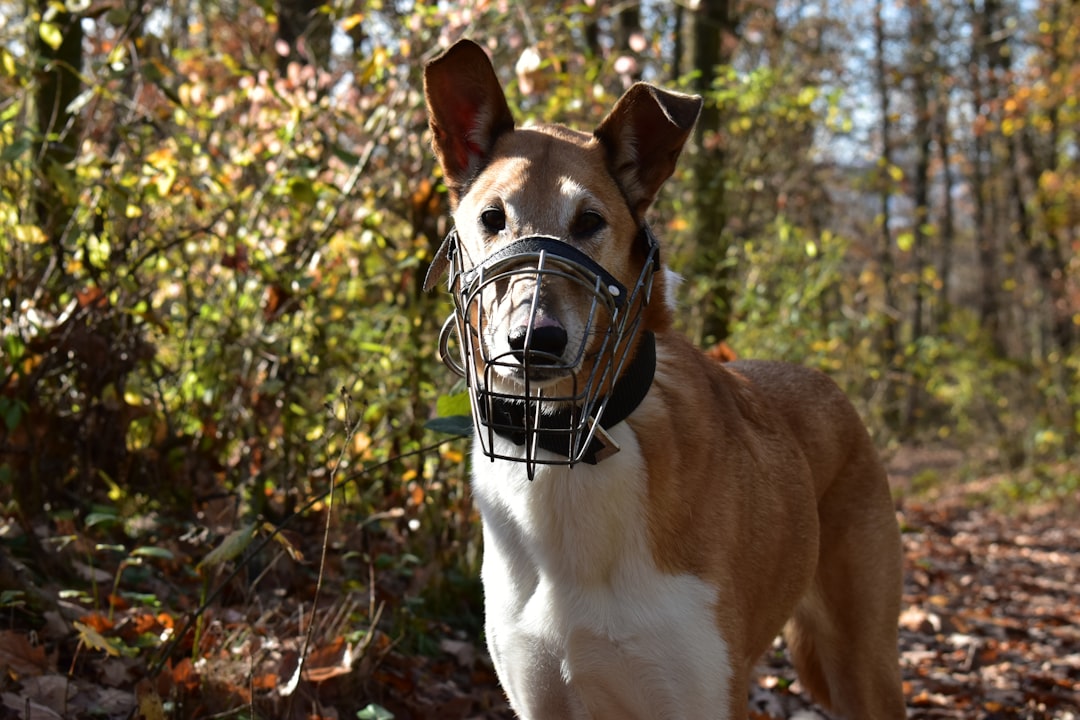
- General scavenging: a properly fitted basket muzzle is usually sufficient.
- Poop eating: you need much more coverage at the front, such as a stool/scavenging shield, an enclosed design such as JAFCO, or a Biothane design with narrow spacing between the front straps.
- Emergency/occlusion muzzles: not appropriate for walks or scavenging management.
- Soft muzzles: not my choice for this job either.
If you want to compare muzzle construction more broadly first, see my guide to the different types of dog muzzles.
Why Most Basket Muzzles Don’t Work For Poop Eaters
This is the mistake I see most often.
A normal basket muzzle may be perfectly good at preventing a dog from picking up larger pieces of food or solid objects. Poop is different because it is squidgy.
Your dog can simply push the basket into the poop and eat it through the gaps.
So now your dog has still eaten poop, and you have the added privilege of cleaning another dog’s poop out of your dog’s muzzle. Delightful.
For a committed poop eater, the important feature is coverage at the front of the muzzle. You still need a safe fit and appropriate pant room; the goal is to block access to what is on the ground, not to hold your dog’s mouth closed.
Best For Poop-Eating Long-Snouted Dogs: Birdwell With A Stool Guard
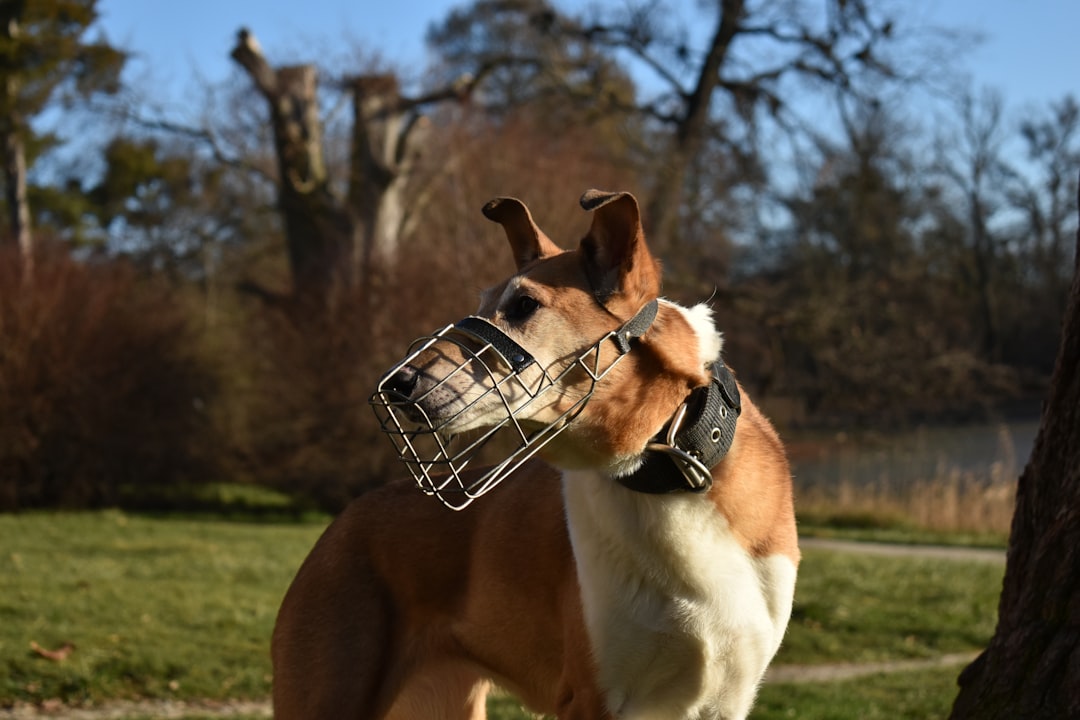
The Birdwell is one of my favorite solutions for a longer-snouted dog who eats poop because it can be used with a shield at the front. That shield is the important bit: it physically prevents the dog from pushing soft material through the basket openings.
However, I would not call Birdwell the best option for most dogs. Its shape is much better suited to longer snoots, and fit always comes before a product recommendation.
I have not yet found an equivalent front-shield option for larger breeds that I am happy universally recommending, so I would rather be honest about that than pretend one muzzle works for every dog.
Best Broadly Applicable Option For Poop Eaters: JAFCO
A JAFCO vinyl muzzle can work well for many dogs because its more enclosed construction makes it much harder to push scavenged material through the front.
The compromise is ventilation. I am cautious about airflow in JAFCO muzzles and would use them for shorter periods, particularly in warm or humid environments. The feature that makes an enclosed muzzle useful for scavenging is also the reason you need to be more thoughtful about heat.
Fit, weather, activity level and the individual dog all matter.
Another Option: Narrow-Spaced Biothane Muzzles
A Biothane muzzle can also work for scavenging if the spacing between the straps in front of the mouth is narrow enough to prevent the dog pulling things through.
When I say a “tight” Biothane muzzle, I do not mean fitting the muzzle tightly against the dog’s face or removing pant room. I mean the gaps between the Biothane straps at the front are narrow.
Your dog still needs an appropriately fitted basket with sufficient room to pant and move their mouth.
For Ordinary Scavenging, Keep It Simple
If your dog is eating general stuff rather than poop, you usually do not need a specialized poop-eating design. A normal basket muzzle can be absolutely fine.
The big issue is fit.
Do not buy a muzzle because someone online said a particular size fits a Labrador, German Shepherd or spaniel. Dogs within the same breed can have very different head and muzzle dimensions.
There are excellent specialist muzzle-fitting communities online, particularly on Facebook, and similar communities exist elsewhere. Use them. Contact the manufacturer if necessary. Email measurements and photos. Getting the fit right is far more valuable than trying to guess.
You can also use my best dog muzzles I’ve tried and tested as a starting point for comparing designs.
A Scavenging Muzzle Can Be A Long-Term Solution
I do not think we need to treat a muzzle as something owners have somehow failed if they continue using.
Training scavenging is hard.
If a properly fitted muzzle allows your dog to have enjoyable walks while reliably preventing dangerous ingestion, I am perfectly happy for that to be part of their long-term management. Management that works is not a lesser version of training.

You can train alongside it if that is useful. But I do not want owners feeling that every walk needs to become an endless test of whether their dog can resist something delicious, disgusting or dangerous on the ground.
Why Scavenging Matters: It Isn’t Just About Eating Something Dangerous
Ingestion is the obvious risk. Dogs can swallow toxic substances or objects that cause choking, injury or obstruction.
But there is another problem I take seriously: resource guarding.
If your dog finds something valuable and you repeatedly rush in to grab it from their mouth, you can create conflict around found objects. For most dogs, I do not recommend routinely physically taking scavenged items from them.
About 99% of the time, I would rather trade.
If it is a genuine emergency and the item presents an immediate serious danger, that changes the calculation. But forcibly removing things should not become your everyday scavenging strategy.
Why I Think “Leave It” Is Overhyped For Scavengers
Leave it is overhyped generally, but I particularly dislike relying on it as the primary safety strategy for a committed scavenger.
It puts pressure back onto the dog. We are asking them to repeatedly override something they are extremely motivated to do, in an uncontrolled real-world environment.
Eventually, they are going to fail.
A muzzle changes the environment so your dog’s safety is not dependent on perfect responses from either of you. You do not have to spot every chicken bone, pile of poop or mystery object before your dog does.
What About Dogs Who Eat Grass, Sticks Or Stones?
Not everything a dog puts in their mouth needs the same response.
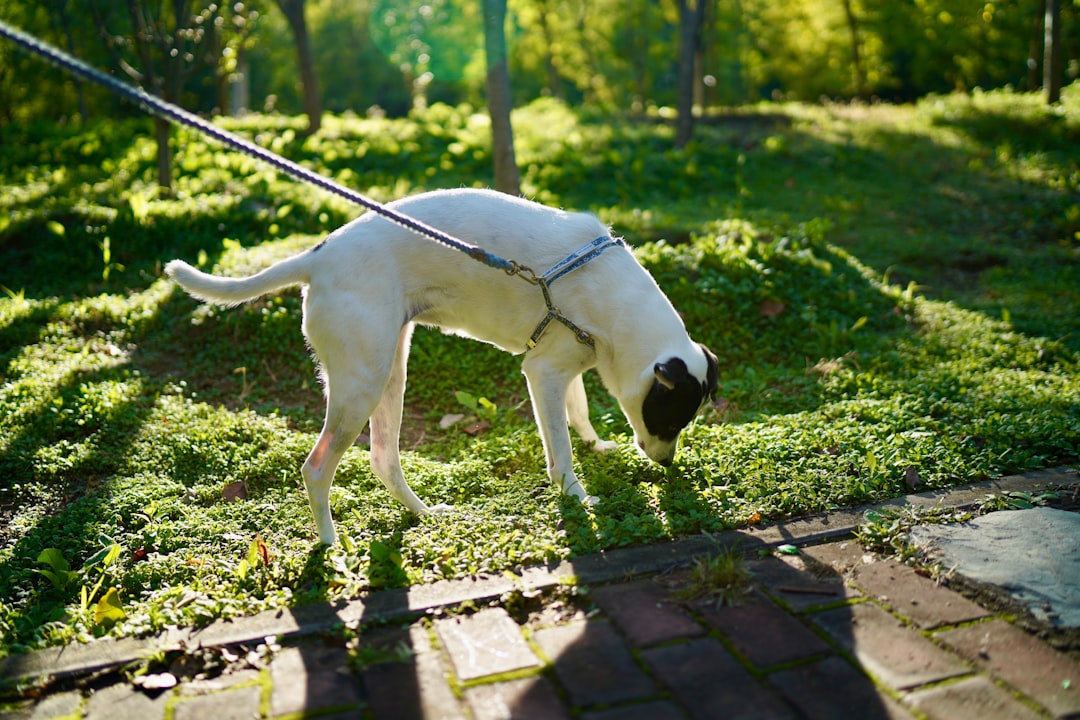
Grass? In most cases, I ignore it.
Sticks? Again, in most cases I am not particularly worried by normal interaction with sticks.
Stones? Different story. Stones can become a serious problem.
I see stone obsession particularly in retrievers and other gundog breeds. Before simply suppressing that behavior, I would look at whether there is an unmet biological need behind the dog’s desire to pick up and carry things. Try giving them an appropriate alternative such as a ball or a purpose-made retrieving toy such as Ruffwear’s skipping-stone style toys.
If the dog is still trying to ingest stones, then yes: I would use a muzzle to prevent that risk.
When Compulsive Eating Needs More Than A Muzzle
There is a difference between an opportunistic dog who grabs discarded food on a walk and behavior that starts to look compulsive.
Pica is difficult to diagnose and, in my experience, is also very often misdiagnosed. I would not diagnose a scavenging dog with pica from an internet checklist.
If the behavior appears compulsive or unusually persistent, I would strongly advise involving a veterinary behaviorist, rather than relying only on a general veterinary appointment or assuming the problem is purely training-related.
For more background on the different reasons dogs may consume things they shouldn’t, see why does my dog eat everything?
Muzzles I Wouldn’t Use For Scavenging Walks
Occlusion muzzles are emergency tools. They are not appropriate for ordinary walks or extended scavenging prevention.
I am not a fan of soft muzzles for this job either.
A walking muzzle needs to be selected and fitted for safe movement, breathing and temperature regulation. Do not compromise those things simply to close the dog’s mouth.
Fit Matters More Than The Brand Name
The best scavenging muzzle is ultimately one that does the job you need and fits your individual dog correctly.
For ordinary scavengers, that may be a straightforward basket muzzle. For poop eaters, look for front coverage: a Birdwell-style stool guard where the fit works, a JAFCO where the conditions and duration make sense, or a properly designed Biothane muzzle with narrow front spacing.
And if you are unsure about sizing, ask. Use specialist fitting groups. Contact the manufacturer. Send measurements. A few extra messages before buying are far preferable to trying to make the wrong muzzle work.
Once you’ve chosen the right one, do not simply strap it on and head outside. Use my positive step-by-step muzzle training guide to teach your dog that wearing their muzzle is comfortable and predictable.

0 Comments