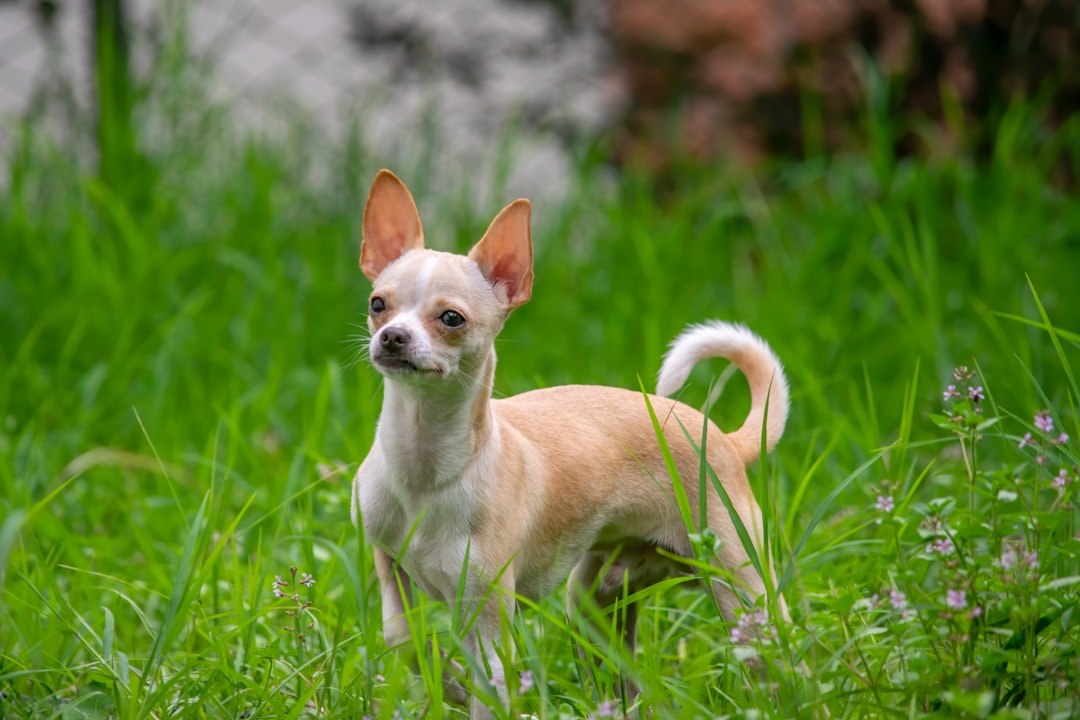
“But my dog is tiny. Do they really need a muzzle?”
If your dog needs a muzzle, their size does not make that need disappear.
A small dog may be physically capable of doing less damage than a much larger dog, but that is not really the point. A bite is still a bite. It can still have consequences for you and your dog, and — just as importantly — biting tells us that the dog is struggling with something.
Small dogs deserve to be safe. The people around them deserve to be safe. And small dogs deserve the same thoughtful training we would give a larger dog.
A Small Bite Still Matters
One of the problems small dogs face is that behaviour we would take very seriously in a large dog is often laughed off or dismissed when the dog weighs ten pounds.
If a large dog is repeatedly snapping at hands, people tend to pay attention. If a tiny dog does it, suddenly it is “sassy.”
That does the dog no favours.
Whatever the legal consequences in your jurisdiction, you should not rely on your dog’s size to protect them from the fallout of a bite. Bite incidents can be reported, records can accumulate, and the fact that your dog is small does not magically make the incident irrelevant.
More importantly, the dog is telling you something.
Fear, pain, handling sensitivity, resource guarding, frustration or another problem may be sitting underneath the bite. A smaller mouth does not make that emotional experience less real.
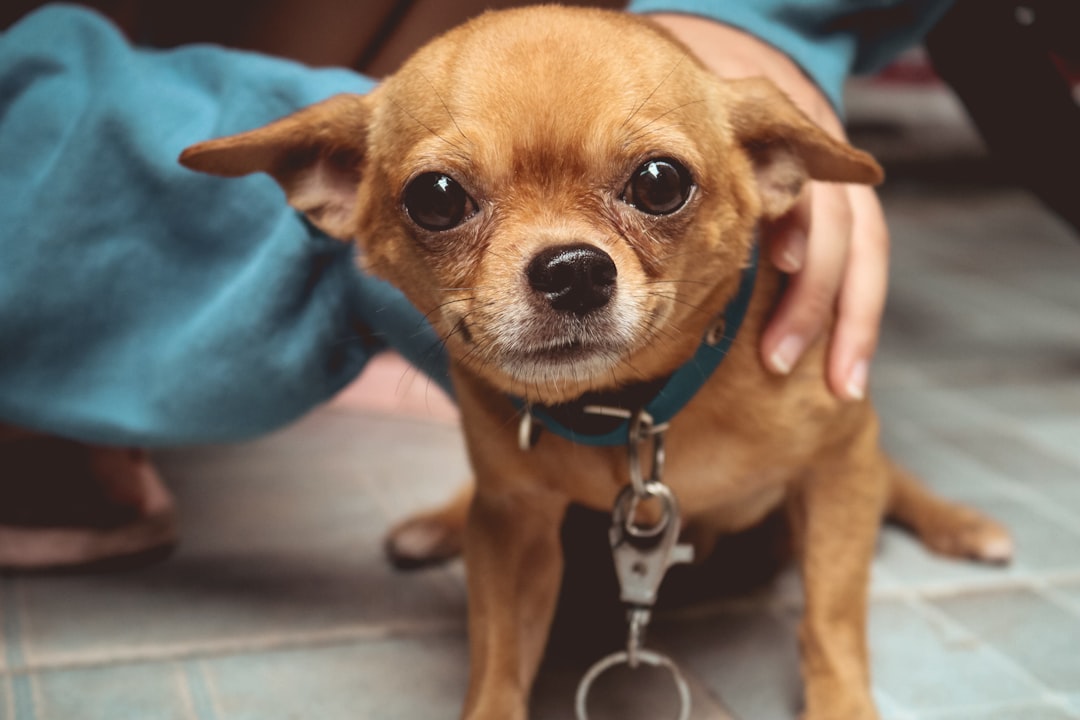
Your Small Dog Still Deserves Training
This is the part I care about most.
If your little dog is biting because they are frightened of being handled, the answer should not be, “Well, they can’t do much damage.”
The dog is still frightened.
If they are biting because people repeatedly ignore their boundaries, those boundaries still matter.
If they are reacting because something hurts, they still deserve to have that pain investigated.
And if they genuinely present a bite risk, they deserve a training and management plan that helps keep them out of situations where another bite can happen.
The goal is not simply preventing teeth from reaching skin. The goal is understanding why the teeth were being used in the first place.
Why Finding Good Muzzles For Small Dogs Has Been Difficult
Historically, the muzzle market has not been particularly kind to very small dogs.
Because small dogs are perceived as less capable of causing serious injury, there simply have not been the same range of thoughtful options available to them.
Too often, the choices at the tiny end of the size chart have been cheap plastic, low-quality designs, restrictive products or muzzles that seem to have been made by shrinking a larger design without thinking properly about the proportions of a small dog’s face.
Thankfully, that is improving.
There are more manufacturers paying attention to fit, comfort and usable sizing for small dogs now, which means owners can afford to be more selective.
What Should A Small-Dog Muzzle Allow?
The basic requirements do not change because the dog is small.
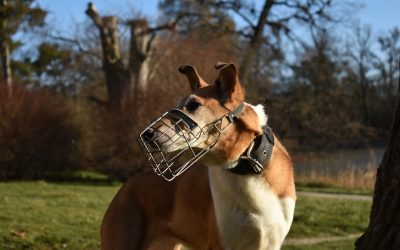
A properly fitted everyday basket muzzle should allow your dog to:
- Pant fully.
- Drink.
- Take treats where the design allows.
- Open their mouth sufficiently to vomit safely.
If the muzzle holds the mouth shut or gives the dog only a tiny amount of opening room, that is not appropriate for normal extended wear.
You can use my muzzle fitting guide to work through the measurements and fit in more detail.
The “Ball In The Mouth” Pant-Room Test — For Tiny Dogs
You will sometimes hear muzzle fit described as leaving enough room for the dog to hold a ball in their mouth.
That is a useful visual, but please apply some common sense to the size of the dog.
I do not mean your Chihuahua needs enough muzzle depth to hold a full-size tennis ball.
Imagine an appropriately small ball for that dog’s mouth. What we are trying to visualise is enough depth for the jaw to open into a genuine pant, rather than a token little gap between the teeth.
The principle is the same whether the dog weighs five pounds or fifty: the basket needs to accommodate the dog’s open mouth, not merely fit neatly around the closed one.
Don’t Choose A Muzzle Because It Looks Neat
This is especially relevant for little dogs because a generously sized basket can look surprisingly large on a small face.
That does not automatically mean it is too big.
Owners understandably want a muzzle that looks tidy and unobtrusive. Unfortunately, a muzzle fitted beautifully around a closed mouth can become completely inadequate once the dog needs to pant.
Function comes before aesthetics.
Check the muzzle from the front and side. Look at where it sits around the eyes. Check that it is not rubbing the nose. Then look at the vertical depth available when the dog opens their mouth.
A tiny muzzle should still be a functional muzzle.
Basket Muzzles Are Usually The Starting Point
For normal walks, training, veterinary preparation and most everyday muzzle use, I generally want a properly fitted basket muzzle.
The exact material and strength depend on why your dog is wearing it.
If the muzzle is primarily a visual deterrent or an additional precaution on a dog with very low bite risk, you may be able to prioritise a lighter design.
If your small dog is a genuine, determined bite risk, choose a more robust basket appropriate to that risk.
My guide to dog muzzle types explains the differences between the main constructions, and my bite-risk muzzle guide goes into the additional considerations for dogs who genuinely intend to bite.
A Muzzle Still Needs Training
Do not buy the smallest basket you can find, strap it onto your dog and head out.
Small dogs need muzzle conditioning just as much as large dogs do.
Introduce it gradually. Let your dog voluntarily put their nose into it. Reinforce that behaviour. Build duration slowly and add the straps only when the dog is comfortable with the earlier stages.
The aim is for the muzzle to become boring.
My positive muzzle-training guide takes you through that process step by step.
Don’t Use The Muzzle To Ignore The Problem
A muzzle is safety equipment.
It can give you a little more room for human error and reaction time, but it does not solve the reason your dog wants to bite.
If your small dog bites during handling, work on handling.
If they are frightened of strangers, work on that fear at a level they can cope with.
If they suddenly become defensive about being touched, investigate pain first.
If their warnings are routinely being ignored, change the human behaviour too.
Correcting the owner’s handling and understanding is often far more important than simply putting equipment on the dog.
What About Very Small Or Unusual Face Shapes?
Size is only one part of muzzle fit. Face shape matters enormously.
A tiny dog with a proportionally normal muzzle may have very different options from a very flat-faced small dog.
If you have a French Bulldog, Pug or another brachycephalic dog, standard baskets can be difficult because there may simply not be enough nose for the muzzle to sit on correctly. I cover those dogs separately in my guide to muzzles for flat-faced dogs.
How To Choose The Best Muzzle For Your Small Dog
Before buying, ask:
- Why does my dog need the muzzle? A genuine bite risk requires different strength from a visual deterrent.
- Can my dog fully pant in it? Check depth with the mouth open, not just the fit around a closed mouth.
- Can my dog drink and vomit safely?
- Does it stay clear of the eyes and avoid rubbing the nose?
- Is the construction strong enough for my dog’s actual risk?
- Have I trained my dog to wear it comfortably?
You can compare more options in my tried-and-tested guide to the best dog muzzles.
The Bottom Line
Small dogs do not need tiny standards.
A bite still matters. Your safety still matters. Other people’s safety still matters. And the dog’s experience matters.
Choose a muzzle that allows a real pant, drinking and safe mouth movement. Train it properly. Then work on whatever caused the need for the muzzle in the first place.
Your dog being small is not a reason to take the problem less seriously. It is a reason to demand better equipment for them.


0 Comments