

If you need to transport a puppy in a car, the goal is not to find one universally “best” setup. It is to give your puppy a secure place to travel, enough comfort to settle, and as much safe freedom of movement as the vehicle allows. That matters whether this is your puppy’s first ride home, a trip to the vet, a rental car, or a longer journey.
For most puppies, your practical choices are a properly secured travel carrier or crate, or a crash-tested vehicle harness used exactly as its manufacturer intends. Which one makes most sense depends on the puppy, their size, the car, and how well they cope with travel.
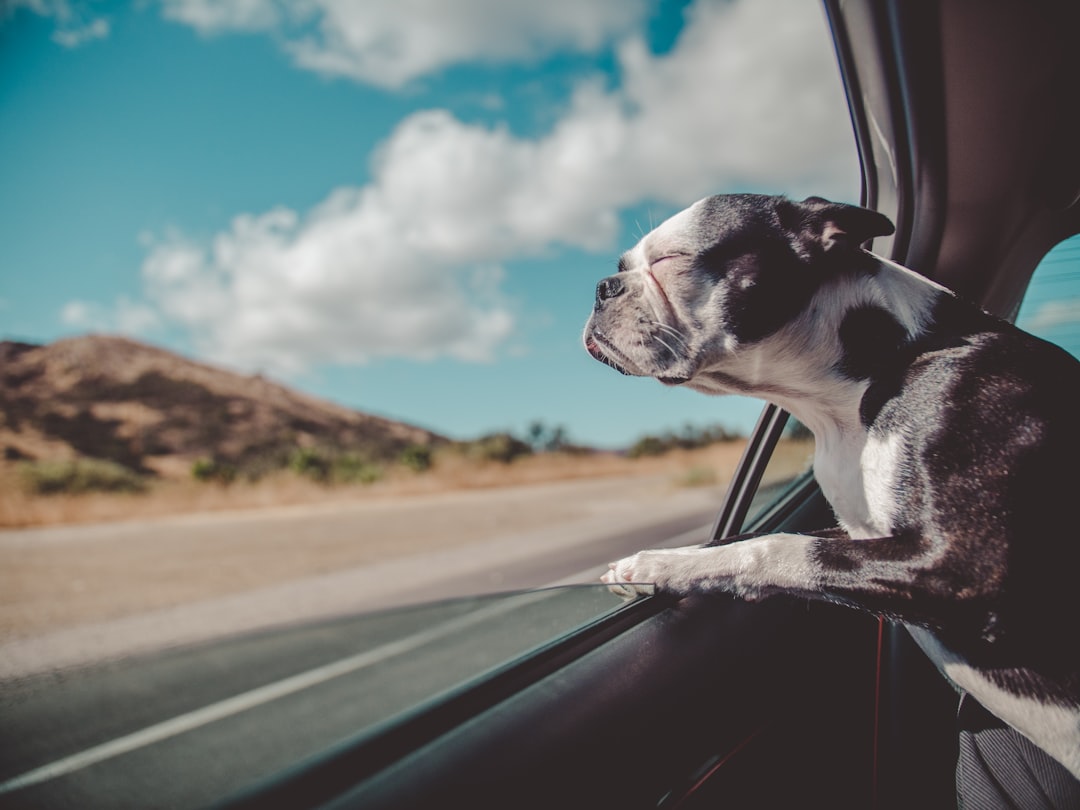
If your puppy drools heavily, vomits, becomes lethargic or seems increasingly miserable once the car moves, treat that as a separate problem rather than simply tightening the restraint. See Dog Car Sickness: Quick Fixes and a Gradual Puppy Training Plan for the step-by-step approach I use.
What is the safest way to transport a puppy in a car?
Your puppy should not travel loose in the vehicle, on the driver’s lap, or attached to the car by their collar. In a sudden stop, an unrestrained puppy can be injured and can also become a projectile inside the vehicle. The Merck Veterinary Manual’s car-travel guidance also recommends restraint to reduce driver distraction and injury risk.
Broadly, I would choose between:
- A travel carrier or crate designed for vehicle use, secured according to the manufacturer’s instructions.
- A crash-tested vehicle harness, fitted correctly and attached only in the way the manufacturer specifies.
“Crash-tested” is worth taking seriously rather than treating as a marketing phrase. The Center for Pet Safety maintains a list of independently certified harnesses, carriers and travel crates, and its testing has repeatedly shown that not every product marketed for car travel performs well in a collision.
That does not mean every puppy needs the most enormous, permanent crate you can fit in a vehicle. For a small puppy, a properly designed carrier may be much more realistic. For a puppy who travels better with a little more freedom to change position, an appropriate vehicle harness may suit better. Safety comes first, but within the safe options available I do like puppies to have enough room to find a comfortable position.
How do you transport a puppy in a car without a crate?
If a crate is not practical, use a properly fitted crash-tested car harness designed specifically for vehicle restraint. A normal walking harness plus a random seat-belt tether is not automatically a crash-safe setup.
This distinction matters. A car restraint needs to control how far the dog can move in a sudden stop without creating dangerous loading through the neck or allowing the dog to launch around the cabin. Long extension tethers and zip-line style systems may create much more movement than you want in a collision.
For puppy-sized harness options and fit considerations, see Rebarkable Recommends: Puppy Harnesses. Always check that the particular size you are buying is intended and tested for vehicle use; do not assume every harness made by a brand has the same certification.
What if you do not own the car?
This is where the advice needs to become practical. If you are using a rental car, borrowing a vehicle, or travelling in somebody else’s car, you probably do not want to install a huge permanent setup for one journey.
I would prioritise something portable that you already know how to fit: a suitable travel carrier for a small puppy, or a properly fitted vehicle restraint harness if the car has the required anchoring arrangement. Bring a washable blanket or waterproof seat protector as well. Puppies are puppies; muddy paws, accidents and car sickness are all easier to deal with when you have planned for them.
Do not wait until the morning of the journey to discover how the restraint attaches. If possible, practise fitting it beforehand. Rental and borrowed cars vary, and a product that works beautifully in one vehicle can be awkward in another.
A simple rental-car puppy kit
- Your chosen carrier, crate or vehicle harness
- Lead and regular walking harness for getting in and out safely
- Washable blanket or seat protector
- Towels and paper towels
- Waste bags and a sealable bag for dirty bedding
- Water and a bowl
- A familiar blanket or other safe comfort item
Carrier, crate or harness: which is better for a puppy?
I would not choose by a blanket rule. I would choose the safest suitable options for that vehicle, then look at how the puppy actually travels.
| Setup | Useful when | Watch for |
|---|---|---|
| Travel carrier | Small puppies, temporary/rental-car travel, puppies already comfortable in a carrier | Correct securing method, ventilation, enough room to lie comfortably |
| Travel crate | Vehicles with enough space for a properly secured crate; puppies who genuinely relax in one | Do not assume any household crate is crash-safe; secure it as directed |
| Vehicle harness | Puppies who benefit from changing body position and are large enough for an appropriate tested harness | Correct fit and attachment; avoid long tethers and collar attachment |
If you are shopping for a crate, Rebarkable Recommends: Puppy Crates is a useful starting point, but remember that home crate suitability and vehicle crash safety are not automatically the same thing.
Where should a puppy sit in the car?
The safest practical location depends on the restraint system and the vehicle. Follow the product manufacturer’s installation instructions rather than improvising a location because it feels convenient.
I would avoid putting a puppy in a front passenger seat where an airbag could become an additional hazard. Do not hold the puppy on your lap, even if somebody else is driving. It feels reassuring until something goes wrong, and then neither your arms nor a normal walking lead are meaningful crash protection.
For small carriers, pay close attention to the manufacturer’s instructions. The Center for Pet Safety specifically warns that simply looping a seat belt around a carrier is not always safer; some carriers can be crushed by the belt in a collision. Use the installation method the carrier was designed and tested with.
How much freedom should a puppy have in the car?
Enough to be comfortable, not enough to roam around the vehicle.
With dogs who struggle with car sickness, I often find that a little freedom to shift position can help. Some want to lie down. Others sit or stand for part of the journey. The vehicle and the restraint system usually decide how much movement can safely be allowed, so I would never create extra freedom by adding a long tether or compromising crash protection.
The useful question is not “Can my puppy move?” but “Can my puppy find a comfortable position while still being properly restrained?”
How do you make a puppy’s first car journey easier?
Keep the first journey as boringly manageable as possible. You do not need to turn it into a grand socialisation experience.
Get the car comfortably cool before loading the puppy. Set up the restraint first, so the puppy is not sitting around while humans argue with straps. Drive smoothly. Avoid sharp acceleration and braking where you reasonably can. If the journey is optional, keep it short enough that the puppy finishes before they are overwhelmed or nauseous.
If this is the journey home from the breeder or rescue, remember that the puppy is already dealing with a huge change. They do not need six extra stops to “socialise” them on the way. Get them home safely and gently.
What if the puppy cries in the car?
Crying is information, not a diagnosis. A puppy might be worried, frustrated, separated from a person, physically uncomfortable or beginning to feel nauseous. Why Does My Puppy Cry in the Car? goes deeper into how to tell those causes apart.
Look at the whole dog. Heavy drooling, repeated lip licking, yawning, swallowing, sudden lethargy or vomiting point me much more strongly toward motion sickness. If the puppy is distressed before the car even moves, learned worry or unfamiliarity may be a bigger part of it.
You do not need to ignore or emotionally abandon a crying puppy to avoid “reinforcing” fear. Keep your response calm, make the journey easier where possible, and work out what is actually driving the behaviour.
What if the puppy gets car sick?
Heavy drooling is the practical stop signal I pay closest attention to. I would rather stop before the puppy gets as far as vomiting.
If it is safe and practical, pull over and give the puppy some time outside the moving vehicle to recover. If this is a training journey rather than essential travel, I would prefer to head home gently after that rather than waiting for the puppy to recover and then immediately asking for another difficult repetition.
For future training, treat distance, time and speed as separate variables. You can repeat exactly the same easy journey several times. You do not have to make every session longer. Increase only one variable at a time while the puppy is coping comfortably.
Some dogs also seem to travel better in electric vehicles. There is limited preliminary evidence pointing in that direction, although we do not know why. My suspicion is that lower engine noise and vibration may contribute, but that part is speculation. If you happen to have access to an EV, it can be a useful variable to try; it is not a treatment in itself.
Should you feed a puppy before travelling?
A very full stomach can make nausea harder for some dogs, but I would not give blanket advice to fast a young puppy for long periods. Puppies have different feeding needs, and very young or tiny puppies can be less tolerant of missed meals.
If your puppy regularly gets motion sick, speak to your vet about sensible meal timing for that individual puppy. Water should remain available appropriately, and medication or supplements should not be improvised without veterinary guidance.
How often should you stop on a long journey with a puppy?
There is no single toilet-break timetable that fits every puppy. Age, bladder capacity, journey length, stress and whether the puppy is asleep all matter.
Plan more generously than you would for an adult dog, but do not repeatedly wake a settled puppy just because an arbitrary timer has gone off. When you do stop, keep the puppy securely on lead before opening vehicle doors.
For incompletely vaccinated puppies, be thoughtful about where you put them down. Busy service-station dog areas can have very high dog traffic. Your own vet is the right person to advise you about local infectious-disease risk and your puppy’s vaccination status.
Can a puppy travel with you in a taxi or rideshare?
Policies vary by company, driver and location, so check before you book. From the puppy’s point of view, the same safety principles apply: bring a portable restraint option you know how to use, protect the vehicle, secure the puppy before the car moves, and keep loading and unloading controlled.
A small travel carrier is often the most practical option when you have no control over which vehicle turns up. If you rely on a harness system, make sure it does not require a vehicle-specific installation that may not be available.
What I would do for a 10-pound, 14-week-old puppy in a rental car
This is a very common real-world version of the question: young puppy, small body, unfamiliar vehicle, and no desire to buy a permanent car setup. If this is the collection journey, pair this with Bringing a Puppy Home in the Car: Your First Journey Together.
I would look first at a good-quality portable travel carrier that is genuinely suitable for vehicle use and for the puppy’s current size. It is easy to bring to the rental car, contains puppy mess, and avoids depending on an unfamiliar vehicle’s layout. If the puppy strongly dislikes confinement or travels materially better with more freedom, I would look at an appropriately sized crash-tested vehicle harness instead, provided the puppy meets the product’s size requirements and the rental car supports the required installation.
I would bring towels, water, a lead, spare bedding and something to protect the rental upholstery. I would also build in enough time that I could stop if heavy drooling started rather than being forced to push through until the puppy vomited.
Quick puppy car safety checklist
- Restrain the puppy before the vehicle moves.
- Never attach a car restraint to the puppy’s collar.
- Use a carrier, crate or harness designed for vehicle travel rather than assuming any pet product is crash-safe.
- Install the product exactly as its manufacturer specifies.
- Give the puppy enough safe room to find a comfortable body position.
- Keep the vehicle cool and drive smoothly.
- Watch for heavy drooling and other early nausea signs.
- On training trips, stop before the puppy becomes fully carsick.
- Keep the puppy secured on lead before opening the car door at stops.
- For repeated car sickness, work on gradual exposure rather than simply putting the puppy through longer journeys.
The bigger goal: a puppy who can travel comfortably
Car safety and car comfort are related, but they are not the same problem. The restraint protects the puppy if something goes wrong. Training helps the puppy learn that movement itself is manageable.
So choose the safest practical setup for the car you actually have, then pay attention to the dog in front of you. If they are comfortable, great. If they are drooling, freezing, vomiting or becoming increasingly worried, do not assume they simply need to “get used to it.” Make the next exposure easier and work upwards gradually.
And if car sickness is already part of the picture, start with Dog Car Sickness: Quick Fixes and a Gradual Puppy Training Plan. That is the piece I would use alongside this one.




0 Comments