Muzzle training is something I think every dog should be comfortable with. A muzzle can be useful for a dog who bites, scavenges, needs extra safety for handling or veterinary care, or simply benefits from an additional layer of protection in case something goes wrong. Using one responsibly is good management, not a failure.
But the goal is not to force your dog to tolerate something strapped to their face. Good muzzle training builds genuine comfort with the muzzle, and ideally gets your dog to the point where seeing it predicts good things.
For most dogs, this is very achievable. Some dogs will make good progress in a week, many will take closer to a month, and very sensitive dogs can take several months. Those are only ballpark figures. The dog sets the pace.

Step 1: Know Why Your Dog Needs A Muzzle
Before you start putting a muzzle anywhere near your dog’s face, understand why you’re using it. If biting is the reason, that means understanding why your dog bites.
If your dog bites because they’re sensitive to handling, worried by people approaching, uncomfortable with proximity, or fearful of touch around their face, you may need to work on those underlying sensitivities before you can make meaningful progress with muzzle training.
Most dogs can begin with some gentle exposure to the muzzle itself, but if the thing your dog is actually worried about is a person getting close enough to handle their face, then that matters. Muzzle training does not exist in isolation.
The goal is not simply to get the muzzle on. The goal is to have a dog who is genuinely comfortable wearing it. If you’re still deciding what type of muzzle your dog actually needs, my guide to the different types of dog muzzles will help you narrow that down before you train with the wrong one.
Step 2: Show The Muzzle, Reward, Then Put It Away
Start simple.
Show your dog the muzzle, reward them for seeing it, then hide the muzzle again.
That exposure does not need to be long. In fact, short is often better. The point is to create a very simple association: muzzle appears, good things happen.
You can be quite close to your dog as long as your dog is genuinely comfortable with that proximity. There is no value in pushing closer just because you think you should.
Your criterion for moving on is not time. It is your dog’s body language.
I want to see comfort, relaxation and, ideally, curiosity. Curiosity is probably the best sign you can get at this stage.
Step 3: Let Your Dog Explore The Muzzle
Once your dog is happy seeing the muzzle, I like to put treats inside it and simply let the dog investigate. Small, high-value pieces work best here; Vital Essentials freeze-dried treats are a convenient option because they’re easy to break up and feed through a basket muzzle. This is an affiliate link, so I may earn a commission if you buy through it, at no extra cost to you.
At this point I may not even hold the muzzle. I will often leave it on the floor and allow the dog to explore it completely on their own terms.
This removes pressure from the interaction. Your dog gets to decide whether they approach it, sniff it and investigate it.
Again, the thing I’m looking for is comfort. I do not want a dog retreating from the muzzle, trying to avoid it, or showing clear signs that they would rather not engage.
If your dog is happily investigating it, that is a good indication that you can begin asking for a little more.
Step 4: Let Your Dog Put Their Nose In
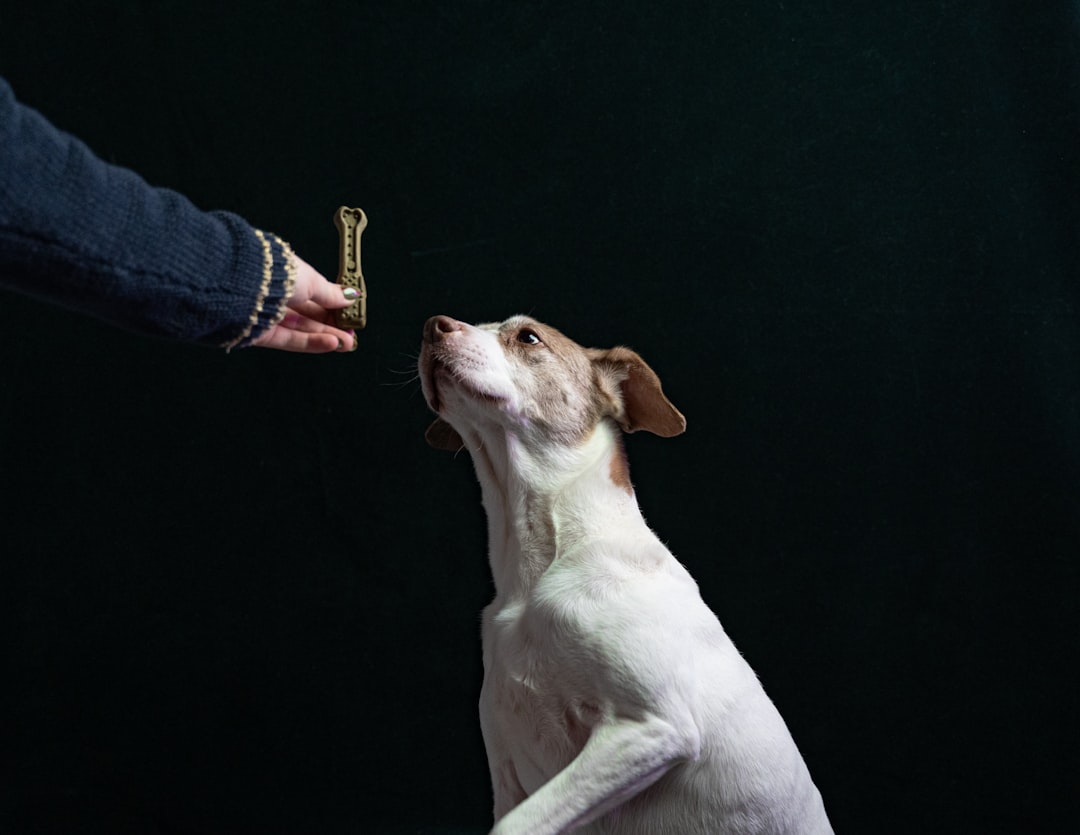
Pick the muzzle up and hold it steady.
Do not push the muzzle onto your dog’s face. Let your dog make the movement.
If they voluntarily put their nose into the muzzle, mark that behaviour and, importantly, reward them through the muzzle.
This is one of the most important principles in the whole process: the good stuff happens while the muzzle is on.
I do not want the dog learning that pulling their head out of the muzzle is what makes the reward appear.
Step 5: Build Duration
Once your dog is volunteering their nose into the muzzle comfortably, begin adding tiny amounts of duration.
Instead of immediately marking the moment their nose goes in, wait a second, then mark and reward. Gradually extend that time as your dog’s confidence grows.
This is not about seeing how long your dog will tolerate it. It is about allowing confidence to develop before increasing the difficulty.
When your dog is relaxed with duration, you can start increasing the ask in other ways.
Step 6: Pretend To Fasten The Muzzle
The next step is introducing the sensation of the muzzle being secured around the head.
At first, you do not even need to clip it.
Hold the straps as though the muzzle were fastened for a couple of seconds, then mark and reward while the muzzle is still in place. After that, remove it.
Again, the reward belongs to the muzzle being on, not to the moment it comes off.
Step 7: Introduce The Clip
If your dog is comfortable with the fastening noise, clip the muzzle properly, build a little duration, mark and reward while it is still on, then remove it.
If your dog is sensitive to the sound of the clip, that sound may need its own small desensitisation process.
Once your dog is relaxed with the muzzle fastened, begin building duration again.
Step 8: Add Movement
Once your dog can comfortably wear the muzzle for a short period, start moving around.
For dogs who are not being muzzled to prevent scavenging, search-and-find games with treats around the house can be a great way to build positive movement in the muzzle, provided your dog can easily pick up those treats through it.
If your goal is to prevent scavenging, do not rehearse scavenging as part of muzzle training. Instead, walk with your dog and reward directly from your hand.
Step 9: Take It Into The Real World Slowly
Do not go from your living room to the dog park and hope for the best.
Build the context gradually:
- House
- Garden or yard
- Quiet street
- Park or more realistic environments
The criteria remain the same at every stage: your dog should look relaxed and comfortable.
If you start seeing distress, pawing at the muzzle, rubbing their face on the floor or against you, or repeatedly trying to remove it, your dog is telling you that the process has moved too quickly.
Go back to the previous stage and build up again more slowly.
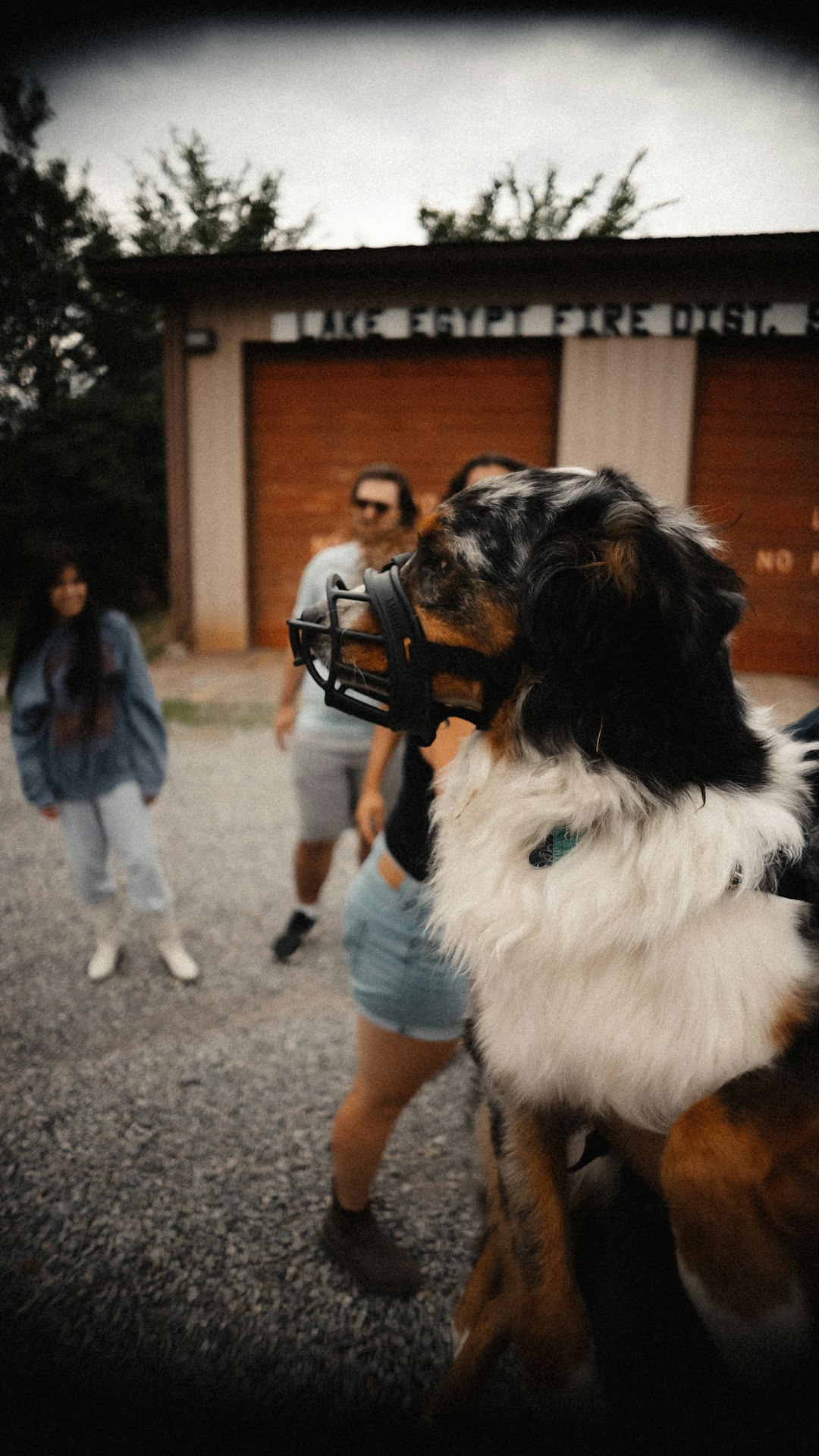
The Two Biggest Muzzle Training Mistakes
1. Choosing The Wrong Muzzle
The biggest mistake I see pet parents make is using the wrong muzzle for the job.
Muzzles are used for lots of different reasons: preventing bites, deterring scavenging, veterinary handling, or simply providing an extra layer of protection in case something goes wrong.
The muzzle has to suit the purpose.
If you are trying to prevent scavenging, an ordinary open basket muzzle may not stop your dog eating things from the ground — particularly if your dog eats poop. I’ve covered the specific designs and front coverage you need in my guide to the best muzzles for dogs who eat everything on walks. If your dog is a serious bite risk, a flexible muzzle such as a Baskerville Ultra may not provide the level of bite protection you need. And if you are trying to solve normal puppy biting, a muzzle is not the appropriate tool at all.
Use the right tool, in the right context, for the right reason.
If you’re still choosing one, see my best dog muzzles I’ve tried and tested to compare options for different dogs and different needs.
2. Going Too Fast
The second biggest mistake is simply rushing the training.
If your dog is not genuinely comfortable in the muzzle, then the muzzle itself becomes another source of stress.
This matters particularly for reactive dogs. If your dog is already struggling with the environment, adding an uncomfortable muzzle on top of that stress can set your training backwards rather than help.
What If My Dog Paws At The Muzzle?
If your dog starts pawing at the muzzle, trying to scrape it off, rubbing their face on the floor or on you, or otherwise showing discomfort, you have probably progressed too quickly at an earlier stage.
There is no complicated fix.
Go back one step, rebuild comfort there, then progress again more gradually.
How Long Does Muzzle Training Take?
How long is a piece of string?
Every dog is different, but as a rough guide:
- A dog who takes to muzzle training very easily may make good progress within a week.
- A more typical dog may take around a month to become genuinely confident.
- A very sensitive dog may need three months or more.
Those are ballpark figures, not deadlines. Your dog’s comfort matters more than the calendar.
How Long Can A Dog Wear A Muzzle?
If a muzzle is properly fitted, gives sufficient pant room and ventilation, and allows your dog to drink, then a few hours at a time can be reasonable.
If your dog regularly needs to wear one for much longer than a couple of hours, I would start asking why. That is less a muzzle question and more a question about the situation we’re putting the dog in.
A hike, for example, may reasonably mean a couple of hours in a muzzle. But routinely keeping a dog muzzled for very long periods can be a sign that the environment or management plan needs changing.
A muzzle should support good management, not allow us to keep exposing a dog to situations they cannot cope with.
Muzzle Safety
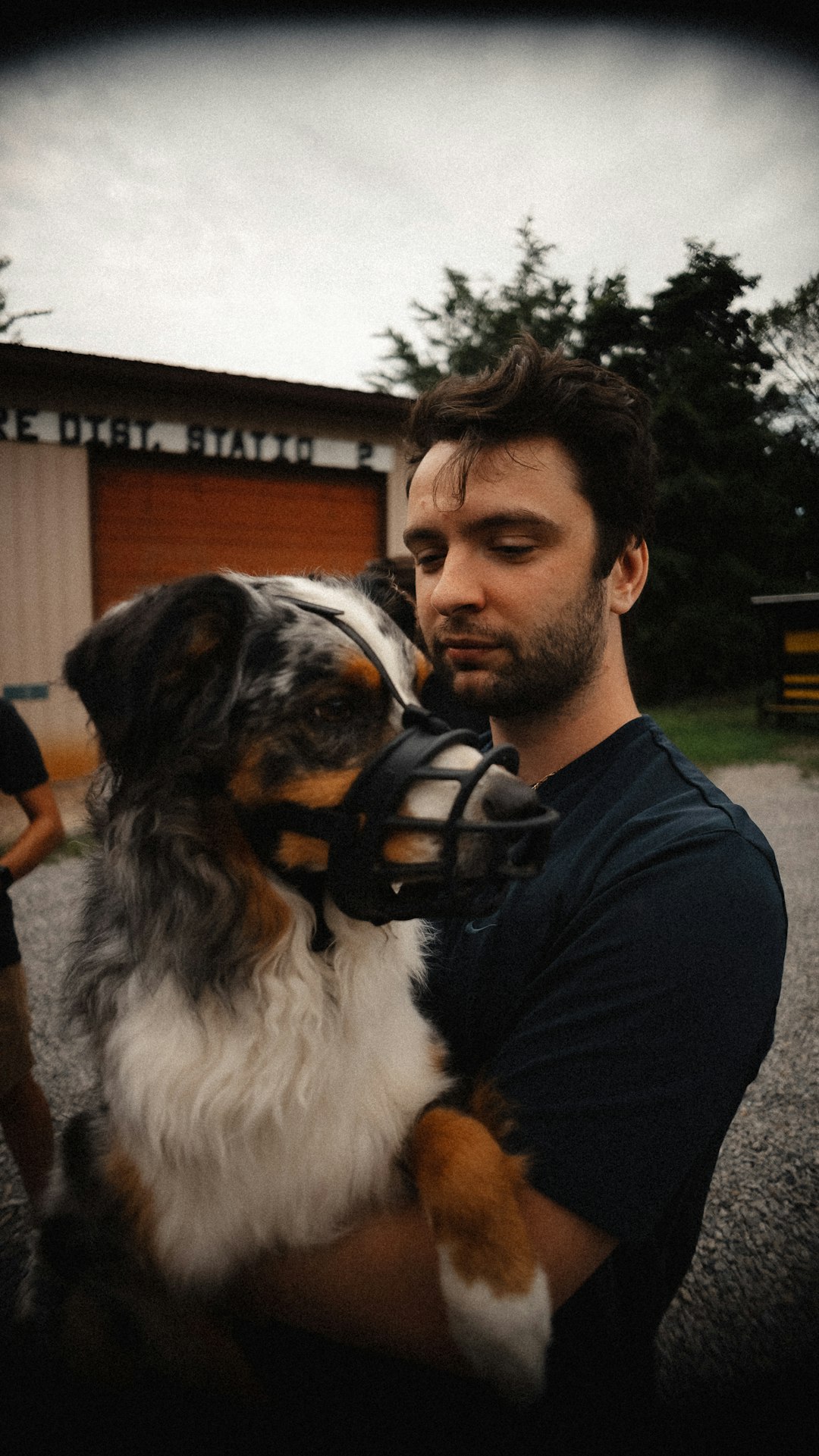
Keep muzzle use practical and sensible.
- Make sure the muzzle is properly fitted and allows adequate panting and airflow. If you’re unsure, use my guide to fitting a muzzle properly.
- Make sure your dog can drink when necessary. Dogs should still be able to drink through an appropriately fitted muzzle.
- Do not leave a muzzled dog unattended.
- Be especially mindful of heat and ventilation.
- For most dogs, there is no reason to put the muzzle on before you reach the location where it is needed.
- If your dog is safe to handle, putting the muzzle on when you arrive is usually sufficient rather than leaving it on unnecessarily during a car journey.
When To Get Professional Help
You will always be doing some of the training yourself, and that is a good thing.
My approach to dog training is that you should understand your own dog and be part of resolving the problem rather than handing the dog over and hoping someone else fixes everything for you.
But that does not mean you have to do it without support.
If you are not confident, if your dog has significant handling sensitivities, or particularly if you are working with a large dog who presents a serious bite risk, I strongly recommend working with a qualified trainer or behaviour professional who can oversee the process.
The Goal Is Comfort, Not Compliance
Muzzle training is really not rocket science.
Show the muzzle. Build curiosity. Let the dog choose to interact with it. Reward through it. Gradually add duration, fastening, movement and real-world environments.
If your dog becomes uncomfortable, go backwards.
The whole process should be built around a dog who feels safe and relaxed wearing the muzzle, because that is what makes the muzzle a useful management tool rather than one more stressful thing strapped to your dog’s face.
If you want to understand muzzle use more broadly — what dogs can do in them, when they’re appropriate and some of the common misconceptions around them — read Dog Muzzles: Everything You Need To Know.


0 Comments