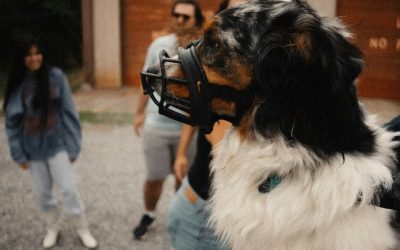
My dogs go to the vet muzzled.
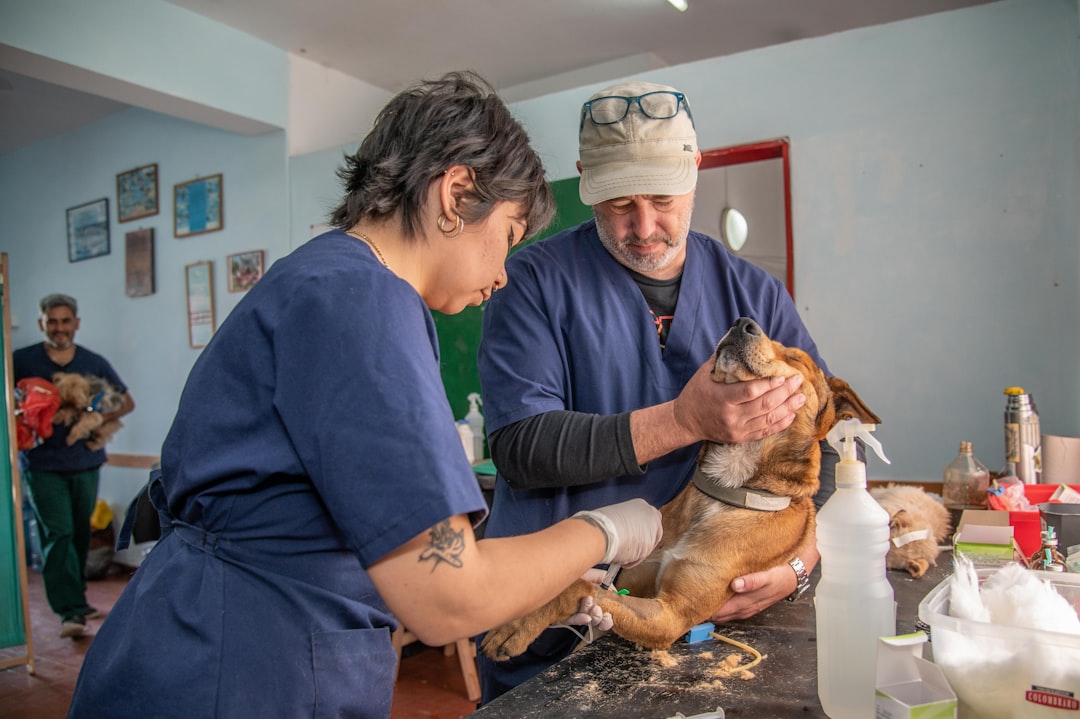
That does not mean I expect them to bite. It means veterinary professionals work with animals who may be frightened, painful, restrained or overwhelmed, and bites are an occupational reality.
A properly trained muzzle is a simple extra layer of safety. But there is an enormous difference between training a dog to be comfortable in a basket muzzle before an appointment and putting an unfamiliar muzzle onto an already terrified dog so that we can force our way through a procedure.
The goal is safety without making the fear worse.
For Planned Vet Visits: Train A Basket Muzzle
If you know your dog has an appointment coming up, my preference is straightforward: use a properly fitted basket muzzle and train the dog to wear it comfortably beforehand.
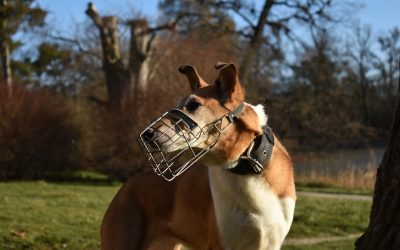
A good basket muzzle allows appropriate pant room and gives us a useful safety margin while still allowing the dog to function normally.
What I do not want is for the first appearance of the muzzle to be in the veterinary waiting room, five minutes before a stranger needs to examine a painful leg.
Muzzle training should happen away from the stressful situation. Build positive associations, increase duration gradually and teach your dog that wearing the muzzle predicts perfectly ordinary, good things.
If you need the process, use my step-by-step guide to positive muzzle training, and make sure the muzzle itself is fitted correctly using my dog muzzle fitting guide.
When Does An Occlusion Muzzle Belong At The Vet?
Occlusion muzzles are not everyday muzzles.
They restrict the dog’s ability to open their mouth, which means they are unsuitable for walks, normal training sessions or prolonged wear.
But veterinary medicine includes emergencies.
If a dog needs urgent treatment, is an immediate bite risk and has not been trained to wear a basket muzzle, there are circumstances where an occlusion muzzle may be necessary for a very short period so essential treatment can happen safely.
That is an emergency tool, not the training plan.
If the visit is predictable and you have time to prepare, I would rather see the dog trained to wear a comfortable basket muzzle.
If Aggression Appears Suddenly, Think Pain First
If your normally tolerant dog suddenly growls, snaps or tries to bite when handled, pain should be one of the first things you investigate.
Do not immediately decide that your dog has developed a behaviour problem.
Dogs cannot tell us, “That hurts when you move my shoulder.” They can move away, freeze, stiffen, growl, snap or bite.
Those responses are information.
This matters particularly at the vet because the dog may already be there precisely because something hurts. If touching one area produces an unexpectedly strong response, tell your vet and take that change seriously.
Why I Don’t Like “Just Hold Them Tighter”
Sometimes getting the procedure completed today is not actually a win.
If the dog is frightened and struggling, simply adding more restraint can escalate the situation. You might technically complete the nail trim, injection or examination, but make the next appointment dramatically harder.
Where the situation allows it, I would rather slow down.
Give the dog breaks. Pay attention to their body language. Adjust the handling. Let them recover instead of repeatedly pushing through escalating discomfort.
A muzzle protects against a bite. It is not permission to ignore everything the dog is telling you.
What If The Dog Needs Treatment Now?
Training is my first choice when we have time.
If a non-urgent procedure can reasonably wait while you prepare the dog, I would rather train first and then return to the vet with a dog who is better equipped to cope.
But sometimes treatment cannot wait.
If the dog urgently needs veterinary care and fear makes safe handling impossible, talk to your veterinarian about appropriate pharmaceutical support or sedation rather than trying to overpower a terrified dog.
That is not a substitute for future training. It is a way of getting necessary medical care into a dog who is not currently able to participate safely.
The Two Handling Skills I’d Prioritise
In an ideal world, I would teach cooperative care for everything: ears, eyes, mouth, paws, body handling, positioning and the kinds of restraint a dog may encounter during routine care.
Realistically, owners have limited time.
If I had to prioritise, I would start here.
1. Being Touched While Wearing The Muzzle
Teach your dog that they can wear their muzzle while you calmly touch and examine different areas of their body.
I also like teaching the dog to look back to their handler when they have a problem. That gives the owner something extremely valuable: communication.
But communication only works if you listen.
You need to learn what your dog’s discomfort signals look like and be willing to advocate for them during the appointment. If your dog is telling you that something is becoming too much, make sure the veterinary team knows.
2. Paw Handling
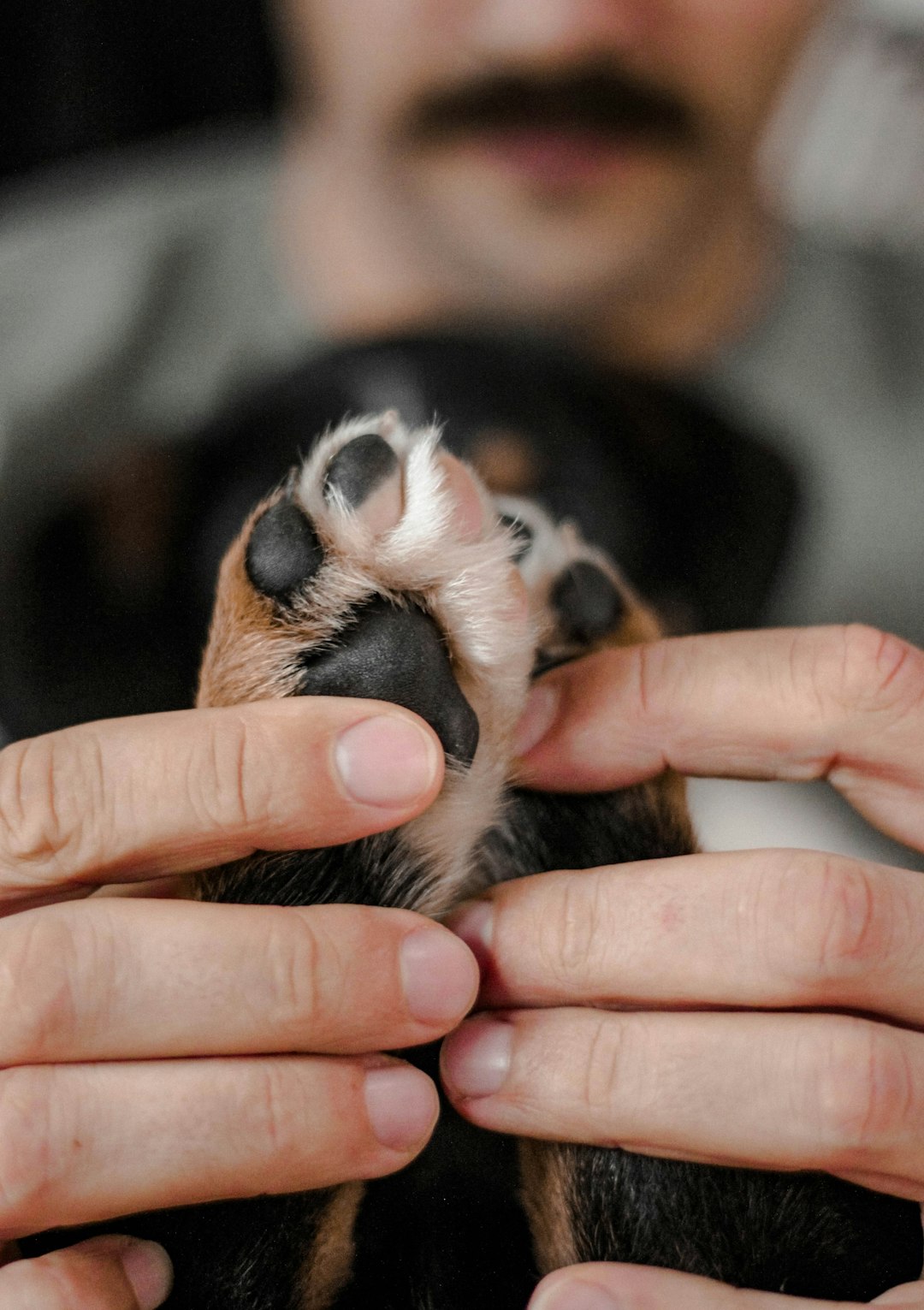
Paw handling is often, frankly, poorly done.
Feet are relevant to veterinary examinations, nail care, injuries and grooming, yet many dogs only experience sustained paw handling when someone suddenly needs to get a job done.
Teach it when nothing needs doing.
Brief touches, lifting a paw, holding it gently, looking between toes and gradually introducing the equipment associated with nail care can make future handling much easier.

What About Groomers?
The same principles apply to grooming.
If your dog is likely to bite during grooming, tell the groomer beforehand. Do not hand over a dog with a known bite risk and hope for the best.
Train the muzzle before the appointment, practise handling at home and make sure the muzzle chosen is appropriate for the dog and the task.
Again, the muzzle should create a safer environment for good handling. It should not be used to make it possible to push a frightened dog through escalating distress.
If grooming has become a major struggle, break the skills down outside the grooming environment and rebuild them gradually.
A Muzzle Does Not Replace Advocacy
This may be the most important part.
Putting a muzzle on your dog does not mean you hand responsibility over at the clinic door.
You know your dog. Watch them. Learn their early signs of discomfort. Tell the veterinary or grooming team what helps them and what makes things worse.
If you see your dog becoming increasingly uncomfortable, say something.
Good professionals need accurate information about the animal they are handling, and your job is to help provide it.
Which Muzzle Should You Choose?
For planned veterinary visits and grooming, I generally want a properly fitted, properly trained basket muzzle.
If the dog presents a genuine bite risk, choose something robust enough for that risk. Remember that no muzzle is truly biteproof; stronger designs provide a greater margin for human reaction and error, not a licence to relax your handling.
If you are dealing with a serious bite history, see my guide to muzzles for bite-risk dogs.
You can also compare constructions in my guide to the different types of dog muzzles and see my tried-and-tested dog muzzle recommendations.
The Bottom Line
For a planned vet or grooming visit, train a basket muzzle before you need it.
If your dog’s tolerance for handling suddenly changes, investigate pain before assuming you have a training problem.
If the procedure is not urgent and your dog cannot cope, I would rather slow down and train than force the issue and make the next appointment worse.
If treatment genuinely cannot wait, veterinary sedation or very short-term emergency restraint may be safer than battling through escalating fear.
And throughout all of it, advocate for your dog.
The muzzle is there to protect everyone while good handling happens. It is not there to make bad handling possible.
0 Comments