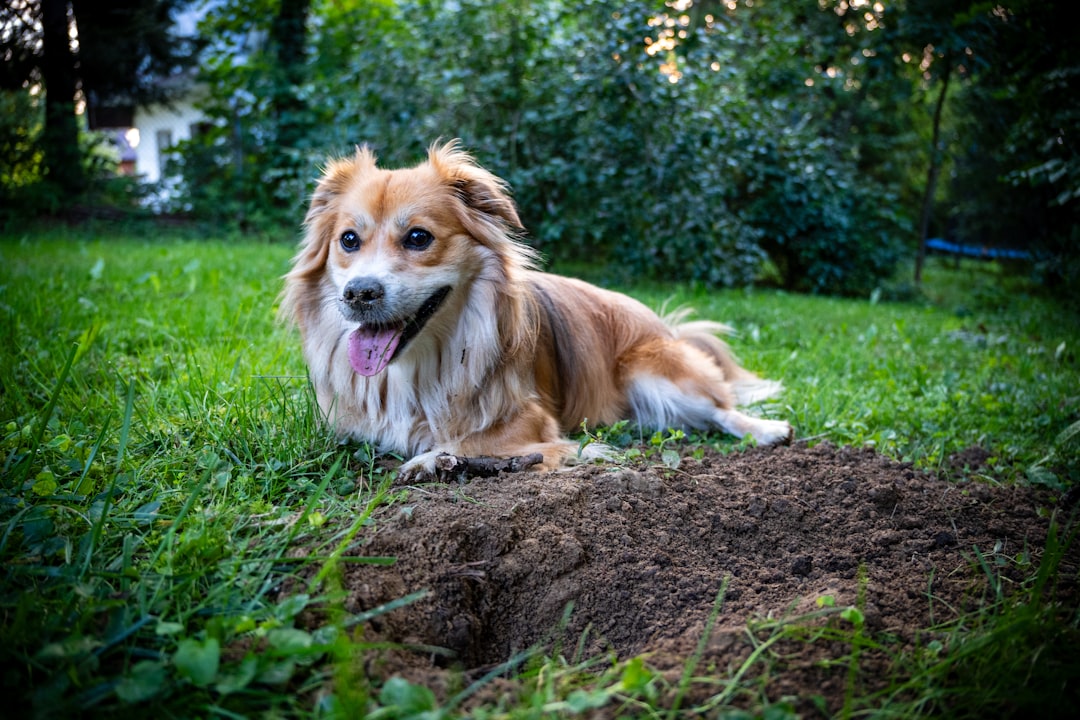
If your dog has decided your carefully planted garden would look better with a crater in the middle of it, I understand why you’re here.
But I’m going to challenge the goal slightly: I don’t usually want to teach a dog that digging itself is wrong.
Digging is normal dog behaviour. For some dogs it’s an occasional hobby; for others it’s practically a calling. The useful question isn’t simply “How do I stop my dog digging?” It’s why are they digging here, and what would I rather they do instead?
I’m a professional dog trainer and behaviour consultant, and my approach is to protect the bits of the yard that matter, work out what’s driving the behaviour, and — where appropriate — give the dog somewhere they actually can dig. Much easier than spending the next ten years arguing with a terrier about soil.

Why Do Dogs Dig?
There isn’t one universal reason, and that’s why generic “digging deterrents” often miss the point. Watch when, where and how your dog digs. The pattern usually tells you quite a lot.
Digging Is Part of Their Genetics
Some dogs have been selectively bred for behaviours that make digging rather unsurprising. Terriers are the obvious example: many were developed to pursue quarry into or around the ground. Dachshunds weren’t exactly designed to admire a badger hole from a respectful distance either.
Northern breeds can be enthusiastic diggers too, and plenty of individual dogs with no stereotypical “digging breed” label simply enjoy doing it.
If you’ve brought home a dog whose genetics make digging highly reinforcing, my expectations need to be realistic. I can teach them where to dig much more fairly than pretending the underlying desire shouldn’t exist.
They’re Hunting Something
If your dog becomes intensely interested in one particular patch, sniffs first, listens at the ground, then starts excavating with purpose, there may genuinely be something under there.
Moles, voles, insects and other little creatures can make a patch of earth incredibly interesting. In that situation, adding another puzzle toy indoors probably isn’t going to make the underground wildlife less compelling.
They’re Trying to Get Cool
Dogs may scrape away the warm top layer of soil and lie in the cooler earth underneath. If the digging happens mainly on hot days and is followed by your dog settling into the hole, I’d treat that as useful information rather than a training failure.
Make sure they have easy access to shade, fresh water and somewhere genuinely cool to rest. On very hot days, bringing them indoors may be the much more sensible answer. My guide to keeping dogs safe in hot weather goes into the heat side of this in more detail.
They’re Burying Something Valuable
Yes, dogs really do bury things. Food, chews and toys can all get carefully stashed for later. If your dog only digs when they’ve been given a particularly valuable chew, you’ve probably found your clue.
They’ve Discovered Digging Is Brilliant Fun
Sometimes we don’t need a dramatic explanation. Soil moves. It smells interesting. Things appear in it. The dog gets to use their nose, shoulders, paws and whole body. Digging can be wonderfully reinforcing all by itself.
A dog who spends long periods alone in an empty yard may be especially likely to invent their own entertainment, but I wouldn’t automatically label every digging dog “bored.” Some very fulfilled dogs still adore digging.
They’re Trying to Get Out
Digging repeatedly at the bottom of a fence deserves more attention than a random hole in the lawn.
Your dog may be trying to reach another dog, wildlife, people or something interesting outside the yard. They may also simply have learned that digging at a weak point gets them somewhere.
That becomes a safety issue, so I’d manage access immediately rather than waiting for training to fix it.

Digging Can Be Connected to Distress
Frantic digging at doors, gates, fencing or flooring — particularly when the dog is alone — is different from a dog happily excavating the flower bed. If you’re also seeing distress around confinement, it’s worth looking at the broader picture rather than assuming the dog simply needs firmer boundaries; my guide to calming an anxious dog around their crate explains some of those distinctions.
If you also see pacing, vocalising, destruction around exits, attempts to escape, drooling or other signs of distress, don’t treat the digging as the problem. It’s a symptom. That’s when I’d look at the bigger behavioural picture and get appropriate professional help.
How to Stop a Dog Digging Where You Don’t Want Them To
Notice the wording there: where you don’t want them to.
For many dogs, that’s a much more achievable goal than eliminating digging altogether.
1. Work Out What the Digging Is Doing for Your Dog
Before changing anything, spend a few days observing if it’s safe to do so. Ask yourself:
- Does it happen in one location or everywhere?
- Does your dog sniff or listen before digging?
- Is it mainly in hot weather?
- Does it happen after receiving food or chews?
- Is your dog trying to get underneath a fence?
- Does it happen mostly when they’re alone?
- Do they look loose and engaged, or frantic and distressed?
Those answers determine what I’d do next.
2. Manage the Places That Are Off Limits
You are allowed to protect your tomatoes.
Fencing off beds, using raised planters, placing pavers or large rocks over vulnerable areas, or securing chicken wire appropriately so the dog can’t access the soil can all be perfectly reasonable management.
The distinction I care about is why we’re using it. I’m happy to make an area physically unavailable. I’m not interested in setting up hidden unpleasant surprises so the dog gets hurt, frightened or uncomfortable when they try to dig.
If your dog digs at a fence line, management becomes even more important. Block access to that section, supervise outdoor time and secure the boundary so a successful escape isn’t possible while you work on the reason they’re trying to leave.
3. Give Keen Diggers a Legal Digging Spot
I love a dig pit for dogs who genuinely enjoy digging.
You can use a child’s sandbox, a purpose-built raised area, or simply dedicate a section of the yard. Fill it with a dog-safe digging material such as clean soil or play sand and make that area considerably more rewarding than your flower beds.
Bury toys or treats very shallowly at first so they’re easy to find. Let your dog see you put something in there. Encourage exploration, celebrate when they start digging, and gradually make the searches more interesting.
This isn’t “rewarding bad behaviour.” We’re giving a natural behaviour an appropriate outlet.
4. Redirect Rather Than Correct
If you catch your dog beginning to dig somewhere that’s off limits, I don’t need a stern “NO DIG!”
Interrupt neutrally, call them away, and immediately give them somewhere sensible to put that behaviour. If they have a dig pit, take them there and encourage them to use it. Or redirect into sniffing, a food search, play or another activity that makes sense for that dog.
A positively trained “leave it” cue can be useful here, but I want it paired with redirection. “Don’t do that” isn’t much of a training plan unless I also make it clear what is available.
5. Meet the Need You Actually Identified
If your dog needs more appropriate things to do, give them more appropriate things to do — but don’t fall into the trap of assuming every behaviour problem means you need to exhaust the dog.
More walking isn’t automatically the answer. Depending on the dog, I might use sniffing, scent games, safe shredding enrichment, food searches, chewing, training, play, exploring somewhere new, species-appropriate enrichment or simply more meaningful time with their people.
If they’re digging to cool themselves, solve the heat problem. If they’re hunting rodents, manage that environment. If they’re burying chews, decide whether you care. If they’re distressed when left alone, address the distress.
The function matters.
Should I Use Cayenne Pepper to Stop My Dog Digging?
No.
Have you ever accidentally inhaled cayenne pepper? It burns like all hell. I know because I’ve done it — and promptly cried.
That’s precisely the problem with recommending it as a dog deterrent. The entire point is to make investigating or digging that area unpleasant enough that the dog avoids doing it again. That’s punishment, and I don’t need to make a dog’s nose, eyes or mouth uncomfortable to teach them where I’d rather they dig.
The same principle applies to chilli powder, deliberately unpleasant sprays, startling the dog, spraying them with water, shouting at them or setting up something intended to frighten or hurt them when they dig.
Management is different. A little fence around the vegetable patch prevents access. A barrier along the fence line prevents escape. Those solutions don’t rely on the dog having a bad experience in order to work.
Can I Prevent a Puppy From Becoming a Digger?
I wouldn’t make that my goal either.
If your puppy discovers digging, you haven’t failed to teach boundaries. They’re a dog. Dogs do dog things.
What you can do from the beginning is supervise them in the yard, prevent repeated access to places that really matter to you, provide suitable enrichment and teach them that some areas are available while others aren’t. That same balance of management, realistic expectations and teaching skills is a big part of raising a puppy when you work full-time, too.

And if you’ve got a terrier puppy who thinks a dig pit is the greatest invention in human history? Fantastic. I’d use that enthusiasm rather than spend their puppyhood fighting it.
When Digging Needs Professional Help
Most garden digging doesn’t need a behaviour professional. It’s normal behaviour plus an inconvenient location.
I would get more help if the digging is frantic or compulsive, your dog is injuring their paws or mouth, they’re repeatedly attempting to escape, the behaviour appears suddenly without an obvious explanation, or it happens alongside signs of anxiety or distress.
In those cases, I’d rather work out what’s happening underneath the behaviour than keep trying increasingly creative ways to protect the lawn.
Your Garden and Your Dog Can Coexist
You don’t have to choose between giving your dog agency and having a yard that doesn’t resemble the surface of the moon.
Protect the areas that need protecting. Work out why your dog is digging. Give enthusiastic diggers somewhere appropriate to do it, redirect them when necessary, and deal with any underlying problem rather than punishing the behaviour you can see.
Sometimes the best solution to a dog who loves digging isn’t teaching them to stop.
It’s giving them an appropriate place to dig.






0 Comments