If I had a dollar for every time I’d had this discussion…
Can you have a puppy and work full-time? Yes. Yes, you can—but there’s a lot of scope within that statement, and it can be done in very different ways.
A puppy who is properly supported with walkers, neighbor visits, family help or daycare while their guardian works five days a week will have a very different experience from a puppy whose guardian works a 12-hour shift and expects them to stay in a crate from the moment they arrive home.
So, it’s not necessarily the full-time job that’s the issue. It’s what you put around it to make the situation work for the puppy.
And sometimes the more useful question isn’t “Can I make having a puppy work?” It’s “Is a puppy actually the right choice for my life right now?”
Can You Have a Puppy and Work Full-Time?
Yes—but you’ll need a realistic support system.
Dogs are social creatures. They’re not designed to spend significant stretches completely alone, particularly when they’re very young and have just been separated from their mother, littermates and everything familiar.

From Rebarkable
Raising a puppy? Get the complete plan.
The Rebarkable Puppy Bundle brings routines, socialization, core skills and common puppy problems together in one positive-reinforcement resource.
See the Puppy BundleDigital download · Instant access via Etsy
We also need to remember that just because we can technically make something work doesn’t automatically make it the right choice. The puppy’s welfare has to come before what we want.
Then there’s the practical side: if you’re not present, you can’t train.
You may come home to accidents, shredded toys, barking or a puppy who has practiced entertaining themselves in ways you don’t particularly appreciate. That isn’t the puppy being bad. They simply weren’t given the opportunity to get it right.
If you work full-time, your plan needs to include who will provide toilet breaks, social interaction and supervision while you’re away. Hoping the puppy will simply sleep until you return isn’t really a plan.
How Long Can a Puppy Be Left Alone?
This depends on the individual puppy, their age, their previous experiences and whether they’ve been gradually taught that alone time is safe.
Their physical ability to hold their bladder is only one part of the equation. A puppy might physically make it several hours without an accident but still find that length of social isolation upsetting.
As a rough starting point:
| Puppy’s age | A sensible starting expectation |
|---|---|
| 8–10 weeks | Very short periods, built up gradually; frequent toilet breaks |
| 10–12 weeks | Around one to two hours, depending on the puppy |
| 3–4 months | Around two to three hours with appropriate preparation |
| 4–6 months | Gradually building toward three to four hours |
| 6 months and older | Some may manage longer, but a full working day still requires a break |
These aren’t targets you should force a puppy to meet. They’re general management estimates, and some puppies will need considerably more support.
An eight-week-old puppy shouldn’t arrive in a completely unfamiliar home on Sunday and then be left alone from nine to five on Monday. Think about what we’re asking of them: they’ve left their mother, littermates and familiar environment, and now their new person has disappeared too. That’s enormous.
Ideally, take some time off when your puppy comes home and begin alone-time training immediately—but gently. Start with seconds and minutes rather than hours, then increase the duration while the puppy remains comfortable.
Create a Safe Puppy Setup—Not Just a Crate
Puppies need access to space.
Leaving a young puppy in a crate for most of the working day isn’t okay. A crate can be a useful bed and settling space, but it shouldn’t become somewhere we store a puppy until we’re available again.
I prefer setting up a secure playpen around the puppy’s bed or open crate. If you need one, this puppy playpen is a practical option. This gives them space to move, sleep, play, drink and change position comfortably.

A good setup might include:
- A secure playpen or carefully puppy-proofed room
- An open crate or comfortable bed
- Fresh water
- Waterproof or easily cleaned flooring
- A separate toileting area if absolutely necessary
- A small selection of safe, familiar enrichment items
- A camera so you can see how the puppy is actually coping
And honestly? Be prepared to clean or mop when you get home.
Management helps enormously, but puppies are still puppies. There will probably be some mess along the way, particularly while they’re learning.
Puppy-Proof the Space Properly
Puppies have an incredible ability to locate the one dangerous object you didn’t notice.
Remove cords, cables and wires. Block access to sofas or furniture they may climb, chew or become stuck behind. Check for houseplants, cleaning products, loose fabric, children’s toys and anything small enough to swallow.
Be careful with toys and chews too. Something being sold for dogs doesn’t automatically mean it’s safe for your individual puppy to use unsupervised.
The first few times your puppy gets any chew or enrichment item, they need to be supervised. Watch what they do with it. Do they calmly chew it, or are they attempting to swallow enormous chunks like a tiny, furry trash compactor?
You need to know how your puppy uses something before deciding it’s safe to leave with them alone.
Potty Training a Puppy While Working Full-Time
Someone needs to be physically present to take the puppy outside and teach them where to go. That one really is non-negotiable.
It could be you coming home, a neighbor popping in, a family member helping, or a professional puppy sitter or walker—but a very young puppy can’t maintain an adult working schedule without toilet breaks. If you do need to bring in paid help, Care.com is one place to look for pet sitters and dog walkers; just make sure you still interview them carefully and choose someone whose experience actually fits your puppy.
And no, they won’t necessarily “just go on a puppy pad.” Using a pad is still a learned behavior.
Pads can also make outdoor potty training a little more complicated because you’re teaching the puppy that toileting inside is sometimes correct. That doesn’t mean you can never use them; sometimes management has to be practical. Just understand that it isn’t the same as teaching the puppy to hold it all day.
Your helper needs to do more than open the door briefly. Ideally, they should take the puppy to the correct spot, wait calmly, and reward them immediately after they finish.
Without that consistency, you’re not maintaining a potty-training schedule. You’re simply hoping for the best while you’re gone.
What Should a Working Puppy Schedule Look Like?
The exact schedule will depend on your puppy’s age, but a working day might look something like this:
| Time | Puppy’s routine |
|---|---|
| 6:30 a.m. | Potty break, breakfast and calm interaction |
| 7:00 a.m. | Short walk, play or age-appropriate training |
| 8:00 a.m. | Another potty break before you leave |
| 10:00 a.m. | Sitter or neighbor visit, potty break and interaction |
| 12:30 p.m. | Potty break, lunch if needed, play and a short training session |
| 3:00 p.m. | Another visit and potty break |
| 5:30 p.m. | You return: potty break, interaction and appropriate exercise |
| Evening | Dinner, training, enrichment, rest and final toilet breaks |
A very young puppy may need more frequent visits than this. An older puppy may need fewer.
What matters is that the schedule reflects the puppy you actually have—not the routine you wish they could already manage.
What About Exercise and Enrichment?
Most of a puppy’s exercise can happen while you’re home, and that’s absolutely fine. A neighbor, walker or well-run daycare can also help during the day.
However, puppies need far more sleep than many people realize. We don’t need to keep them busy for every waking second in an attempt to tire them out.
An overtired puppy often looks like a puppy who needs more exercise: biting, grabbing clothes, zooming around, barking and seemingly unable to switch off. Adding even more stimulation can make everything worse.
The goal is a sensible balance of exercise, interaction, enrichment and proper naps.
Useful enrichment options can include snuffle mats, lick mats, stuffed Kongs or Toppls, and suitable natural chews such as bully sticks, yak cheese or pig ears. The right choice depends on your puppy’s age, chewing style and ability to use the item safely.
Again, supervise every new option before leaving it with your puppy alone.
Is Daycare a Good Option?
Most social dogs can enjoy daycare—if it’s the right daycare.
Not all daycares are created equal, and staff need to understand each dog’s natural vibe. If a puppy is social and wants to play, great! Let them play. But puppies who don’t want to join in shouldn’t be forced to, and staff should advocate for them by providing space or separating them when necessary.
Daycares also frequently struggle to give puppies enough sleep.
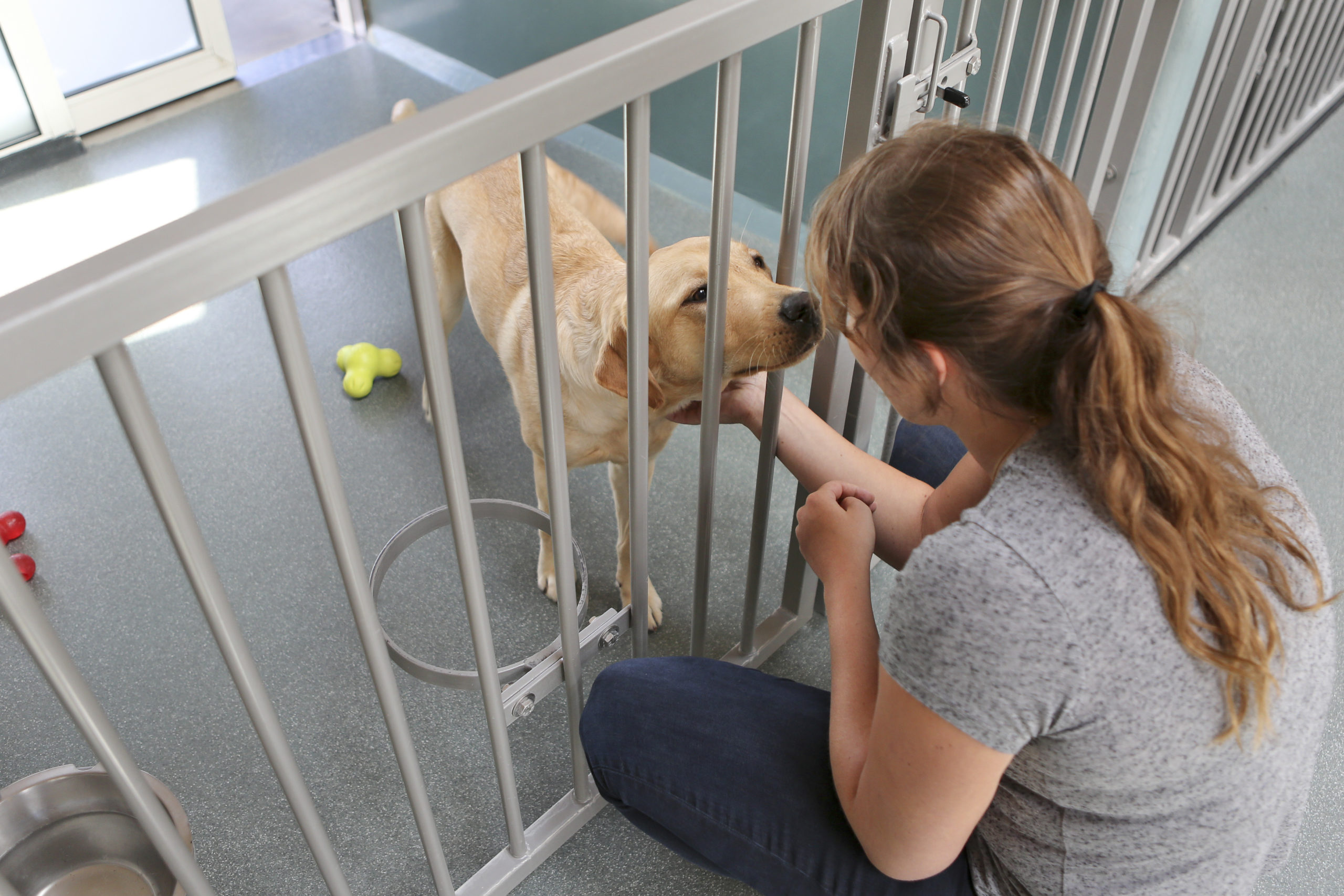
If your puppy is attending, ask about the nap schedule. Where do the puppies sleep? Is it genuinely quiet? Are rest periods enforced, or are puppies expected to keep playing until they practically fall over?
Daycare might be helpful for one or two days each week without being the right solution for every working day. Some puppies love it. Others come home completely fried.
How Can You Reduce the Risk of Separation Anxiety?
The biggest mistake is expecting too much, too quickly.
Alone time should be taught gradually. Begin by moving briefly out of sight, returning before your puppy becomes distressed, and slowly increasing the duration. The RSPCA’s home-alone guidance follows the same gradual approach.
A camera is extremely useful here. Without one, you only know what the puppy is doing when you leave and what you find when you return. You might miss pacing, whining, barking or repeated attempts to escape.
And don’t rely on the idea that they’ll “cry it out.” A puppy who stops vocalizing hasn’t necessarily learned to feel safe. They may simply have stopped expressing their distress. If the behavior looks more serious than ordinary puppy protest, the ASPCA’s separation-anxiety overview is a useful starting point.
Independence is a skill, and like every other puppy skill, it needs to be taught. This becomes especially important if you’re raising two puppies together, where deliberately building each puppy’s confidence and independence matters.
Do You Actually Need a Puppy?
This is the part people often don’t want to hear—but it matters.
You don’t need to have a puppy.
Bringing home an adolescent or fully grown dog is more than okay. An adult dog may already be house-trained, able to settle and physically capable of managing a more realistic working-day routine.
There are also animals that may suit your lifestyle better than a dog. A cat is the obvious alternative, but the one I think more “dog people” should consider is a house rabbit.
Rabbits are wonderful companions. They’re intelligent, social, trainable and full of personality. They’re a lot like dogs in some ways, but smaller on average, more comfortable with stretches of independent time and without the same walking commitments.
They still need proper housing, enrichment, companionship and specialist care—they’re certainly not an “easy” disposable pet—but they can fit some working lifestyles better than a puppy.
Sometimes it’s less about asking, “Can I make a puppy work?” and more about honestly asking, “Is a puppy the right choice?”
If you have the time, support and resources to meet their needs, working full-time doesn’t automatically rule you out. But if the only way to make it work involves leaving a baby animal alone or crated for most of the day, the kinder decision may be to wait—or choose a companion whose needs genuinely fit the life you have.


0 Comments