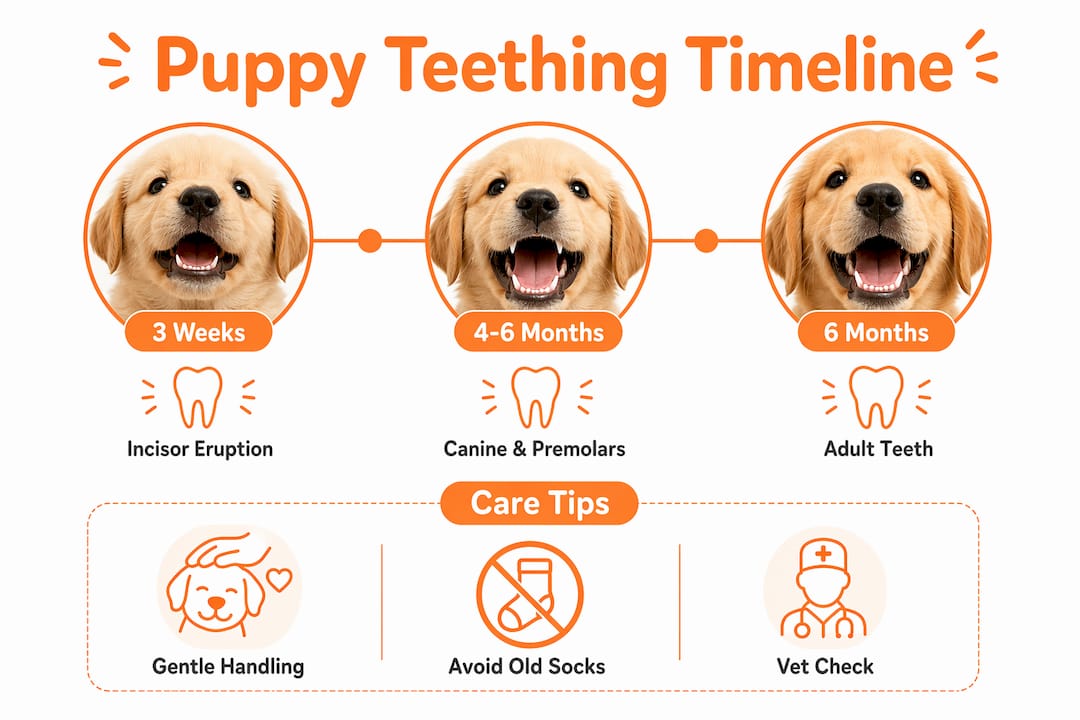
Puppy teething typically begins around 3 weeks of age, peaks between 4 and 6 months, and is usually finished by about 6 months. That’s the short version. The longer version is the one that actually helps you survive it — and that’s what this guide covers.
Your puppy starts life with no teeth at all, then grows a full set of 28 deciduous teeth (those infamous needle teeth) before shedding them and replacing them with 42 permanent adult teeth. The shedding and adult eruption phase, which typically occurs during a few months in puppyhood, is what most owners mean when they say their puppy is “teething.” And here’s the thing worth knowing: those needle teeth are sharp by design. They’re built to elicit a reaction because young puppies have very little jaw strength. When your puppy finally drops those needles and grows in blunter adult teeth, that’s actually a signal that jaw strength is developing right on schedule.
The single most important action right now? Get safe chew toys in front of your puppy, start gentle mouth-handling exercises, and remove anything you don’t want destroyed. The AKC, Purina, and USDA/APHIS all confirm this general timeline, and veterinarians consistently point to the same red flag to watch for early: a visible adult tooth sitting right beside a baby tooth that hasn’t fallen out yet. That’s a call-your-vet situation, not a wait-and-see one.
“The intensified chewing phase usually ends during early puppyhood. Some recommend giving puppies ice cubes, special dog toys that can be frozen, or frozen wet washcloths to chew, which might help numb teething pain.” — ASPCA
Table of Contents
- What does the puppy teething timeline look like week by week?
- How do you know if your puppy is teething normally?
- What should you do during the worst weeks of teething?
- Daily dental care and when to call the vet
- What does “done teething” actually look like?
- Vet- and trainer-backed tips every new owner should know
- Key Takeaways
- The part most owners get wrong
- Rebarkable helps you stay ahead of every teething milestone
- Useful sources and further reading
What does the puppy teething timeline look like week by week?
Here’s the full roadmap, from birth through a complete adult set. Keep in mind that individual puppies vary, and small or brachycephalic breeds often run on a slightly different schedule.

| Age | Milestone | What you’ll notice | Owner action |
|---|---|---|---|
| Birth to 2 weeks | No teeth present | Puppy nurses exclusively | Nothing needed yet |
| Weeks 2–4 | Baby incisors begin erupting | Puppy starts mouthing more | Begin very gentle lip touches |
| Weeks 5–8 | Full deciduous set of 28 teeth present | Needle-sharp teeth visible; mouthing intensifies | Introduce soft chew toys |
| Weeks 12–16 | Baby teeth begin falling out | May find tiny teeth; gums look red | Offer appropriate chews; check gums weekly |
| Weeks 16–20 | Heavy shedding; adult teeth erupting | Chewing spikes dramatically; drooling possible | Frozen chew items; puppy-proof the home |
| By 6 months | All 42 adult teeth fully in place | Chewing becomes more deliberate | Transition to adult chews; start brushing routine |
The eruption order follows a predictable pattern: incisors come in first, then canines, then premolars, and finally molars. Most puppies swallow their baby teeth as they lose them, so don’t panic if you never find a single tooth on the floor. According to the AKC, finding a tooth is actually the exception, not the rule.
A note on breed variation: Small breeds and brachycephalic breeds (think Bulldogs, Pugs, Shih Tzus) tend to have less jaw space, which raises their risk of retained baby teeth. If you have one of those breeds, keep a closer eye on the 16–20 week window.
How do you know if your puppy is teething normally?
Most teething signs are completely normal and nothing to stress about. The tricky part is knowing which ones cross the line into “call the vet” territory.
Normal signs to expect:
- Increased chewing and mouthing of everything in reach
- Swollen, pink, or slightly sensitive gums
- Drooling more than usual
- Brief dips in appetite (a day or two is fine)
- Tiny blood spots on chew toys (a little is normal as teeth loosen)
- Whimpering or fussiness, especially around the 16–20 week mark
Red flags that need veterinary attention:
- Persistent or heavy bleeding from the gums
- Severe swelling, pus, or a foul odor from the mouth
- A visible adult tooth sitting beside a baby tooth that hasn’t fallen out (double tooth appearance)
- A broken tooth with an exposed root
- Refusal to eat for more than 24 hours
- Adult teeth erupting at an unusual angle
The double tooth situation deserves a specific callout. When a permanent tooth is visible while the baby tooth is still in place, that retained deciduous tooth can push the adult tooth out of alignment. Veterinarians typically recommend extraction before it causes a lasting bite problem.
Pro Tip: Start gentle mouth-handling exercises from day one at home. Lift your puppy’s lips, briefly touch the teeth and gums, and make it a positive experience with praise or a tiny treat. Veterinarians recommend early mouth handling specifically because it makes future dental checks and brushing dramatically less stressful for both of you.
What should you do during the worst weeks of teething?
A window during early puppyhood is where most owners feel like they’re losing the battle. Multiple adult teeth are erupting at once, gums are genuinely tender, and your puppy’s chewing drive is at its absolute highest. This is not bad behavior. It’s biology.
PetMD notes that the behavioral peak during this phase typically spans about 8 weeks, and the primary management strategy is redirection to appropriate chew items, not punishment. Punishment during teething is ineffective and counterproductive.
Non-drug pain relief that actually works:
Freeze a damp washcloth and let your puppy chew on it under supervision. A Kong stuffed with wet food and frozen solid is another favorite. The cold reduces gum inflammation and gives your puppy something satisfying to work on. Rotate two or three options so novelty stays high.
When it comes to chew toy selection, texture and size matter. You want something firm enough to satisfy the urge but not so hard it risks cracking a tooth. A good rule of thumb: if you cannot easily create a slight impression with a thumbnail, it’s probably too hard for a puppy. Avoid anything small enough to swallow whole, and retire any toy that starts breaking into chunks.
“Environmental management and frozen soft items are recommended; punishment for chewing is ineffective — redirection is the right approach.” — PetMD
Environment management during peak teething:
- Remove shoes, cords, and anything leather from floor level
- Use baby gates or a crate to limit access to rooms you can’t supervise
- Rotate toys every 2–3 days so your puppy doesn’t lose interest
- Keep a chew toy in your pocket so you can redirect instantly
One thing worth knowing: never give your puppy an old sock or a worn shoe as a teething toy. It seems harmless, but it trains the puppy to target those items permanently. Dedicated chew toys only.
On pain medication: never give human pain relievers like ibuprofen or acetaminophen to a puppy. Topical anesthetics designed for human teething are also not appropriate without veterinary guidance. If your puppy seems to be in significant pain, call your vet.
Pro Tip: Set a toy rotation reminder on your phone every 48–72 hours. Swapping out two or three toys keeps them feeling “new” and dramatically reduces the chance your puppy goes hunting for something more interesting, like your furniture.
Daily dental care and when to call the vet
The teething window is actually the best time to build dental habits, because your puppy’s mouth is already getting regular attention. Don’t waste it.
How to check your puppy’s mouth:
- Lift both lips gently to see the outer surfaces of the teeth and gums
- Look for redness, swelling, or any sign of a tooth that looks “doubled up”
- Check the gum color (healthy gums are pink, not white or deep red)
- Do this at least once a week during the 12–20 week window
Starting a brushing routine:
You don’t need a full brush-and-paste routine on day one. Start by rubbing your finger along the gum line for a few seconds, then reward. After a week or two, introduce a finger brush with a tiny amount of dog-safe toothpaste. The goal at this stage is just familiarity. Pairing this with early grooming habits makes the whole process much smoother as your puppy grows.
Veterinary red flags and what to do:
- Retained baby tooth: Schedule a vet appointment promptly. Extraction is usually recommended before the adult tooth is fully in.
- Adult tooth erupting at an angle: Photograph it and call your vet the same day.
- Persistent bleeding: If it doesn’t stop within a few minutes of gentle pressure, call your vet.
- Broken tooth with visible pulp (pink or red inside): This is an urgent vet visit, not a wait-and-see.
- Foul odor or visible swelling: Could indicate infection. Don’t delay.
Most puppies swallow their baby teeth without any issue. Finding one on the floor is a nice little surprise, but not finding any is completely normal and nothing to worry about.
Pro Tip: Pair your weekly gum check with something your puppy already loves, like a post-walk treat session. Keeping it predictable and positive means your puppy learns to tolerate mouth handling rather than dread it. This pays off enormously at every vet visit for the rest of their life. Check out Rebarkable’s guide on cooperative care for a step-by-step approach.
What does “done teething” actually look like?
Most puppies have their full set of 42 permanent adult teeth by around 6 months of age, though some larger breeds can take a little longer. The finish line isn’t always a dramatic moment. It’s more of a gradual shift.
Signs that teething is wrapping up:
- No new loose teeth or extra bleeding when chewing
- Chewing becomes more deliberate and less frantic
- The “must chew everything immediately” urgency fades
- You can do a mouth check without finding any wobbly teeth
“While the acute teething phase usually ends around six months, chewing remains a lifelong behavior. The owner’s role shifts from managing teething pain to providing consistent, appropriate chewing outlets for enrichment and dental health.” — VCA Animal Hospitals
That shift in role is worth taking seriously. Chewing doesn’t stop when teething does. It just changes motivation. Post-teething chewing is about mental stimulation, stress relief, and jaw exercise. Swapping to adult-appropriate chew items (harder, longer-lasting options that suit your dog’s size and chew style) keeps that need met safely.
Schedule a dental review with your vet around the 6–7 month mark if you have any concerns about tooth alignment or retained teeth. And keep up the brushing routine you started during teething. The dental care habits you build now are the ones that stick for life.
Vet- and trainer-backed tips every new owner should know
Here’s a practical checklist you can start using this week, plus a toy rotation plan that actually holds up during the worst of teething.
Immediate actions this week:
- Audit your home for floor-level hazards: cords, shoes, anything leather or fabric within puppy reach.
- Pick up two or three dedicated chew toys in different textures (rubber, rope, nylon).
- Start daily 30-second mouth-handling sessions: lift lips, touch teeth, reward with praise.
- Set a toy rotation reminder every 48–72 hours.
- Note your puppy’s current age and mark the 16–20 week window on your calendar as the peak watch period.
Simple toy rotation plan:
- Keep a pool of 6–8 approved chew toys total.
- Have 2–3 available at any given time; store the rest out of sight.
- Rotate every 2–3 days by swapping one “old” toy for one from storage.
- Retire any toy that’s cracked, broken into pieces, or small enough to swallow.
- Add a frozen option (frozen Kong, frozen washcloth) during the 16–20 week peak.
Behavioral tips for nipping and mouthing:
- Redirect immediately: when your puppy mouths your hand, swap in a chew toy. Consistency matters more than speed.
- Reinforce the replacement: when your puppy takes the toy instead of your hand, mark it with a “yes” and reward.
- Preemptive enrichment: give your puppy a chew before situations that typically trigger mouthing (after meals, before guests arrive, during high-energy play).
- Avoid yelping loudly as a deterrent during the teething phase — it can overstimulate some puppies rather than calm them down.
For more on redirecting nips specifically, Rebarkable’s guide on stopping puppy biting walks through the trainer-tested approach in detail.
Rebarkable’s 52-week program is built around exactly these developmental windows. The weekly training checkpoints align with teething milestones, so you’re getting timed, relevant guidance right when you need it rather than generic advice that doesn’t match where your puppy actually is.
Pro Tip: The best puppy toys for teething aren’t necessarily the most expensive ones. What matters is variety in texture, appropriate size for your breed, and having enough options to rotate. A $5 rubber ring and a frozen Kong can outperform a $30 “teething kit” if they’re used consistently.
Key Takeaways
The puppy teething timeline runs from about 3 weeks to 6 months, with the most intense chewing and discomfort concentrated in the 16–20 week window when adult teeth actively replace all 28 baby teeth.
| Point | Details |
|---|---|
| Timeline at a glance | Teething starts around 3 weeks, peaks at 4–6 months, and usually finishes by 6 months. |
| Tooth count | Puppies grow 28 baby teeth, then replace them with 42 permanent adult teeth. |
| Peak window | Weeks 16–20 bring the heaviest shedding and adult tooth eruption; frozen chews and toy rotation help most. |
| Top red flag | A visible adult tooth beside an unerupted baby tooth needs a vet appointment, not a wait-and-see approach. |
| Rebarkable support | Rebarkable’s 52-week program delivers timed weekly guidance that aligns with teething milestones and behavior shifts. |
The part most owners get wrong
Here’s an honest take: the biggest teething mistake isn’t failing to buy the right chew toy. It’s accidentally training your puppy that your stuff is fair game.
It happens fast. You hand over an old sock because your puppy is clearly uncomfortable and you want to help. Totally understandable. But that sock now smells like you, feels satisfying to chew, and your puppy has just learned that your belongings are chew toys. Three months later you’re wondering why your dog keeps stealing laundry.
The one habit that prevents most of this? Dedicated chew toys from day one, and consistent redirection every single time. Not sometimes. Every time. The teething phase is short in the grand scheme of raising a dog, but the habits it builds (or breaks) tend to stick around much longer than the needle teeth do.
New owners also tend to underestimate how much the 16–20 week window catches them off guard. The puppy seemed fine, the chewing was manageable, and then suddenly it’s like a different dog moved in. That’s not a training failure. That’s just the biology of adult teeth coming in all at once. Knowing it’s coming means you can set up the environment and the chew rotation before the peak hits, rather than scrambling in the middle of it.
Rebarkable helps you stay ahead of every teething milestone
Teething is one of those phases where timing matters. Getting the right guidance at week 14 is genuinely different from getting it at week 20, and that’s exactly what Rebarkable’s 52-week email training program is built around.

Each week’s content is timed to your puppy’s actual developmental stage, so when the peak teething window hits, you’re already prepared with the right chew strategy, the right redirection approach, and the behavioral context to understand what’s happening and why. You also get access to a community of owners going through the same phases at the same time, which makes a real difference when you’re staring at a chewed-up shoe at 10 PM wondering if this is normal.
If you’re in the thick of teething right now and also navigating potty training at the same time (because of course you are), Rebarkable’s puppy toilet training guide is a great place to start. Head to Rebarkable to see how the weekly program works and get your first update delivered straight to your inbox.
Useful sources and further reading
These are the authoritative sources used throughout this article. If you have urgent concerns about your puppy’s teeth or gums, please consult a licensed veterinarian directly.
- Puppy Teething Timeline — AKC: The American Kennel Club’s week-by-week milestone breakdown; the primary source for eruption timing and the reassurance that swallowed baby teeth are normal.
- Puppy Teething and Nipping — AKC: AKC guidance on early mouth handling and how it reduces stress around dental care long-term.
- Puppy Teething — PetMD: Covers eruption order, the biology of needle teeth, and general symptom descriptions.
- How to Stop a Puppy from Chewing — PetMD: The source for peak teething behavior (4–6 months), environmental management tactics, and the case against using personal items as chew toys.
- Teeth, Teething and Chewing in Puppies — VCA Animal Hospitals: Authoritative vet source for tooth counts (28 baby, 42 adult), finish age, retained tooth red flags, and the lifelong chewing note.
- What to Expect with Puppy Teething — Chewy: Useful for breed-specific retained tooth risks, particularly small and brachycephalic breeds.
- Puppy Teething — Purina US: Purina’s stage-by-stage chart and confirmation of the 5–7 month adult tooth completion window.
- Aging Puppies by Teeth — USDA/APHIS: USDA/APHIS reference document on using dental development to assess puppy age; useful for understanding eruption as a developmental marker.
- Destructive Chewing — ASPCA: ASPCA guidance on teething pain management, including frozen washcloths and ice cubes as safe soothing options.
This article is general information, not veterinary advice. For concerns specific to your puppy’s dental development, consult a licensed veterinarian.
Recommended
- When Do Puppies Lose Their Puppy Teeth? A Complete Guide to Teething – Rebarkable
- When Will My Puppy Stop Biting? Professional trainer explains – Rebarkable
- All About Puppy Teething (& 6 Tips To Get You Through It) – Rebarkable
- Help! Our Breeder Says Mother Dog Is “Rejecting” Her 4–6 Week Puppies? – Rebarkable






0 Comments