A long line is one of the most useful pieces of dog-training equipment I own. It gives a dog more freedom than a standard leash without requiring the reliability we’d want before unclipping them completely.
I use long lines for recall training, young dogs, reactive dogs, decompression walks, sniffing, distance work and simply giving dogs more choice safely.
They’re also remarkably simple: essentially a very long fixed-length leash. But simple doesn’t mean foolproof. Length, material, hardware and — most importantly — how you handle the line make a huge difference.
This is the master guide: what long lines are, when to use them, what length to buy and how to use one without tying yourself, your dog and an innocent tree into a complicated knot.
What Is a Dog Long Line?
A long line — also called a training leash, long leash or long lead — is a fixed-length leash substantially longer than the standard 4–6 foot everyday leash. You’ll commonly see them from around 10–15 feet through to 30, 50 or even 100 feet.
The point isn’t simply “more leash.” It’s managed freedom.
Your dog can move, sniff and make choices at a greater distance while you retain a physical safety net. That makes a long line incredibly useful while you’re building skills that aren’t reliable enough to trust off leash yet.
When Should You Use a Long Line?
- Recall training: let your dog practise responding at realistic distances without risking them disappearing.
- Young dogs: give puppies and adolescents freedom before they’ve earned off-leash reliability.
- Reactive dogs: create space for sniffing and decompression while maintaining security.
- Sniffy walks: allow more natural exploration in safe open environments.
- Distance training: proof cues such as recall, sit and down away from you.
- Tracking/mantrailing: allow a dog to work ahead while remaining connected.
For me, the key principle is management. The line helps prevent an unwanted choice from turning into a rehearsed behaviour while still allowing the dog enough freedom to learn.
If recall is the goal, use this alongside my recall training guide.
Long Line vs Flexi or Retractable Leash
Both give your dog more range, but they work very differently.
A long line has a fixed length that you manually feed and gather. A retractable leash stores the line inside a handle and extends as the dog moves.
I prefer a long line for training because I have more predictable control over the line and there is no retracting mechanism changing tension as the dog moves. A Flexi can be convenient for a suitable dog in a quiet open environment, but it isn’t my first choice for recall work.
If this is the decision you’re currently making, I’ve separated that intent into a full long line vs Flexi lead comparison. I’ve also explained why I rarely recommend retractable leashes for everyday use.
What Length Long Line Should I Buy?
There isn’t one perfect length. Longer gives your dog more freedom, but it also gives you more line to manage.
| Length | Best for | My take |
|---|---|---|
| 10–15 ft | Beginners, sniffing, closer management | Easiest place to start |
| 20–30 ft | Recall, decompression, general training | Great all-round range |
| 50–60 ft | Advanced recall/distance work | Useful, but much more to handle |
| 100 ft+ | Very specialist distance work | Rarely necessary for ordinary owners |
I personally keep different lengths for different jobs. A roughly 15-foot line is lovely for general sniffing and decompression walks. For recall work with clients I’ve used much longer lines, around 60 feet, because I specifically want meaningful distance.
If you’re new to long lines, don’t buy the longest one you can find. Start manageable. You can always graduate to more line once your hands and brain stop arguing with each other.
What Material Is Best for a Dog Long Line?
Biothane
This is usually my favourite. Biothane is easy to wipe clean, doesn’t absorb water like fabric, tends to tangle less and is comfortable to work with. For muddy walks and regular use, that practicality matters.
Large dogs generally need wider, stronger material and appropriately rated hardware; tiny dogs need something light enough that they’re not dragging a boat anchor around behind them.
Nylon webbing
Nylon is widely available and usually cheaper. It can work perfectly well, but it gets wet and dirty, and some lines can be unpleasant if they run quickly through your hands.
Rope
Rope can be strong and easy to see, but I’m particularly cautious about grabbing a moving rope line. Friction burns are not a fun training souvenir.
What Hardware Should a Long Line Have?
Don’t focus on the line and forget the clip. Hardware needs to suit the size and strength of the dog.
For a larger or powerful dog, I want a secure fastener I trust. Check the snap, stitching/rivets and line itself regularly for damage. If your dog has a history of equipment failure or escaping, redundancy is worth considering too.
Always Attach a Long Line to a Harness
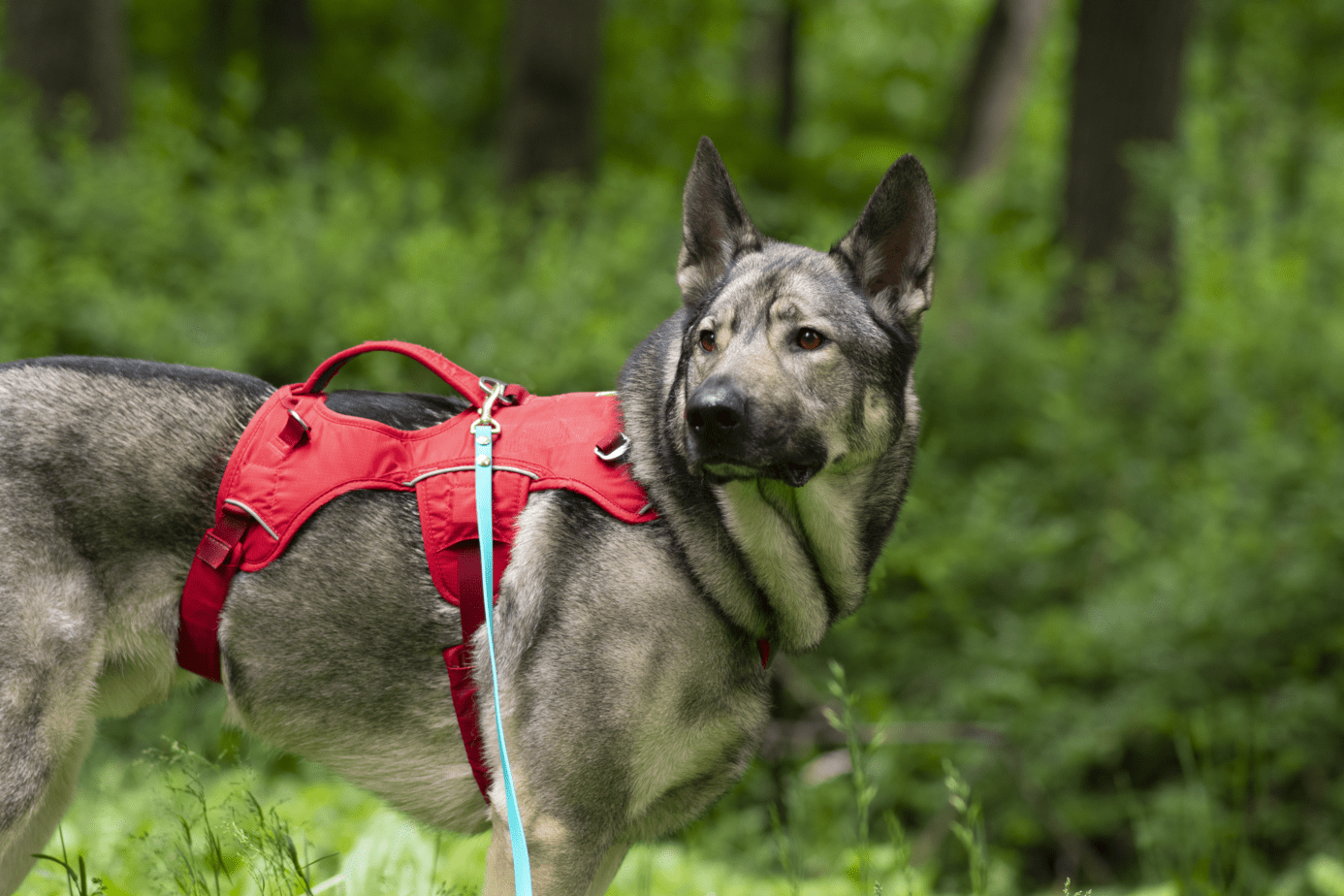
I attach long lines to a secure, well-fitted harness — not to a collar.
A dog can accelerate over a substantial distance before reaching the end of a long line. I don’t want that sudden force concentrated through their neck or head.
If you need an everyday option, start with my best dog harnesses. If your dog backs out of normal equipment, use an escape-proof harness.
How to Use a Long Line Safely
1. Learn to Feed and Gather the Line
Don’t simply let the whole line pile on the ground. Keep the excess managed and feed out more as your dog needs it, then gather it back as they come closer.
I usually use two hands: one managing the bulk of the line and the other controlling the active section.
2. Keep Some Slack
A long line isn’t supposed to be a permanently tight connection. I want enough slack for the dog to move naturally without enormous loops gathering around everyone.
3. Don’t Wrap It Around Your Hand
Please don’t wind a long line around your fingers, wrist or hand. If a dog suddenly accelerates, you do not want your body physically tied into that force.
4. Don’t Grab a Fast-Moving Line
If a trailing line is moving quickly, grabbing it can cause friction burns. In an appropriate situation, stepping on a trailing line can be safer than trying to snatch it with your hand.
5. Choose Bright, Visible Colours
Black and brown disappear remarkably well against soil, leaves and shade. I like bright, obvious lines because I want everyone to know where that line is.
6. Watch for Legs, Trees and Other Dogs
Long lines have an extraordinary talent for finding ankles and shrubbery. Keep watching the route between you and your dog, especially as they change direction.
7. Stay on the Outside of Groups
If you’re walking with several people, don’t put yourself in the middle and let your dog orbit the group unless you’ve always dreamed of recreating a maypole.
8. Don’t Use a Long Line Fully Extended Beside Roads
Long lines are for environments where the extra distance is safe. Near traffic, shorten the line or switch to a normal leash. An open field is a very different environment from a sidewalk.
Can You Use a Long Line With a Reactive Dog?
Absolutely — in the right environment.
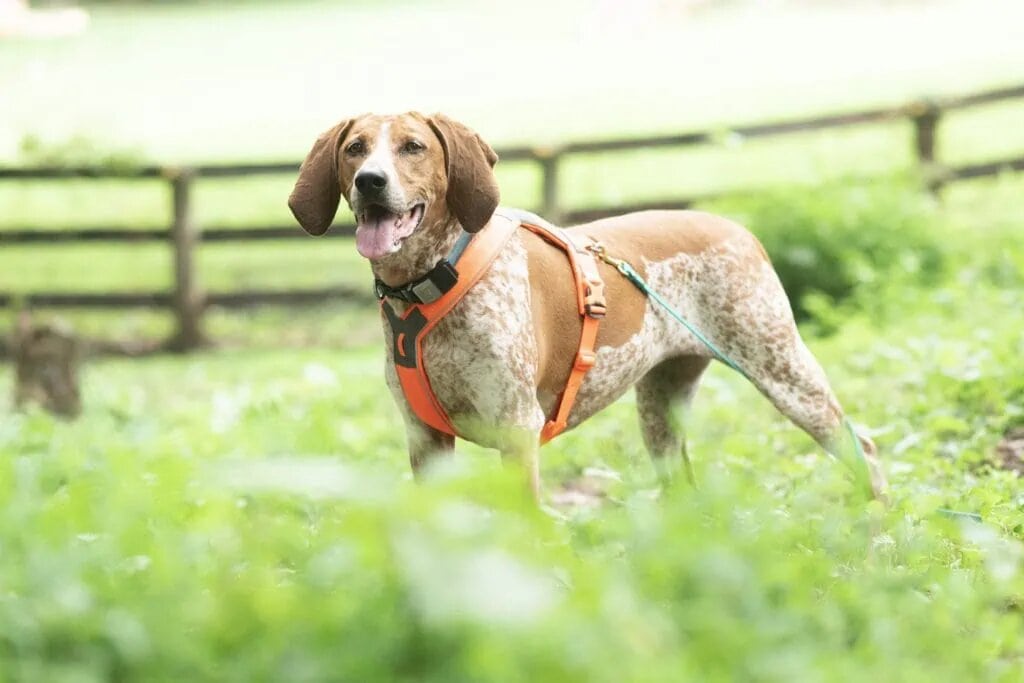
I love long lines for giving reactive dogs opportunities to sniff, decompress and make choices without needing to be off leash. But more line doesn’t mean you should allow a dog to get closer to triggers. Distance is still part of the management plan.
Choose a secure harness, know your dog’s comfortable distance and shorten the available line before you actually need to. If your dog is already at the end of 30 feet when a trigger appears, you’ve made your job much harder.
Can You Let a Long Line Drag?
Sometimes. A drag line can be useful during certain stages of training because it gives you a way to interrupt a bad decision without constantly holding the dog close.
But dragging lines can snag. I only do it in an environment I’ve assessed, and I pay attention to the line, terrain and dog’s speed.
Where Shouldn’t You Use a Long Line?
- Beside busy roads while fully extended
- In crowded pedestrian areas
- Among dogs running together where lines can tangle
- In dense woodland where the line constantly catches
- Anywhere local leash rules require a shorter fixed length
A long line gives freedom because the environment permits freedom. If the environment doesn’t, shorten the leash.
Long Line FAQs
Is a 30-foot leash too long?
No, but it can be a lot for a beginner to handle. For many owners, 15 feet is a much easier introduction before moving to 20–30 feet.
Can I attach a long line to my dog’s collar?
I don’t recommend it. I use a well-fitted harness so that if the dog unexpectedly reaches the end, the force isn’t concentrated through the neck.
Are long lines good for recall?
Yes. Recall training is one of my favourite uses for them because you can practise at meaningful distances while retaining a physical safety net.
Is a long line better than a retractable leash?
For training, I generally think so. Retractable leashes can be convenient in suitable environments, but I prefer the predictable fixed line for recall and management. See my full comparison.
What is the best long-line material?
I usually prefer Biothane because it’s durable, easy to clean and doesn’t absorb water. The best width and hardware depend on your dog’s size and strength.
A Long Line Is Managed Freedom
That’s really the whole point.
We don’t need to choose between keeping a dog glued to a six-foot leash and unclipping them before they’re ready. A long line gives us a useful middle ground: freedom to sniff, explore, train and occasionally make the wrong choice, while still keeping everyone safe.
Start with a manageable length, attach it to a secure harness, practise handling it somewhere boring, and then use that extra freedom to build the skills that matter.
If you’re still deciding on equipment, go next to Long Line vs Flexi Lead, or browse my tested dog harnesses.

Author, Ali Smith
Ali Smith is a professional, qualified, and multi-award winning trainer is the founder of rebarkable. She has always believed animals deserve kindness and champions force free methods. Believing that dog guardians will all choose the kindest options if proper information is provided, she aims to help all dog guardians who need it and make dog training as accessible as possible
Ali lives win Maryland, US with her husband and her three dogs.




0 Comments