Adolescence in puppies is a normal developmental phase, usually kicking off somewhere between 6 and 12 months and driven by hormones and brain maturation, and most of the chaos responds well to consistent training and environment management. That means less winging it and more routine: short training sessions, supervised freedom, and patience while your pup’s brain finishes wiring itself. If you want structured, weekly help through this stretch, programs like Rebarkable exist exactly for that reason.
TL;DR:
- Most adolescent behaviors, like selective hearing and mouthing, occur between 6 and 12 months and typically improve by 18 to 24 months.
- Early socialization and consistent, short training sessions are key to helping dogs cope with fear, anxiety, and impulsive behaviors during adolescence.
- Unusual signs such as withdrawal, loss of appetite, or aggression are not normal and should prompt veterinary or behavioral evaluation.
- Large breed or guardian dogs may take three to four years to fully mature, affecting the timing and management of adolescence.
- Proper nutrition, environment management, and gradual routine shifts support healthy growth and smoother transition from puppy to adult dog.
Table of Contents
- Why Adolescence Happens: Hormones, Brain Changes, and Sensitive Periods
- Common Behaviors and Timeline: What to Expect
- Practical Day-to-Day Management: Training, Exercise, and Environment
- Tactics for Specific Problems: Mouthing, Pulling, and Aggression
- Nutrition and Health Considerations for Adolescent Puppies
- Tips for Moving From Puppy to Adult Dog Routines
- A Realistic Look at Surviving the Teenage Phase
- How Rebarkable Supports You Through Adolescence
- Sources
- FAQ
Why Adolescence Happens: Hormones, Brain Changes, and Sensitive Periods
Your sweet, biddable puppy did not get replaced overnight. What happened is biology. The prefrontal cortex, responsible for impulse control and decision-making, is still developing during adolescence, so dogs have less self-regulation than adults. Cornell University explains this remodeling as the reason previously solid cues seem to vanish overnight. Hormones pile on too, fueling marking, roaming, and a sudden fascination with every scent on the sidewalk.
Timing varies by dog. A longitudinal study of 69 Border Collies found group-level increases in fearfulness and aggression mostly between 6 and 12 months, with some traits still shifting up to two years old. VCA Hospitals puts full behavioral maturity around 18 to 24 months for most dogs, though large or guardian breeds can take 3 to 4 years to fully settle.
Age at adoption matters more than most owners expect:
- Puppies adopted very young, at one or two months, showed higher later signs of fear, anxiety, and attention-seeking compared to those adopted later, according to a study of 107 dogs.
- Early socialization windows shape how a dog copes with novelty well into adulthood.
- Genetics and breed background influence how intense the teenage phase feels day to day.
None of this is your puppy being stubborn. It is a brain in progress.
Common Behaviors and Timeline: What to Expect
Most owners notice the adolescent behavioral changes between about 6 and 12 months, with the more challenging behaviors often settling by 18 to 24 months. Here is what tends to show up, roughly in order:
- Selective hearing appears first, often around 6 to 8 months, when a previously reliable recall suddenly becomes optional.
- Mouthing and nipping can resurface even in dogs who had good bite inhibition as young puppies.
- Energy surges hit hard, sometimes looking like zoomies with no off switch.
- Marking and roaming tendencies increase as hormones ramp up, especially in unneutered dogs.
- A secondary chewing phase lands around 8 to 10 months as adult teeth finish settling in, according to the American Kennel Club.
Most of this is normal testing, not defiance. What is not normal: withdrawal from family interaction, sudden loss of appetite, or unprovoked aggression. VCA Hospitals is blunt about this: those signs are not “just a phase” and deserve a veterinary or behaviorist look, not a wait-and-see approach.
Practical Day-to-Day Management: Training, Exercise, and Environment
This is where the rubber meets the road, and honestly, where most adolescent dogs are won or lost. You do not need marathon training sessions. You need short, frequent ones that keep basic cues fresh under distraction. Five minutes of sit, wait, leave it, and recall practice, done two or three times a day, rebuilds the attention span that adolescence seems to erase.
Physical exercise alone will not cut it. A tired body with a bored brain still finds trouble. Mix in:
- Scent games using treats hidden around a room or yard.
- Puzzle feeders that make mealtime a job instead of a five-second event.
- Short, structured play sessions with clear start and stop cues.
- Rotating toys so nothing gets stale.
Environment management does a lot of heavy lifting too. Crates, baby gates, and honest puppy-proofing prevent the kind of unsupervised trouble that turns into expensive vet visits or bad habits. Our crate training information center walks through setup, and un-crate training covers how to responsibly expand freedom as your dog earns it.
Socialization does not stop once the puppy phase ends. Supervised puppy classes, timed appropriately around your dog’s vaccine schedule, correlate with fewer noise fears and better coping later on, according to a JAVMA study on class attendance. Gradual, positive exposure to new environments during adolescence keeps building on that foundation rather than letting it erode.

Pro Tip: Keep training sessions boring-short and frequent rather than long and occasional. Adolescent brains lose focus fast, but they rebuild it just as quickly with repetition.
For more day-to-day survival tactics, our teenage puppy survival guide has quick fixes for the most common flashpoints.
Tactics for Specific Problems: Mouthing, Pulling, and Aggression
Different problems need different playbooks. Playful mouthing usually responds to a sharp yelp and a brief pause in play, letting bite inhibition rekindle naturally, per ASPCA guidance. Tantrum-style, painful biting is different. Calm, unemotional containment works better than yelping, which can escalate the outburst instead of ending it.
- Leash pulling improves fastest with a well-fitted harness and a “stop and reset” method rather than constant corrections.
- Separation struggles start small: short absences, a stuffed puzzle toy, building duration slowly.
- Unprovoked aggression, fear-based snapping, or guarding around pain deserves a veterinarian or certified behaviorist, not a home fix. Our guide on fear and reactivity breaks down what those signals actually look like.
- Persistent nuisance barking often ties back to boredom or under-exercise, covered in our barking guide.
Nutrition and Health Considerations for Adolescent Puppies
Adolescent dogs are still growing, just less obviously than they were as tiny puppies, and their nutrition needs shift accordingly. Most dogs benefit from staying on a puppy formula sized appropriately for their breed until closer to full growth, since adolescent bones and joints are still developing, especially in larger breeds prone to growth-related issues.
Energy needs can spike during growth surges and dip during calmer stretches, so keep an eye on body condition rather than sticking rigidly to a feeding chart. A dog that is losing his waistline or piling on extra padding needs a portion adjustment, not a diet overhaul.
This is also a common window for spay and neuter conversations, which carry both health and behavior implications worth discussing with your veterinarian on their own timeline. Our spay and neuter information center covers what to weigh. Dental health matters here too: the secondary chewing phase around 8 to 10 months means adult teeth are settling in, so appropriate chew options protect both your dog’s teeth and your furniture. If you are rethinking table habits during this stretch, our table manners guide helps curb begging before it becomes a lifelong habit.
Meeting a growing dog’s physical and nutritional needs is worth researching properly rather than guessing, since general guidance on puppy growth needs can help you understand what active, developing dogs require.
Tips for Moving From Puppy to Adult Dog Routines
The shift from puppy care to adult care happens gradually, not on a birthday. Start easing your dog toward adult routines once the worst of the adolescent chaos has settled, typically as they approach 18 to 24 months, though large breeds take longer.
Feeding transitions to adult food should happen slowly over a week or two, mixed gradually with the old formula to avoid stomach upset. Exercise routines can shift too: many adult dogs settle into a lower-intensity but still consistent activity level compared to the adolescent zoomie years, though this varies widely by breed.
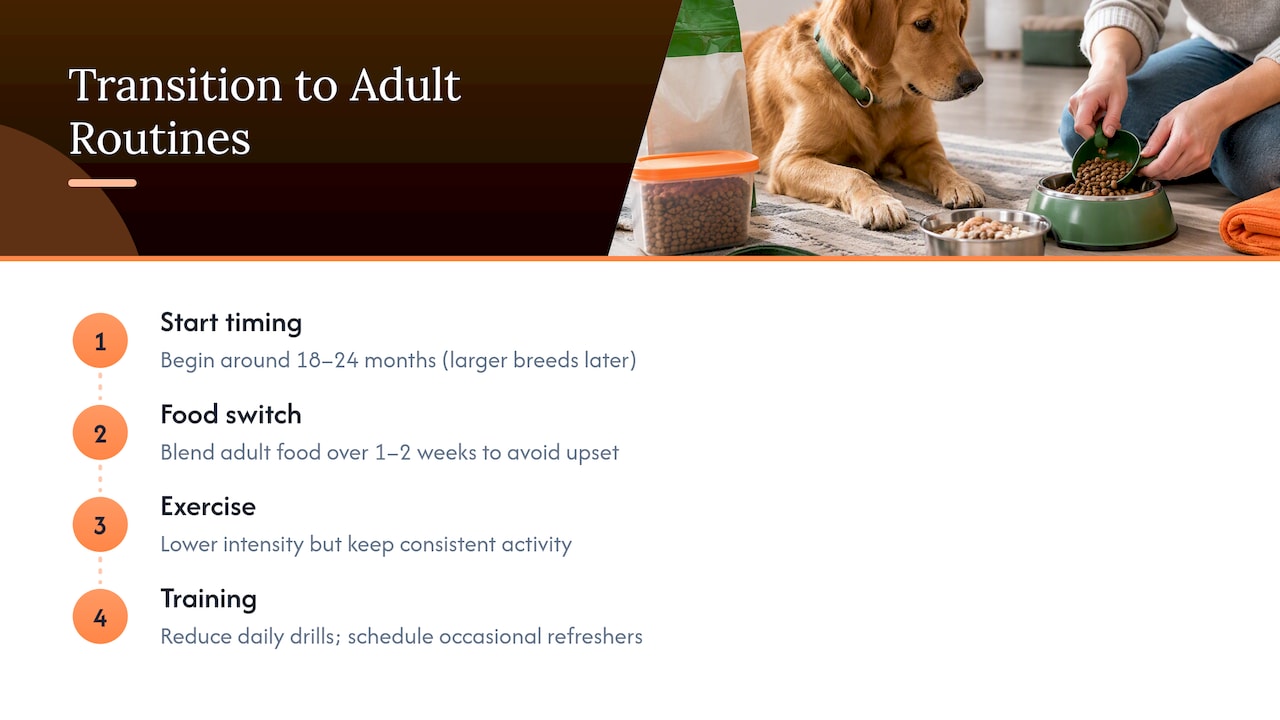
Training does not stop, it just changes shape. Cues that needed daily reinforcement during adolescence usually need less frequent practice once your dog matures, though occasional refreshers keep things sharp. If you are weighing how to structure that ongoing training, our comparison of online versus in-person training lays out the tradeoffs honestly.
A Realistic Look at Surviving the Teenage Phase
I will be straight with you: adolescence is the stretch where a lot of owners feel like they failed. You did not. Your dog’s brain is mid-renovation, and expecting puppy-level compliance from a body that size is setting yourself up for frustration. Small, consistent wins beat dramatic overhauls, and punishment-based fixes tend to backfire by adding fear on top of an already impulsive brain.
A weekly, structured approach helps because it breaks an overwhelming stretch into manageable pieces, which is the benefit of using a science-backed training program.
— Ali
How Rebarkable Supports You Through Adolescence
Rebarkable’s weekly training program was built around exactly this kind of stretch: the messy, unpredictable months where puppies test boundaries and owners need a plan more than a pep talk. Such programs often deliver weekly lessons, troubleshooting guidance, and video demonstrations by email, helping owners know what to work on next.

This flexible format fits busy households well, allowing training to be done in short pockets of time, often with community support from other owners navigating the same phase. If you are curious what structured training typically costs compared to other options, our breakdown of puppy training costs is worth a look before you decide. Check out the Pupdates program to get weekly, guided structure through adolescence and beyond.
Sources
- Behavioral changes in dogs during adolescence — PMC (2016)
- Effects of puppy socialization classes — JAVMA (2017)
- Mouthing, nipping and play biting — ASPCA
FAQ
How long does it take for a dog to get used to a new puppy?
Every household is different, and there is no single benchmark for this adjustment. Gradual, supervised introductions with plenty of positive reinforcement tend to smooth the process, and giving both dogs their own space early on helps.
What is a red flag puppy’s behavior?
Withdrawal from the family, sudden loss of appetite, and unprovoked aggression are signs that go beyond typical adolescent testing, according to VCA Hospitals. These warrant a veterinary or behaviorist evaluation rather than a wait-and-see approach.
How long does a puppy’s adolescent stage last?
Adolescence typically starts between 6 and 12 months and continues until behavioral maturity around 18 to 24 months for most dogs, per VCA Hospitals. Large or guardian breeds can take 3 to 4 years to fully mature.
What is the puppy blues?
Puppy blues describes the exhaustion, doubt, and frustration many owners feel during demanding early puppy or adolescent stretches. It usually eases as training routines take hold and the dog’s impulse control improves with brain maturation.
Does early socialization really affect adult behavior?
Yes. A study of 107 dogs found that puppies adopted very young showed more fear and anxiety later, and broader research links early, positive socialization to fewer fear responses as adults.
Recommended
- Teenage Puppy Problems: 7 Survival Tips From a Trainer
- Why You Shouldn’t Use Punishment In Dog Training [2024]
- How to Set Up A Perfect Daily Routine For Your Puppy
- Stop Puppy Barking: Quick Training for New Owners



0 Comments