The three easiest homemade puppy training treats are pea-sized soft meat bits, no-bake cheese or pumpkin dollops, and dehydrated single-protein jerky. Each one packs high reward value into a tiny, low-calorie bite your puppy can gobble fast, so training stays quick and focused. Just skip xylitol, onions, garlic, and grapes or raisins, and keep total treats to about 10% of your puppy’s daily calories.
TL;DR:
- Keeping treats to about 10% of a puppy’s daily calories allows for 15 to 30 small treats per day, depending on the puppy’s weight and intake.
- Avoid ingredients like xylitol, onions, garlic, grapes, and raisins in homemade treats, as they are highly toxic to dogs and pose serious health risks.
- Use silicone molds and pre-portion treats into small bags or molds to save time and ensure consistency in reward size across training sessions.
- Treats should be stored appropriately in the refrigerator or a cool, airtight container, with soft treats used within 3 to 5 days for freshness.
- Reward within one second of the desired behavior and keep training sessions short and focused to maximize learning and avoid losing your puppy’s attention.
Table of Contents
- Three easy recipes you can make tonight
- Why pea-sized portions and calorie counts matter
- Ingredients that never belong in a homemade treat
- Keeping treats fresh and ready to grab
- Getting the timing right during training
- Where this advice comes from
- What most treat advice gets backward
- Pairing homemade treats with structured training support
- Sources
- FAQ
Three easy recipes you can make tonight
You don’t need a culinary degree or a fancy dehydrator to make treats your puppy will work for. These three options cover the bases: soft, chewy, and shelf-stable.
No-bake meat mash. Cook a single protein (plain chicken breast, turkey, or lean beef) until fully done, then mash or pulse it in a food processor with a spoonful of plain pumpkin puree to bind it. Roll the mixture into pea-sized balls with your fingers or a piping bag and refrigerate until firm. This one takes ten minutes and needs zero baking, which makes it the fastest option when you’re out of treats and training starts in an hour.
Soft-bake cheese or pumpkin cookies. Mix low-fat cheese or pumpkin puree with a little oat flour and one egg, roll the dough thin, and bake at a low temperature until just set, not crisp. While the sheet is still warm, score it into a tiny grid so you can snap off pea-sized squares once it cools. These hold together better than the no-bake version and travel well in a pocket.
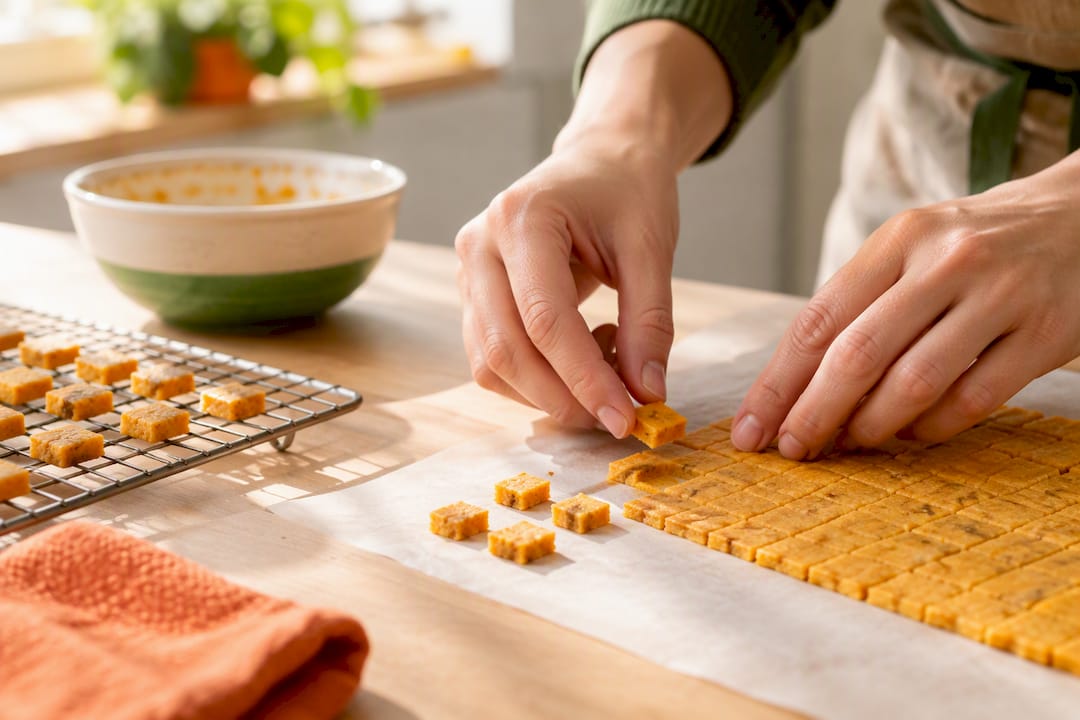
Dehydrated single-protein jerky. Slice chicken breast or lean beef into thin strips, cook them through completely first (never dehydrate raw poultry), then dry them low and slow in a dehydrator or a low oven for several hours until leathery. Cut the finished strips into small bits before you head out the door. Jerky-style treats hold up better in a warm pocket than soft-baked ones and last longer between training sessions.
A few swaps make these recipes work for more puppies: use turkey instead of beef for a lighter protein, or swap pumpkin for sweet potato if your puppy prefers it. Never add onion, garlic, or anything with xylitol, and check every label before it goes in the bowl, including peanut butter and any pre-made mix you might use for peanut butter treats.
- Use silicone candy molds to form dozens of identical pea-sized treats in one batch.
- Chill dough or mash for 15 minutes before cutting so it holds its shape.
- Pipe soft mixtures onto a lined tray instead of rolling by hand to save time.
Pro Tip: Freeze half of any batch in a labeled bag so you always have a backup ready when your puppy’s usual treat runs out mid-session.
If you want a deeper dive into what makes a treat worth reaching for, our guide to high-value treats breaks down why some rewards work better than others.
Why pea-sized portions and calorie counts matter
Tiny treats aren’t just cute, they’re strategic. A pea-sized bite gets swallowed in under a second, so your puppy stays focused on you instead of chewing and losing the thread of the exercise. That speed is what lets you reward dozens of repetitions in a single short session.
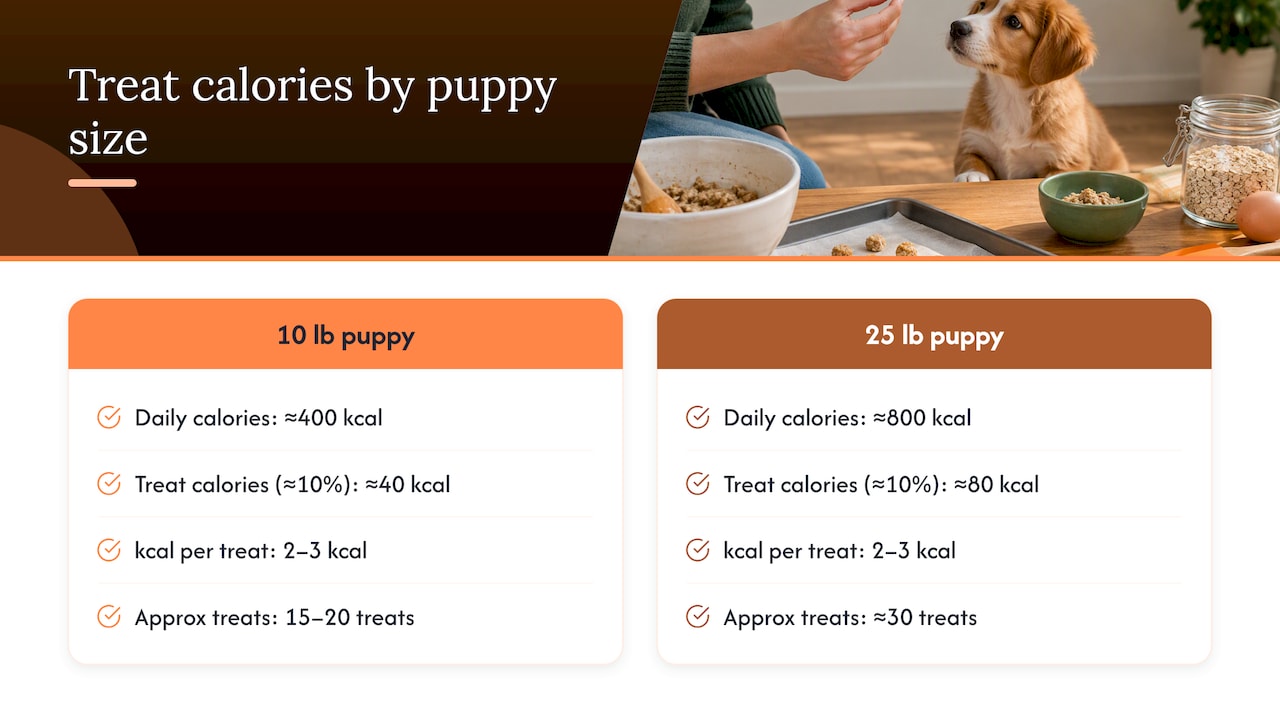
Calories add up fast when you’re rewarding that often. Veterinary guidance generally caps treats at about 10% of a dog’s daily calorie intake, with the rest coming from a complete puppy food. Training treats are often built to land around 2 to 3 kilocalories per piece, small enough that you can reward constantly without derailing your puppy’s diet.
Say a 10-pound puppy eats around 400 daily calories: that leaves roughly 40 calories, or about 15 to 20 tiny treats, for training. A 25-pound puppy eating closer to 800 calories has about 80 calories of wiggle room, closer to 30 treats across the day. Spread that across three or four short sessions and you’ve got plenty of room to reward generously without overdoing it.
Ingredients that never belong in a homemade treat
Homemade doesn’t automatically mean safe, so check every ingredient before it hits the mixing bowl. Xylitol, onions, garlic, grapes and raisins, chocolate, and macadamia nuts have no place in a puppy treat, ever.
Xylitol deserves special attention because it hides in places you wouldn’t expect, including some brands of peanut butter and baking mixes. It’s highly toxic to dogs and can trigger a dangerous drop in blood sugar along with liver damage, so read the label every single time, even on a jar you’ve bought before.
One of the most common toxic exposures ASPCA Poison Control sees involves everyday foods like grapes, onions, garlic, and xylitol, all of which are easy to accidentally toss into a homemade recipe if you’re not paying attention.
If you suspect your puppy got into something they shouldn’t have, call your vet or ASPCA Animal Poison Control right away, and bring the packaging with you so the clinic knows exactly what they’re dealing with.
Keeping treats fresh and ready to grab
No-bake and soft-baked treats are perishable, so keep them refrigerated and use them within 3 to 5 days. Dehydrated jerky lasts considerably longer in an airtight container, either in the fridge or a cool pantry, but use your common sense: if it smells off or shows any mold, toss it.
Pre-portion treats into small snack bags or silicone molds right after cooling, so grabbing a handful for a walk takes no thought at all. If soft-baked treats stick together in the bag, a light dusting of oat flour keeps them separate. Always let treats cool completely before storing, since trapped warmth is what causes sogginess and clumping.
Getting the timing right during training
The treat itself only does half the job. When and how you deliver it decides whether your puppy actually learns anything.
- Reward within one second of the correct behavior so your puppy connects the dots.
- Keep sessions to 3 to 5 minutes so attention doesn’t fade.
- Reward every single repetition when teaching something brand new.
- Switch to rewarding only some repetitions once the behavior is reliable.
As a cue becomes second nature, start swapping in praise or a quick game instead of food every time, a method covered in more detail in our guide to reducing treats in training. If your puppy shrugs off food rewards entirely, that’s its own puzzle, and our piece on food-motivation struggles walks through what to try instead.
Where this advice comes from
The calorie and portioning guidance here draws on feeding research from UC Davis and treat-sizing standards from the Purina Institute, and the toxin warnings come straight from the ASPCA. A 52-week training program built around this same science-backed approach can help support smoother, faster progress in short daily sessions when paired with consistent, appropriately sized treats.
What most treat advice gets backward
Most articles on this topic treat the recipe as the hard part and the portioning as an afterthought. It’s the opposite. Any puppy will eat a piece of chicken. The real skill is making that chicken small enough, low-calorie enough, and fast enough to deliver that you can reward forty times in a five-minute session without your puppy waddling off overweight by month three.
The other thing conventional advice underplays is variety. Puppies get bored of the same cheese cube after a week, and a bored puppy stops working for food. Rotating between a soft meat mash, a baked cookie, and a chewy jerky strip keeps the reward interesting, which matters more for long-term motivation than any single “best” recipe ever will.
If you take one thing from all this, prioritize portion size over ingredients. A perfectly balanced treat that’s the size of a dice cube will slow down your session and pack in calories you don’t need. A pea-sized bite of something simple, made correctly, beats a gourmet treat every time.
— Ali
Pairing homemade treats with structured training support
Homemade treats solve the reward side of training, but knowing exactly when to use them and what to teach next is the part most new owners struggle with. Rebarkable’s 52-week email program was built to fill that gap, delivering bite-sized lessons that match the pace of a puppy’s actual development.

- Weekly lessons tell you exactly how to structure short, treat-based sessions so your pea-sized rewards go further.
- Troubleshooting tips arrive right when common puppy-stage problems tend to show up, so you’re never guessing what to work on next.
If you want a low-effort way to keep training on track between batches of homemade treats, check out Pupdates and see what a full year of guided support looks like.
Sources
- Updated safety warning on xylitol: How to protect your pets | ASPCA
- Treats guidelines for dogs — UC Davis veterinary nutrition guidance
- Puppies and adult dogs: feeding treats — Purina Institute
FAQ
What are the best treats to give a puppy while training?
Pea-sized soft meat bits, no-bake cheese or pumpkin dollops, and dehydrated single-protein jerky work best because they’re swallowed fast and keep calories low. Training treats generally aim for about 2 to 3 kilocalories per piece, which lets you reward often without overfeeding.
What are some natural training treats for puppies?
Plain cooked chicken, turkey, or lean beef, along with plain pumpkin puree, make simple, natural training treats with no added sugar or preservatives. Avoid seasoning entirely and skip any ingredient list that includes onion, garlic, or xylitol.
At what age can you start training a puppy with treats?
Puppies can start basic reward-based training as soon as they come home, using soft, easy-to-chew treats. Keep pieces tiny and soft at this age since baby teeth aren’t ready for anything hard or chewy.
What are some good homemade treats for puppies?
A no-bake meat mash made from a single cooked protein mixed with pumpkin puree is one of the easiest homemade options, since it needs no baking at all. Soft-baked cheese or pumpkin cookies and dehydrated jerky strips are two other reliable choices that store well between sessions.
Recommended
- High Value Treats: The Complete Guide To Make Your Training Easy! (With A Recipe!)
- 10 Tried & Tested, Delicious Kong Recipes For Your Puppy!
- How to Reduce Treats in Positive Reinforcement Training
- The 3 D’s of Dog Training: Keys to Puppy Training Success
0 Comments