A dog’s growth plates don’t all close on one universal birthday. They close gradually as a puppy reaches skeletal maturity, and the timing varies by the individual dog, their size and breed, and even which bone you’re talking about. Smaller dogs generally mature earlier; large and giant breeds can continue growing for considerably longer.
Growth plates are areas of developing cartilage near the ends of a puppy’s long bones. They’re what allow those bones to lengthen as your puppy grows, and once growth is complete they harden into mature bone.
That’s why you’ll hear growth plates mentioned whenever puppy exercise, jumping, repetitive running or injuries come up. We don’t need to wrap puppies in bubble wrap — normal movement and age-appropriate activity are important — but we do want to be sensible about repetitive high-impact exercise while their skeleton is still developing.
When Do Growth Plates Close in Dogs?
There isn’t one precise closure age that applies to every dog. As a practical guide, many smaller dogs reach skeletal maturity sooner, while large and giant dogs may continue maturing well beyond their first birthday. Different growth plates within the same dog can also close at different times.
If you need to know whether your particular dog’s growth plates have closed — for example before beginning a demanding sport or because of an injury — age alone isn’t a guarantee. Your veterinarian can assess your dog and, where clinically appropriate, imaging can show whether a particular growth plate is still open.
What Are Growth Plates In Dogs?
Growth plates (also known as epiphyseal plates) are a soft cushion, made from cartilage, located near the ends of a long bone such as a front or rear limb.
As your dog approaches skeletal maturity, the cartilage of each growth plate is gradually replaced by bone. You will often see broad age ranges quoted online, but I wouldn’t treat any one number as a guarantee that every growth plate in every dog has closed.
Breed and eventual adult size matter. A small dog may finish much of their skeletal growth relatively early, whereas giant breeds such as Newfoundlands, St. Bernards, Irish Wolfhounds and Great Danes mature much more slowly. That’s one reason I take a more individual approach to exercise than simply saying, “they’re one now, so anything goes.”
Can A Young Dog Injure Their Growth Plates?
Absolutely! Your young dog is certainly capable of making an oops and overexerting themselves to the point of injuring their leg, which can, unfortunately, have an effect on the growth plate.
No one likes to see their dog in pain. This is why it is so important to not allow them to exercise for too long or too strenuously as they can easily damage their growing bones.
If a dog were to, unfortunately, injure their growth plate, a serious issue can occur, such as bone deformity, a shortened limb, a higher occurrence of hip or elbow dysplasia and future arthritis.
This is where understanding the appropriate degree and length of time your young dog is exercising is so important to their overall health and development! After all, we wouldn’t want to push our dog too hard and end up with them at the vet the next day.
So how can we avoid injury?
How Much Exercise Is Too Much Or Too Little For A Young Dog?
Those somewhat squishy growth plates in each limb are pretty vulnerable and an injury to that area is a big deal. When a growth plate suffers some kind of trauma then the cells that normally would continue to grow and eventually harden will stop short, leaving the limb stunted or even improperly formed.
As you can imagine, the issues after that are substantial, leading to chronic discomfort and a forever poorly developed leg. We all know how much we love watching our dog run through the yard or trot proudly next to us on a walk, so let’s keep those legs in good shape!
What About the Puppy “5-Minute Rule”?
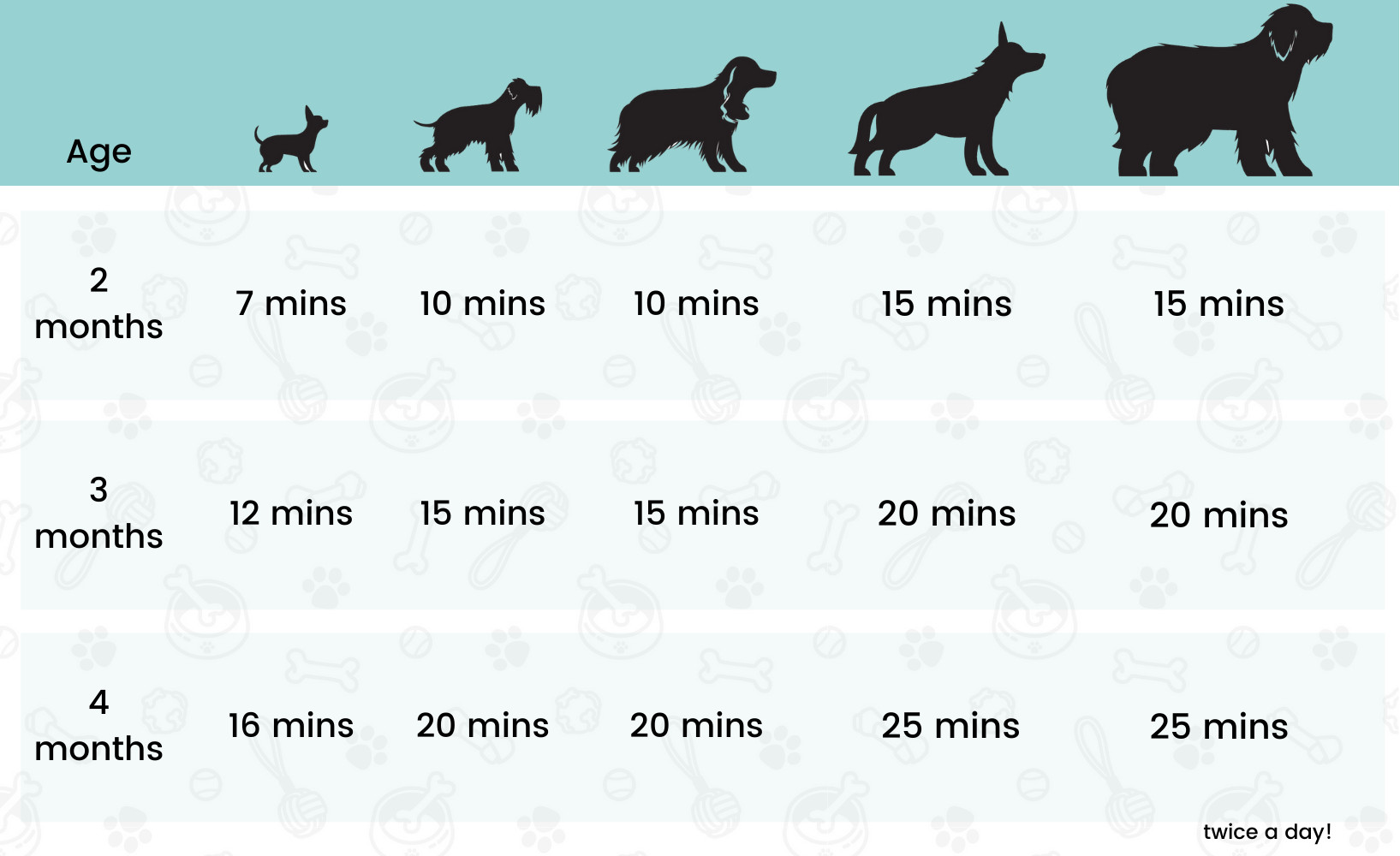
You may have heard that puppies should only be exercised for five minutes per month of age, up to twice a day. I wouldn’t use that as a hard physiological limit. Puppies don’t suddenly damage themselves at minute 26 because they’re five months old, and the rule doesn’t account for breed, surface, speed, terrain, type of movement or the individual puppy.
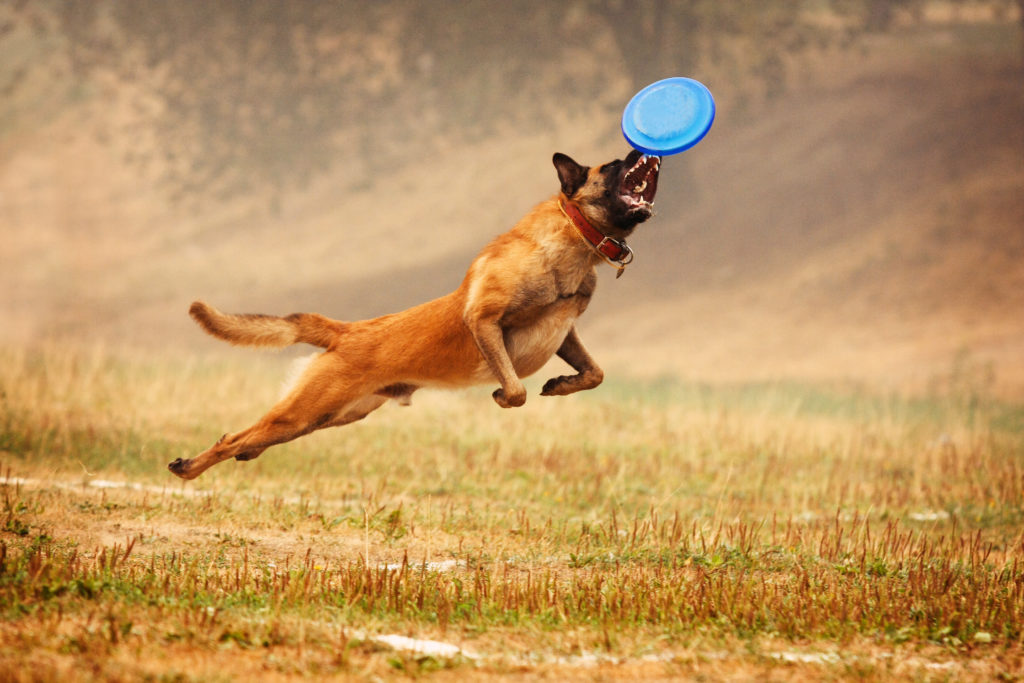
I find it much more useful to think about the type and intensity of exercise. A puppy choosing to sniff, wander, play and rest at their own pace is very different from repetitive forced running, repeated high jumps, sharp turns after a ball or trying to keep up with a human athlete.
Watch the puppy in front of you. Build fitness gradually, give them opportunities to stop, vary what they do, and remember that a puppy who becomes increasingly wild and frantic may actually be overtired, not asking you for another hour of exercise. For a fuller breakdown, see my guide to how much exercise puppies need.
Even if your puppy is wanting to keep going, try to encourage them to take a quick break! Just like excited and curious human kiddos, sometimes you have to make them settle down before they realize just how tired they are. Before you know it, they’re passed out in your lap!
The Giant Dog Breeds And Their Growing Bones
Even though they are the giants of the dog world, these big babies require a more gentle approach to exercise, especially when they are young and still growing. Because of their size and super long bones, they are at an even higher risk of injury to their growth plates, bones and joints than any other dogs.
When letting your giant pup outside for some play time, be sure to keep an eye on them. Taking sharp turns and very strenuous activity puts tons of pressure on those still vulnerable, long limbs.
An injury to a growth plate in a giant breed dog could be detrimental to their overall health and longevity. Not only will they have a limb that didn’t form properly, leading to an awkward gate and predisposition to pain and arthritis but they will require more assistance from you in the long run.
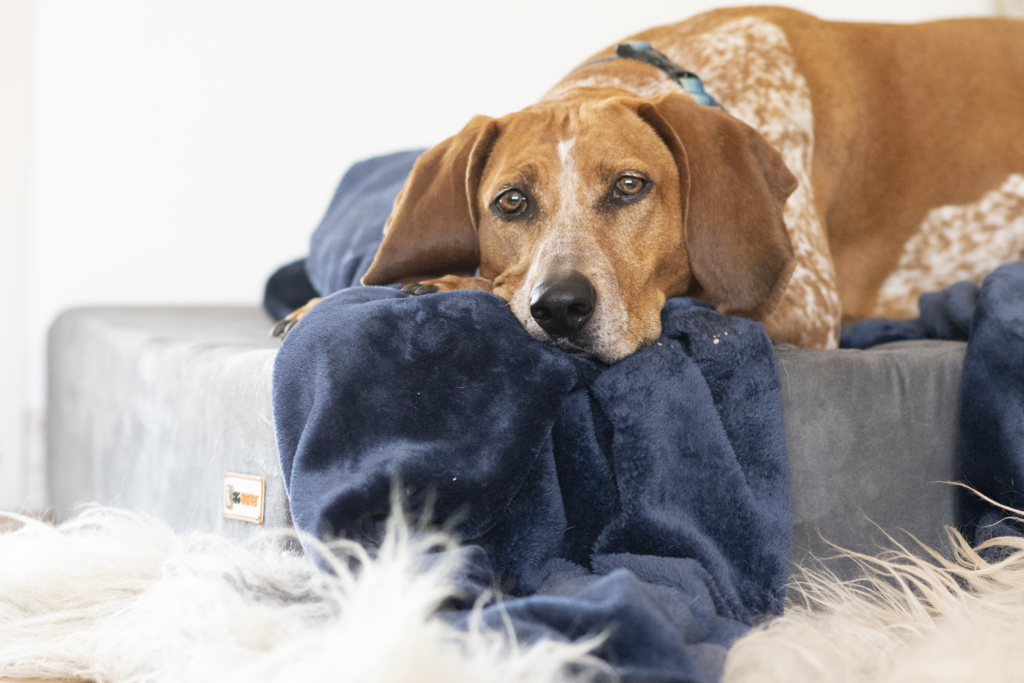
I don’t know about you, but hoisting a 150 lb dog off of the floor every day is not an easy task for most people!
- Let them move, explore and build coordination rather than trying to keep them sedentary.
- Build walks and structured activity gradually instead of making sudden jumps in distance or intensity.
- Be more cautious with repetitive high-impact work such as repeated jumping, hard stops, sharp turns and long forced runs.
- Give growing dogs plenty of opportunities to rest and choose when they’re finished.
- If you want to start a demanding canine sport, discuss your individual dog’s development and conditioning with your vet and an appropriately qualified coach.
Nutrition matters too, particularly for large and giant breed puppies. Feed an appropriately formulated complete puppy diet rather than adding calcium or joint supplements simply because your puppy is big; if you think supplementation is needed, discuss it with your veterinarian first.
What Do I Do If My Puppy Is Limping?
The first thing to do is, of course, call your vet! They will give you the proper guidance, which should include coming in for an exam and potentially x-rays to interpret your pet’s reason for limping.
There can be loads of reasons for a young dog to limp, and an injury to a growth plate is certainly one of them. However, let’s hope that’s not the issue!
Your young dog could be limping due to several things besides a damaged growth plate, such as:
- A simple sprain to a joint
- Panosteitis (growing pains common in large breed dogs like German Shepherds)
- Elbow or hip dysplasia
- A fracture or broken bone
I’m Trying To Rest My Puppy, But He Won’t Stop Being Hyper!
Ahh, forgive me for laughing, but it’s only because I know exactly what you’re going through. It’s the age-old issue with puppies – they just never stop! While this is pretty true of most young animals, it is possible to reign in those crazy tendencies and get them to settle down.
Finding ways to get your dog to relax a little can take some work, but trust me when I say that there are plenty of tools at your disposal! Here are a few suggestions for getting that excitable young pup to calm down for some couch time and hopefully a nap.
- Have a designated resting area such as a bed or a cozy kennel for your puppy to go to when it’s time to settle down. (Not to mention, every puppy should be kennel trained for their own safety!)
- Puzzles! There is a plethora online and at the pet store of fun feeder toys and puzzles for your pups’ maturing brain. These will keep them busy for quite a while without having to worry about them overexerting themselves. However, it is important to not overfeed your puppy as this can bring on a world of other issues!
- Have a controlled play session before trying to get them to settle. This may include playing together in the yard or going on a short walk through the neighborhood.
Protecting Your Puppy’s Growth Plates
A young dog can have a lot of energy, and growth plates are one reason to be thoughtful about how we build exercise while they’re developing. But the goal isn’t to prevent normal puppy movement. Let puppies walk, sniff, play, explore and learn how to use their bodies; be more deliberate about repetitive, high-impact or forced exercise and build physical demands gradually.
As always, reach out to your veterinarian if you think that your dog has any kind of injury, but especially to a limb. Their growing bones and soft growth plates are extremely important when it comes to your dog’s skeletal development, as any abnormality could lead to life-long pain and other complications.

Author, Ali Smith
Ali Smith is a professional, qualified, and multi-award winning trainer is the founder of rebarkable. She has always believed animals deserve kindness and champions force free methods. Believing that dog guardians will all choose the kindest options if proper information is provided, she aims to help all dog guardians who need it and make dog training as accessible as possible
Ali lives win Maryland, US with her husband and her three dogs.
0 Comments