When I moved from the UK to Maryland, adjusting my poor dog to an American summer was a thing. British “hot weather” and a humid Maryland day are not the same beast—and dogs do not always make sensible decisions about either.
That last part matters. A dog may stay beside you because that is where they want to be, continue chasing a ball because the game is exciting, or insist they are absolutely fine right up until they very much are not. Dogs are not necessarily good at regulating themselves when the fun, their person or an interesting smell is involved.
So I am a big believer in knowing better than your dog and stepping in where necessary. With heat, it is necessary.
Why Do Dogs Overheat Faster Than We Do?
To understand heat risk, we need to look at how dogs cool themselves. We hairless apes sweat across most of our bodies. Dogs do not. They have sweat glands in their paw pads, but their primary cooling mechanism is panting.
Panting moves air over moist surfaces in the mouth and respiratory tract so heat can leave through evaporation. It works—but it can become much less effective when the air is hot and humid, when a dog is exercising hard, or when their airway is compromised.
Dogs also use behavior to manage temperature. They seek shade, reduce movement, spread out on a cool floor, drink, wade in water and dig down to cooler soil. Unfortunately, we humans sometimes scold those perfectly sensible choices. The dog digging a shallow patch of fresh earth to lie in may not be plotting against your lawn; they may be trying to cool their belly.
Which Dogs Are Most at Risk in Hot Weather?
Every dog can overheat, but some have much less margin for error. Take extra care with:
- Flat-faced dogs, including Bulldogs, French Bulldogs and Pugs, whose shortened airways make panting less efficient.
- Senior dogs, especially those with heart, respiratory, neurological or mobility conditions.
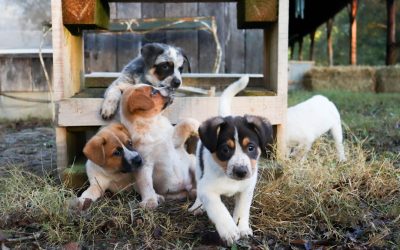
- Puppies, who are busy, excitable and not known for excellent life choices.
- Overweight dogs.
- Thick-coated and dark-coated dogs.
- Dogs with laryngeal paralysis, heart disease or other breathing problems.
- Highly driven dogs who will continue running, working or playing beyond the point they should stop.
Cornell University’s veterinary guidance identifies brachycephalic, elderly, overweight, thick- or dark-coated dogs and those with cardiac or respiratory disorders as higher-risk groups. But “not high risk” does not mean immune. My coonhounds love warmth; that does not grant them heatproof status.
How to Modify Your Dog’s Routine in Hot Weather
The obvious changes genuinely help: move walks to early morning and later evening, when the air and walking surfaces tend to be cooler. Keep outings shorter, calmer and less exciting when the heat or humidity is prohibitive.
Do not plan by air temperature alone. Direct sun, humidity, limited airflow and hot surfaces all affect risk. Tarmac, asphalt, metal and dark paving can become much hotter than the surrounding air. Check the surface yourself and choose grass or shade where possible. Boots can protect paw pads, but they must be introduced gradually and they do not make strenuous exercise safe in dangerous heat.
Summer is a fabulous time to swap some physical exercise for mental enrichment. Scent games, trick training, food puzzles, hide-and-seek, tug and short training sessions can meet needs without generating the same amount of body heat as a long run. The importance of sniffing is easy to underestimate; ten thoughtful minutes with their nose can be much more valuable than marching another mile.
Other options include supervised swimming and indoor treadmill work. Swimming is still exercise, though—dogs can overdo it, swallow too much water or struggle to exit a pool—so use an appropriate canine life jacket where needed and provide frequent breaks.
Using a Canine Treadmill or Slatmill in Hot Weather
We have a PawPaw dog slatmill, and honestly, it works. Because it is self-powered rather than motorized, the dog controls the movement and can stop running—but that does not remove the need for human judgment.
A slatmill needs training. Introduce it gradually using positive reinforcement: reward your dog for approaching it, stepping onto it, standing comfortably and then creating a little controlled movement. Do not put a worried dog onto the machine, restrain them there or lure them into running before they understand how the surface moves.
Use it only under direct supervision in a cool, well-ventilated or air-conditioned room. Keep sessions short, provide water and monitor your dog closely. A driven dog can still run themselves hot on a self-powered mill, so you—not the dog—remain responsible for deciding when the workout ends.
It is a useful way to provide physical exercise when roads and pavements are dangerously hot, but it does not replace sniffing, exploring or time outside when conditions are safe. Think of it as one tool in the summer toolbox, not an indoor substitute for your dog’s entire life.
Practical Cooling Ideas for Indoors and the Backyard
One of my favorite summer investments is giving dogs access to water whenever they are outside—and I do not just mean a drinking bowl.
A dog-safe paddling pool is fantastic for many small and medium-sized breeds. For larger dogs, I highly recommend a livestock stock tank. They are incredibly durable, large enough for a big dog to stand or lie in, and survive claws much better than most plastic kiddie pools.
- Put the pool or tank in shade.
- Make sure your dog can enter and exit easily without slipping.
- Keep the water shallow enough for the individual dog.
- Refresh and clean the water regularly.
- Supervise dogs around all water, even when it looks shallow and harmless.
Indoors, close blinds or curtains before the hottest part of the day, improve airflow with fans and use air conditioning where available. Give dogs access to cool flooring and do not insist that they remain beside you in a warm room.
Cooling mats may help some dogs, but I am not entirely convinced they all deliver what the marketing promises. Treat one as an optional cool place—not a safety system that makes an otherwise hot environment acceptable. A dog must be able to move away from it, and gel-filled mats are unsuitable for dogs likely to chew or puncture them.
Should You Shave a Double-Coated Dog for Summer?
Routine summer shaving is one of those ideas that makes logical sense to humans but does not translate neatly to dogs. A healthy double coat provides insulation and protection from the sun. Removing it down to the skin can increase the risk of sunburn and removes that protective layer.
That does not mean ignoring a dense coat. Brush regularly to remove loose undercoat, prevent matting and maintain airflow through healthy fur. VCA’s veterinary guidance recommends regular brushing and warns against shaving a dog to the skin unless a veterinarian advises it for medical reasons.
If the coat is severely matted, your dog has a medical condition, or you are unsure how their particular coat should be managed, speak to a qualified groomer and your vet. “Do not routinely shave a healthy double coat for summer” is much more useful advice than pretending no dog should ever be clipped under any circumstances.
Creative Ways to Increase Your Dog’s Hydration
Water does not have to come only from one bowl. You can:
- Add water to meals.
- Freeze water or dog-safe, low-sodium broth in a food toy.
- Offer ice cubes if your dog enjoys them.
- Use dog-safe fruits with a high water content, such as seedless watermelon, in sensible portions.
- Place several bowls around the house and yard.
- Carry water on walks rather than relying on finding it.
Some dogs simply drink more when water is always within easy reach. For outdoor water, a livestock float bowl is one of my favorite practical solutions because it maintains the water level automatically. It still needs to be checked and cleaned; “automatically refills” does not mean “automatically hygienic.”
Do not force large quantities of water into an overheated dog, and do not let a dog gulp endlessly after hard exercise. Offer sensible access while you cool them and contact your veterinarian.
Warning Signs of Heatstroke in Dogs
Early warning signs can include:
- excessive or unusually heavy panting;
- heavy drooling;
- bright red or abnormal-looking gums;
- slowing down or repeatedly seeking shade;
- refusing to continue walking;
- restlessness or an inability to settle; and
- unusual tiredness or weakness.
As heat illness progresses, a dog may vomit, develop diarrhea, become confused or uncoordinated, collapse, have a seizure or lose consciousness. Heatstroke can damage multiple organs and is a medical emergency.
What to Do if Your Dog Is Overheating
Start cooling your dog immediately and contact an emergency veterinarian. Do not wait to see whether they improve on their own.
- Move the dog out of the heat and into shade or an air-conditioned area.
- Wet the body with cool water. Do not use an ice bath or cover the dog with wet towels that can trap heat as they warm.
- Create airflow with a fan or vehicle air conditioning.
- Call the veterinary hospital and begin transport while continuing safe cooling.
The Royal Veterinary College summarizes this as “cool first, transport second”: begin active cooling immediately, then continue it on the way to veterinary care. Cornell’s canine heatstroke guidance likewise advises cool water and air conditioning while traveling to the hospital.
Even if your dog appears to recover, they still need veterinary assessment. Internal complications may not be immediately visible.
Hot-Weather Mistakes to Avoid
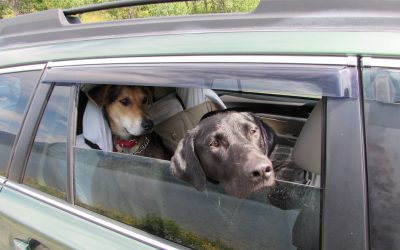
- Never leave a dog in a parked vehicle. Shade, cracked windows and “just a minute” do not make it safe.
- Do not assume your dog will stop themselves. Excitement and social attachment can override sensible behavior.
- Do not rely on a cooling product. Mats, vests and pools support sensible management; they do not cancel dangerous conditions.
- Do not exercise according to the calendar. Your dog does not need the same mileage every day regardless of weather.
- Do not use a laser pointer as indoor exercise. It can create obsessive light- and shadow-chasing behavior because the dog can never complete the chase.
Need Easier Ways to Keep Your Puppy Busy Indoors?
Hot weather can turn a normal routine upside down. My practical puppy-training resources can help you build calmer indoor skills and provide appropriate activities without fear, force or outdated dominance nonsense.
Know Better Than Your Dog
Hot-weather safety is mostly unglamorous management: shorter walks, earlier alarms, more shade, more water and occasionally telling an enthusiastic dog that no, they are not going to keep chasing the ball.
Your dog may choose you, the game or the adventure over their own comfort. That is lovely in one sense—and exactly why the responsibility sits with us. When the weather becomes prohibitive, be the sensible one.
0 Comments