I own a lot of dog collars. Mostly nylon, if I’m honest.
My Tactipup collars have taken a ridiculous amount of real-life abuse, and I have leather here too, so when I’m looking at leather collars I’m not starting from the assumption that leather is automatically the nicer, better or more durable choice. Sometimes nylon is the better collar. Sometimes BioThane is. And sometimes a proper piece of leather is exactly what I want.
The problem with shopping for leather collars is that the word leather doesn’t tell you very much. I’ve seen inexpensive leather collars that are perfectly serviceable and expensive ones where you’re paying largely for styling. What matters to me is the actual construction: what leather is being used, how thick it is, what the hardware is, how wide the collar is for the dog wearing it, and whether the whole thing makes sense for that dog’s life.
Also, just to be clear about how I’ve put this list together: I haven’t personally owned every collar below. I have hands-on experience with leather and a lot of heavy-duty nylon collars, I’ve seen the Pear Tannery-style sighthound collar on a client’s dog, and I’ve selected the others because their construction and intended use make sense to me as a trainer. Where something is based on specifications rather than my own long-term wear test, I’m not going to pretend otherwise.
The leather dog collars I’d look at first
- Traditional leather: The Lille Björn Vero Classic
- Broad leather collar for a large dog: Ray Allen Ultimate Padded Leather Agitation Collar
- Softer everyday leather: Soft Touch Collars Leather Two-Tone
- For long coats: Auburn Leathercrafters Rolled Collar
- For Greyhounds and other sighthounds: Pear Tannery Super Soft Padded Greyhound Collar
- Statement collar: Crazy Rebels
- If leather is actually a terrible idea for your dog: BUMAS BioThane
Those aren’t seven versions of the same recommendation. They’re solving different problems, which is really the point.
The Lille Björn Vero Classic: the traditional one
If I’m spending proper money on a simple leather collar, I want to be able to tell where that money went. “Luxury” does absolutely nothing for me as a specification.
The Lille Björn Vero Classic is interesting because it’s refreshingly specific about what you’re buying: a single 3mm piece of full-grain Italian vegetable-tanned leather, with solid brass buckle, D-ring and Chicago rivets. No layers of mystery material hidden inside it, and no decoration trying to convince me it’s better than it is.
That’s much more my speed.
The thing I’d watch is sizing. The Vero comes in 2cm and 3cm widths and each size only gives you around 5cm of adjustment. On an adult dog with a settled neck size, fine. On a German Shepherd puppy who is currently 40% ears and changing shape by Tuesday? I wouldn’t spend this sort of money expecting one collar to see them through puppyhood.
Vegetable-tanned leather also behaves like leather. It starts firmer, softens with wear and develops a patina. Personally, that’s part of the appeal. If I wanted something to look exactly the same after years of use, leather probably wouldn’t be the material I’d choose.
I’d shortlist this for an adult dog where I wanted a classic leather collar and was happy to actually look after it.
Ray Allen Ultimate Padded Leather: the broad one
Ray Allen’s Ultimate Padded Leather Agitation Collar is latigo leather with a neoprene lining and comes in 1.5-inch and 2-inch widths. It’s sold into the working-dog world, including tracking and agitation work, but the bit that interests me for a normal large dog is much less dramatic: it’s a proper width.
I really don’t think a 1.5- or 2-inch collar is excessive on a German Shepherd-sized dog. I tend to prefer a substantial collar on a substantial neck. That doesn’t mean “wider is always better”; it means the collar should be in proportion to the dog. Two inches on a big shepherd? Totally reasonable. Two inches on a little Spaniel? We’ve basically put a belt around them.
And no, a broad heavy-duty collar isn’t my solution to pulling. If a dog is spending the walk leaning into the leash, I’d rather change the walking setup and train the walking than keep escalating the collar. Equipment and training have different jobs.

Soft Touch Leather Two-Tone: if you don’t want to break leather in
The Soft Touch Collars Leather Two-Tone is almost the opposite approach to the Vero. It uses a full-grain leather outer with a soft sheepskin leather lining and solid brass hardware, so the selling point is immediate softness rather than one simple piece of leather gradually moulding with wear.
I don’t think one approach is inherently superior. If you’ve got a short-coated dog and you’re particularly conscious of what is sitting directly against the skin, the lining may be appealing. If you like minimal construction and want the leather itself to age in, the Vero makes more sense.
This is one of those places where “best leather dog collar” becomes a fairly useless question unless we know what you actually want from it.
Auburn Leathercrafters Rolled Collar: when the coat is the problem
Rolled leather has a very specific use I like: reducing the big flat area of collar rubbing against a longer coat. If you’ve had a dog develop that permanent collar-shaped ridge around the neck, you’ll know exactly what I mean.
Auburn Leathercrafters’ Rolled Collar is made for that job, with hand-polished edges and sizing from small through larger dogs.
I would separate “collar the dog wears” from “equipment I want a pulling dog walking on”, though. A rolled collar puts pressure over a narrower area than a broad flat collar. For ID and ordinary wear on a long-coated dog, great. For a dog hitting the end of a leash repeatedly, I’d choose a different walking setup.
Pear Tannery Greyhound Collar: one I’ve actually seen on a client dog
This recommendation has a little more real-world context behind it because I’ve had a client whose sighthound wore this style of broad leather collar.
The Pear Tannery Super Soft Padded Greyhound Collar is shaped for Greyhounds, Whippets, Lurchers and similar dogs, using a broad padded section rather than treating a sighthound neck like it’s just a skinny version of every other dog’s neck.
That makes sense to me. Sighthounds are one of the occasions where the dog’s proportions genuinely change what I want from the collar.
I would still think separately about escape security. A buckle collar being lovely, broad and comfortable doesn’t magically make a dog unable to reverse out of it. If I had a sighthound who was an escape risk, I’d be looking at the whole walking setup rather than expecting one beautiful leather collar to do everything.
Crazy Rebels: because sometimes you want the ridiculous one
I refuse to pretend aesthetics don’t count. They do. Sometimes you want the sensible brown leather collar and sometimes you want your dog to look like they have their own tour manager.
Crazy Rebels is the latter end of the spectrum: heavily customised statement leather collars with choices around width, hardware, colour and decoration. I love the idea of these for exactly what they are. They’re jewellery and dog equipment.
But decoration doesn’t get a free pass from me. However gorgeous a collar is, I still care about the base leather, the hardware, the attachment points, the edges and the fit. Spikes don’t make a D-ring stronger. Sadly.
And if your dog is wet constantly? Don’t buy leather.
This is probably my strongest opinion in the whole article: don’t buy leather because you’ve decided leather is “best” and then spend the next five years fighting your dog’s actual lifestyle.
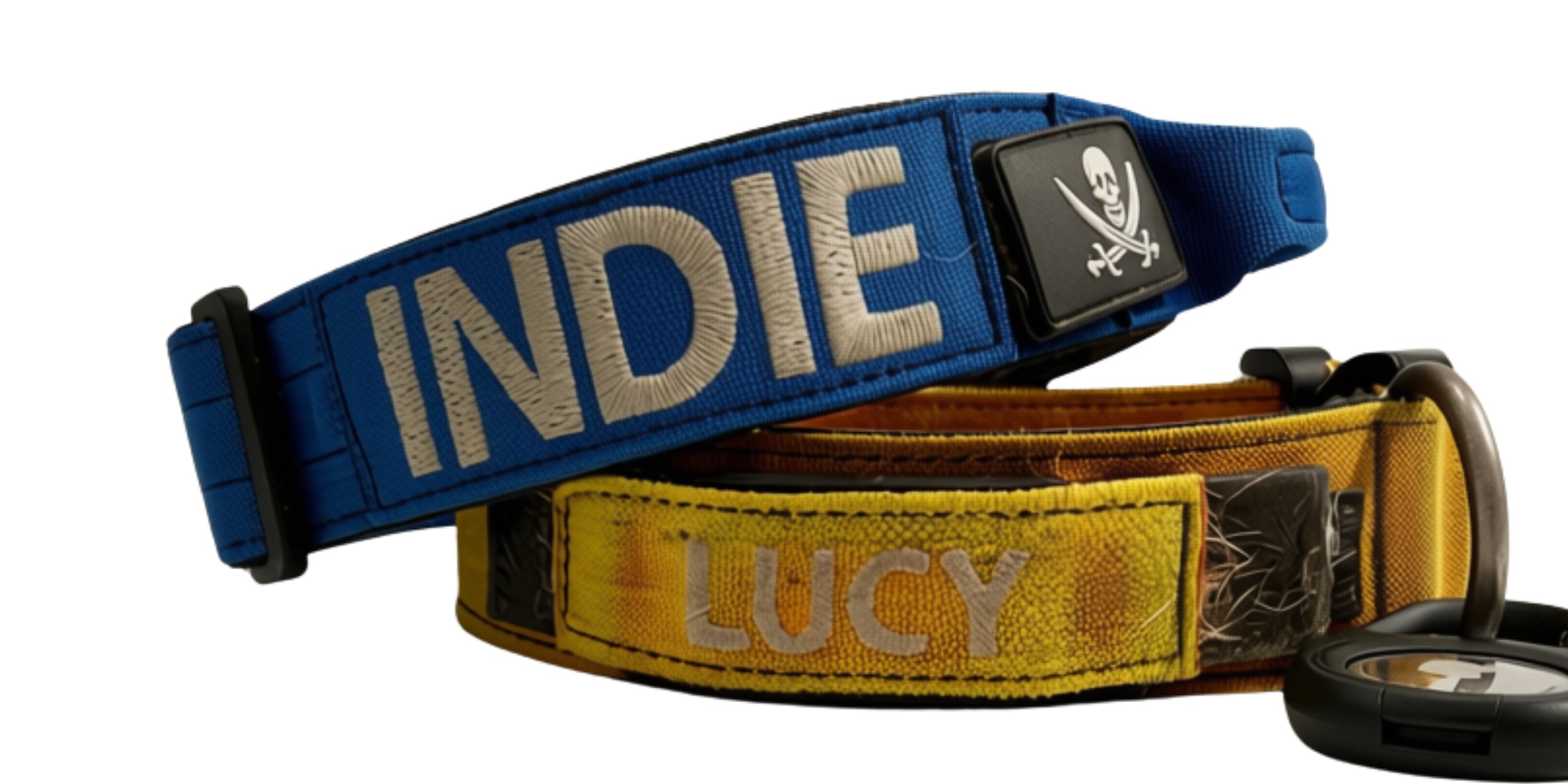
If you’ve got a Labrador who finds water in a desert, a dog who is routinely muddy, or you simply want to hose the collar off and get on with your day, I’d look at nylon or BioThane. I own and use heavy-duty nylon collars for exactly this reason.
BUMAS makes made-to-measure BioThane collars, and that material is far more appealing to me for a dog who is wet all the time. You can wipe or rinse it clean and you don’t have the same leather-care routine.
Leather can last beautifully. That doesn’t mean it wins every comparison.
What I actually check when I pick up a leather collar
I can make this considerably simpler than most buying guides do. I look at five things:
- The leather. Tell me what it actually is. “Genuine leather” on its own isn’t enough information to impress me. I want to know whether it’s full-grain, how it’s constructed and whether I’m looking at one substantial piece or multiple layers.
- The hardware. The buckle and D-ring matter just as much as the pretty leather strap. I look at what they’re made from and, particularly, how the D-ring is attached.
- The width. This is dog-dependent. I like a proper broad collar on a large dog. I don’t want to bury a small dog’s neck in unnecessary collar.
- The edges and the inside. Run your fingers over the bits that will actually touch the dog. Pretty product photography doesn’t tell you whether an edge feels rough.
- The fit and adjustment. I want enough room to get the fit right, but I’m not trying to make an expensive adult leather collar somehow fit a rapidly growing puppy for a year.
If you need help with where a collar should sit and how it should fit, I have a separate dog collar fit and safety guide. And please measure the actual dog. I’ve worked with enough dogs to know that buying by breed is a fantastic way to discover that apparently nobody told your particular dog what size their neck was supposed to be.
Leather collar care: how fussy are you willing to be?
This matters more than people admit. Leather is lovely, but it is not my “throw it in the washer and forget about it” material.
If a leather collar gets wet, let it dry naturally. Keep it reasonably clean, condition it when it needs it, and check the areas that flex repeatedly as well as the hardware attachment points. If that entire sentence made you tired, genuinely: buy nylon or BioThane. There is no medal for owning the highest-maintenance dog collar.
I also wouldn’t spend serious money on leather for a puppy unless I was perfectly happy knowing they may outgrow it. Save the beautiful long-term collar for when the neck stops changing every five minutes.
Are expensive leather dog collars actually worth it?
Sometimes. But not because leather performs a magic financial trick where a $100 collar inevitably outlives six $15 nylon collars.
I’ve got nylon collars that take serious abuse. A leather collar can also be ruined by poor care, repeated soaking, chewing or just being completely wrong for the dog’s life. So longevity isn’t a simple price equation.
Where I think premium leather earns its money is when I can point to what I’m paying for: better leather, appropriate thickness, good finishing, solid hardware, thoughtful construction and, if you care about it, craftsmanship and customisation. That’s why something like the Lille Björn interests me. “Premium” is marketing. A 3mm full-grain leather strap and solid brass hardware are specifications I can actually evaluate.
So, which leather dog collar would I buy?

For a large German Shepherd-sized dog, the Ray Allen appeals to me because the width is right and the construction is substantial. If I wanted a cleaner traditional leather collar for an adult dog, I’d look at the Lille Björn. For a long-coated dog where a flat collar was affecting the coat, I’d investigate rolled leather. For a sighthound, I’d want the proportions of the Pear Tannery-style collar rather than simply buying a standard narrow buckle collar.
And if the dog swims, rolls in mud and generally treats nice belongings as a challenge? I’m going back to nylon or BioThane without a shred of guilt.
That’s really the bit I want people to take away from this. A leather dog collar isn’t better because it’s leather, and the most expensive collar isn’t automatically the best one. Pick the width, construction and material for the dog in front of you — then, if you also want it to be ridiculously pretty, I fully support that decision.
0 Comments