
Yes, puppies can handle road trips once you’ve laid the groundwork. The single most urgent step is starting short acclimation rides this week: a few minutes around the block, paired with a secure crate or crash-tested harness and a vet check to confirm your pup is cleared to travel. Skip the prep and you’re rolling the dice on carsickness, panic, or worse.
TL;DR:
- Short, acclimation rides of five to fifteen minutes are essential to prevent car sickness and anxiety before longer trips, especially for young or unvaccinated puppies.
- Securing puppies with crash-tested crates or harnesses placed in the back seat reduces crash risk and distraction, with crates providing more containment and harnesses offering visibility.
- Feeding a light meal three to four hours prior decreases nausea, and frequent stops of two to three hours help manage motion sickness and allow bathroom breaks.
- Starting with brief practice drives that end on a calm note builds tolerance and confidence, avoiding long journeys until the puppy is fully vaccinated and less anxious.
- A structured weekly training plan focusing on crate comfort, calm settling, and gradually increasing ride length supports steady progress toward a stress-free road trip.
Table of Contents
- Prepare your puppy before the trip with short rides and crate training
- Safety and restraint in the car: crates, harnesses, and placement
- Feeding, motion sickness, and hydration on the road
- Route planning and breaks: how often to stop and what to do
- Packing checklist for a road trip with a puppy
- Managing anxiety and reactivity for nervous puppies on the road
- Vet checklist and travel documents to sort out before you leave
- How a structured weekly plan gets your puppy travel-ready
- Balancing the adventure with what your puppy can actually handle
- Get your puppy travel-ready with weekly training support
- FAQ
- Sources
Prepare your puppy before the trip with short rides and crate training
Building a road-trip-ready puppy is a lot like potty training: small, repeated wins beat one big push. Start with five to fifteen minute rides around the neighborhood, then slowly stretch the time and toss in mild distractions like a quick stop at a drive-through or a busier street.
At home, introduce the crate or a crash-tested harness, pairing it with treats so your puppy starts associating restraint with good things, not confinement. Practice “calm settle” sessions where the pup lies quietly while buckled in, even before the engine starts.
- Teach calm entry and exit through the car door, rewarding four paws on the seat.
- Run a few “mock” sessions with the engine on but the car parked, building tolerance to vibration and noise.
- Gradually combine steps one and two into a real five-minute drive.
- Extend trip length only after your puppy stays relaxed for the shorter one.
Postpone longer trips if your puppy is too young to be fully vaccinated, recovering from illness, or showing severe anxiety in the car. Those situations need patience first, mileage later.
Pro Tip: End every practice ride on a calm note, even if that means cutting it short. A puppy who finishes stressed remembers the car as stressful.
Safety and restraint in the car: crates, harnesses, and placement

A loose puppy in a moving vehicle is a safety hazard for everyone, not just the dog. The American Veterinary Medical Association recommends restraining pets with a crash-tested harness or a properly sized, secured crate, placed in the back seat or cargo area, never loose and never with a head hanging out the window.
Each option has trade-offs:
- A crate offers the most containment and doubles as a den for rest stops, but it needs to be large enough for your puppy to stand, turn, and lie down comfortably.
- A crash-tested harness takes up less space and lets your puppy see out the window, which can ease anxiety, though it offers less protection than a solid crate in a serious collision.
- A booster seat suits very small breeds but isn’t a substitute for a harness clip-in.
Unrestrained pets are a known distraction behind the wheel and can become projectiles in a crash, according to AVMA research. Before you pull out of the driveway, double-check that the crate is strapped down with cargo straps or a seatbelt, the harness clip reaches the seatbelt anchor without excess slack, and nothing can slide or tip during braking.
Feeding, motion sickness, and hydration on the road
A light meal three to four hours before departure cuts the odds of carsickness, since a full stomach sloshing around at highway speed rarely ends well. The AVMA advises skipping large meals right before or during travel.
Watch for these motion sickness signs:
- Excessive drooling or frequent lip licking.
- Pale or gray gums.
- Whining, restlessness, or vomiting.
If you spot these signs, pull over at the next safe stop, let your puppy walk a few minutes, and offer small sips of water once they’ve settled. Chronic sickness is worth a vet visit, since a prescribed anti-nausea medication can make a real difference on longer trips.
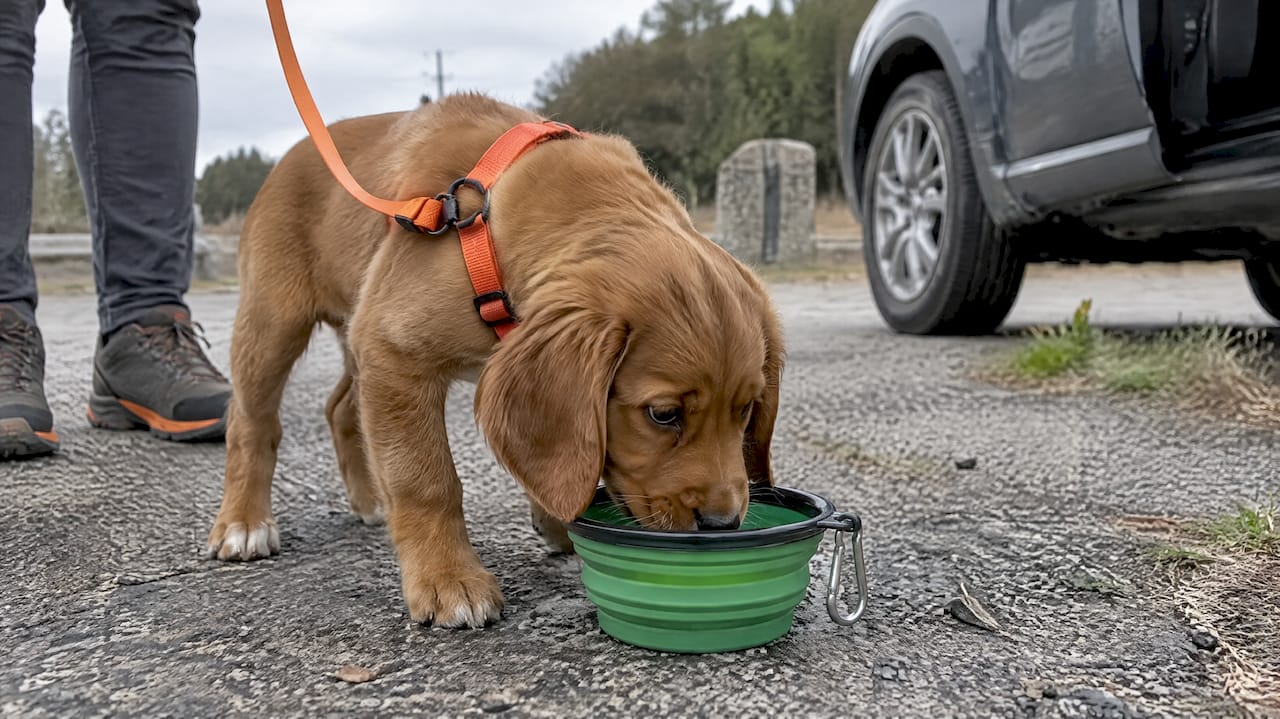
Many road-trip guides now recommend stopping every 2 to 3 hours as a baseline, which also happens to be the natural rhythm for offering water without encouraging your puppy to gulp and upset their stomach. Our related guide on puppy car sickness walks through a four-week plan if your pup struggles more than most.
Route planning and breaks: how often to stop and what to do
Think of 2 to 3 hours as your starting cadence for breaks, then adjust based on your puppy’s age and how their stomach handles the road, as the AVMA notes younger pups often need more frequent stops.
- Let your puppy relieve themselves on leash in a quiet, grassy spot.
- Offer water and a few minutes of play to burn off pent-up energy.
- Check that the crate latch or harness clip is still secure before driving on.
- Glance at a map for the next pet-friendly stop and a nearby emergency vet, just in case.
Book pet-friendly lodging ahead of time rather than hoping for the best at check-in. If the trip spans several states, consider breaking it into two shorter driving days instead of one marathon stretch: your puppy’s bladder and patience will thank you.
Packing checklist for a road trip with a puppy
Half the stress of traveling with a puppy disappears once you’ve packed the right gear the night before. Here’s what earns a spot in the car:
- Leash, collar with current ID tags, and microchip registration details.
- Vaccination records and any prescribed medications, plus a basic first-aid kit.
- Crate or harness, food, bottled water, and collapsible bowls.
- Familiar bedding, a favorite chew toy, poop bags, and a pet-safe cleaner for accidents.
- A list of vet contacts and emergency clinics along your route.
Optional extras like a GPS tracker, calming chews, or a dog life jacket for lake stops can be worth the glove-box space depending on your itinerary. For a full rundown with links to specific gear, our puppy travel essentials guide covers the details, and this general travel packing checklist is handy if you’re coordinating gear for the whole family, not just the dog.
Managing anxiety and reactivity for nervous puppies on the road
A predictable routine does more for an anxious puppy than any gadget. Stick to the same pre-drive sequence every time, which is a short walk, a bathroom break, then loading into the crate, so the car stops feeling unpredictable.
Crate enrichment helps too:
- Tuck in a blanket that smells like home.
- Offer a safe chew to keep your puppy occupied during the first stretch.
- Practice short quiet-time sessions in the crate well before the trip, not the morning you leave.
If your puppy shows real reactivity (lunging, prolonged barking, or panic that doesn’t ease after a few short rides) it’s worth talking to a professional trainer before attempting a long trip. And if distress shows up mid-drive and doesn’t settle at a stop, it’s okay to pause the trip, find a safe place to decompress, or turn around. No destination is worth pushing a panicking puppy further down the highway.
Pro Tip: A stressed puppy often calms faster with stillness and quiet than with more petting or talking. Sometimes the kindest thing is to just sit nearby and wait it out.
Vet checklist and travel documents to sort out before you leave
A pre-trip vet exam confirms your puppy is current on vaccinations, covered for parasite prevention, and generally fit for the miles ahead.
- Schedule the exam a week or two before departure, not the day before.
- Confirm microchip registration details are current and carry paper and digital copies of vaccination records.
- Ask your vet about motion-sickness remedies and any breed-specific travel risks, since flat-faced breeds in particular can struggle with heat and stress.
- Build a folder, physical or digital, of vet contacts and emergency clinics along your route.
The CDC echoes this: update vaccinations, carry records, and never leave your puppy unattended in the vehicle, since temperatures inside a parked car can climb dangerously fast even on a mild day.
How a structured weekly plan gets your puppy travel-ready
Crate comfort, calm settling, and short-ride tolerance are not separate skills. They build on each other week by week, which is exactly how we structure training inside a structured 52-week email training program for new puppy owners.
- Early weeks focus on crate association and calm settle cues, the same groundwork a road trip demands.
- Later milestones introduce longer confinement and novel environments, mirroring what a travel day throws at your puppy.
- Each week lands in your inbox, so you’re never guessing what to practice next.
Our road trip breaks and toileting guide pairs well with this approach if you want more detail on the day-of routine.
Balancing the adventure with what your puppy can actually handle
We’d rather see you nail three short practice drives than force one long haul your puppy isn’t ready for. Progress that sticks is boring and incremental, and there’s no shame in booking a sitter or boarding instead if your pup needs more time.
— Ali
Get your puppy travel-ready with weekly training support
We built a weekly email program for exactly this kind of milestone: turning crate tolerance and calm car behavior into steady, trackable progress instead of guesswork.

- Weekly lessons land in your inbox, building skills like settling in a crate and handling new environments.
- Content is written specifically for new puppy owners juggling training with everything else life throws at them.
If you’d rather have a plan than piece one together from scattered articles, our Pupdates program walks you through it one week at a time.
FAQ
How long can a puppy be in a car ride?
Most puppies handle rides of 2 to 3 hours comfortably once acclimated, though younger pups may need shorter stretches and more frequent stops, per the AVMA. Build up gradually with short practice rides before attempting anything longer.
What is the 7-7-7 rule for puppies?
Definitions vary across trainers, but it’s generally used as a socialization guideline suggesting puppies experience a range of surfaces, sounds, and situations in their early weeks. It is not a formal veterinary or travel standard, so treat it as a general socialization concept rather than a strict rule.
What is the 3-3-3 rule for puppies?
This is a common informal guideline describing an adjustment timeline (often cited as roughly three days, three weeks, and three months) for a newly adopted dog settling into a home. It is not a standardized veterinary rule, so use it as a rough expectation rather than a fixed schedule.
Can I take my 8-week-old puppy on a car ride?
A short, supervised car ride is generally fine for a very young puppy, but longer travel should wait until your vet confirms vaccinations are adequately progressed, as outlined in AKC’s travel guidance. Always check with your vet first, since very young puppies have limited immune protection.
Sources
- Pet safety in vehicles | American Veterinary Medical Association
- Travel with your pet | CDC
- The Complete Guide to Traveling With Your Dog – AKC
Recommended
- Road Trip With a Puppy: Breaks, Food, Sleep & Toileting
- Traveling With a Puppy: Car Trips, Hotels & What to Pack
- Puppy Car Sickness: Quick Fixes and a 4-Week Plan
- Puppy Travel Essentials: What to Pack for a Trip





0 Comments