Potty training can be hard enough without the weather joining in.
You finally feel like your puppy is getting it, then it rains and suddenly they plant all four feet at the back door like you’re asking them to walk into the sea.
And that leaves you with a pretty rubbish choice: wait for the rain to stop and risk a toilet-training setback, or drag a reluctant puppy outside and risk making the rain feel even worse.
The better option is usually neither. We can teach a puppy that wet ground, rain sounds and water on their coat are just normal parts of life — gradually, positively, and without turning every rainy toilet break into a battle.
As a professional dog trainer, I’ve seen this a lot. Some puppies barely notice rain. Others act as though the weather has personally offended them. Short-coated dogs, little dogs and puppies who haven’t experienced much wet weather can be particularly unimpressed.
Why Won’t My Puppy Pee in the Rain?
First, I wouldn’t assume your puppy is being stubborn. Rain changes quite a lot from a dog’s point of view.
- It sounds different. Rain hitting roofs, gutters, leaves and pavement can be surprisingly noisy, particularly to a young puppy who hasn’t heard it before.
- The ground feels different. Wet grass, mud and puddles can feel strange under paws that are used to dry floors and dry lawns.
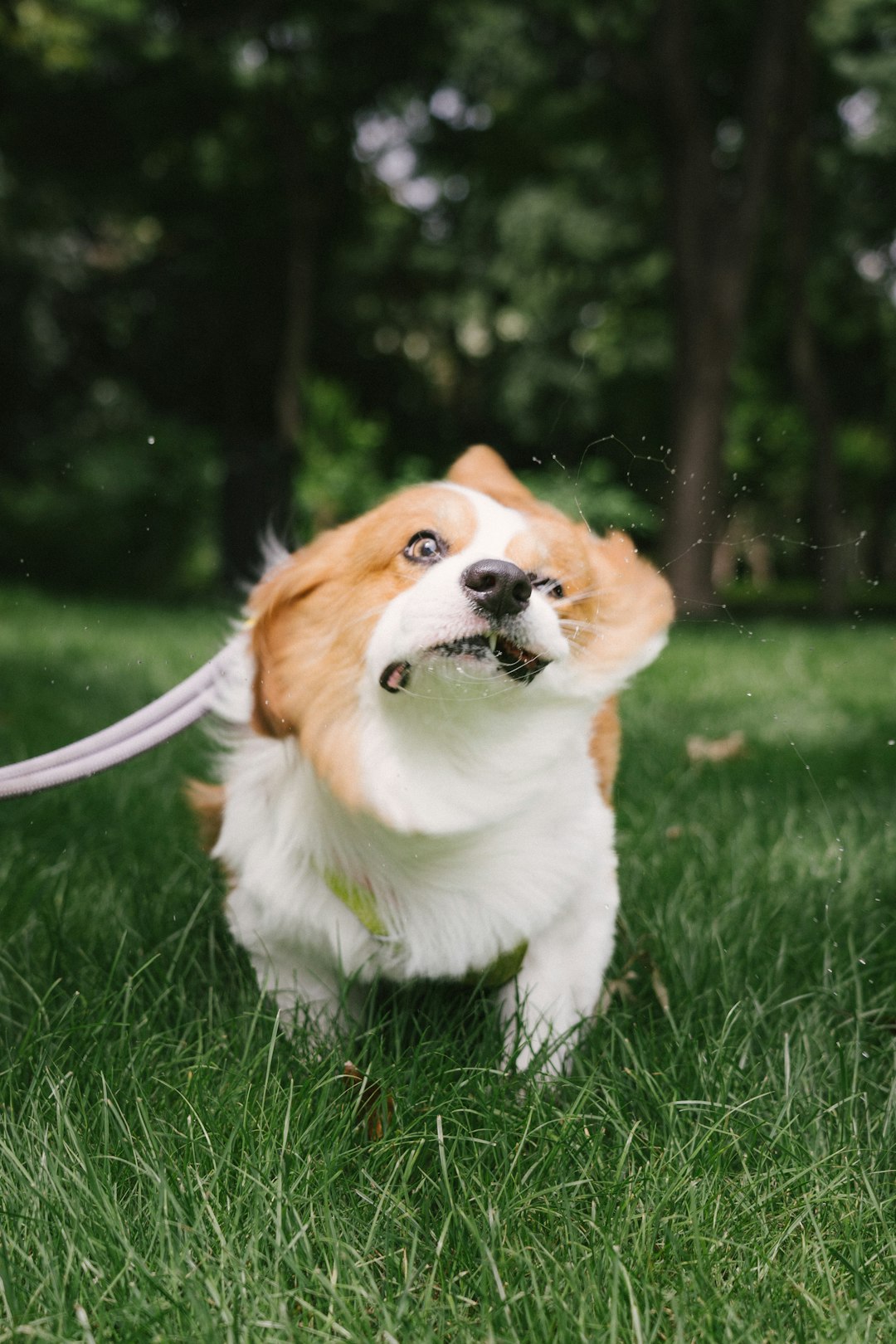
- Being wet can simply be unpleasant. Some dogs couldn’t care less. Others really dislike water running over their head, ears, back or legs.
- Everything smells different. Rain changes and intensifies scent. For a puppy already processing a huge amount of information, that can make the outside world feel very different.
- Wind and storms add another layer. If the rain comes with wind, thunder or sudden temperature changes, the problem may be bigger than rain alone.
- Size and coat matter. A puddle that barely registers to a Labrador can be half a Chihuahua’s leg. In my experience, short-coated dogs such as Dobermans, Weimaraners, German Shorthaired Pointers and Chihuahuas can also be especially reluctant in cold wet weather.
None of that means we need to avoid rain forever. It just tells us that the answer is usually desensitisation, not pressure.
How to Teach a Puppy to Potty in the Rain
The goal isn’t to convince your puppy that rain is the most exciting thing that has ever happened. They don’t have to love it. I just want them comfortable enough that wet weather doesn’t derail house training. This is the same basic principle we use when building a puppy’s comfort around car travel: make the difficult piece small enough that they can cope, then build from there.
1. Start With the Sound of Rain
If your puppy reacts to rain before they even get outside, start there. Open a window during light rain, sit by a covered doorway, or spend a few minutes together on a sheltered porch.
You can also use recordings of rain at a very low volume while your puppy is eating, chewing or relaxing. The important part is that the sound stays at a level they can comfortably ignore. We’re not trying to test how much they can tolerate.
2. Make Wet Ground Boringly Normal
One of my favourite starting points is actually after the rain.
Let your puppy wander over damp grass or wet paving when nothing is falling on them. Toss a few treats into the grass, play for a minute, sniff around together, then go back inside.
If they avoid puddles, don’t march them through one to prove a point. Let them choose how close they get. Confidence is much easier to build when the dog still has some agency.

3. Introduce Light Rain Before Heavy Rain
When damp ground is no big deal, try very short trips outside during light rain. A minute is enough to begin with.
Take food your puppy genuinely values, keep yourself relaxed, and let them explore. If they’ll play, great. If they’d rather sniff and eat a couple of treats, that’s absolutely fine too.
I’d much rather have sixty seconds of a puppy feeling okay in drizzle than ten minutes of them learning that rain predicts being trapped outside until they perform.
4. Pair Rain With Things Your Puppy Already Likes
Rainy weather is a good time to use chews, stuffed Kongs, a snuffle mat near an open door, scatter feeding under a covered porch, or a favourite toy.
We’re not bribing them to endure something awful. We’re changing the prediction: rain starts happening, and ordinary good things still happen too.
5. Practise Toilet Trips Before You Desperately Need One
This is a big one. Don’t make every rainy exposure happen when your puppy desperately needs to pee and you’re desperately late for something.
Do tiny wet-weather practice sessions when the stakes are low. Then, when it really is toilet time, the rain itself isn’t brand new. If you’re juggling this around a job, my guide to raising a puppy while working full-time has more on planning those short training and toilet opportunities.
A predictable daily routine also makes house training much easier because you’re less likely to be guessing when your puppy needs to go. If that’s still feeling chaotic, see my daily routine for puppies.
6. Reward the Toilet, Not Just Being Outside
When your puppy actually toilets outside in the rain, pay them well. I want that moment to matter.
Use a high-value food reward immediately after they finish. If they enjoy play, you can follow with a quick game or head straight back into the warm house — for some puppies, getting back indoors is a pretty powerful reward in itself. For puppies who are generally finding training difficult, I’ve also compared some of the best puppy training apps for new owners and where they can — and can’t — help.
7. Build Up Gradually
Once light rain feels normal, you can gradually work towards longer periods outside and slightly heavier rain.
Don’t jump from “fine with drizzle” to “let’s walk for forty minutes in a thunderstorm.” Desensitisation works because we make the challenge small enough that the puppy can succeed.
Don’t Punish a Puppy for Refusing to Go Out
Please don’t drag them into the rain, scold them for stopping at the door, or punish indoor accidents.
And if you’re using a spray bottle or water pistol as punishment elsewhere in training, I’d stop that too. It’s very difficult to teach a puppy that water and rain are safe while deliberately using water to make them uncomfortable at other times.
More broadly, punishment simply isn’t necessary here. If you want the reasoning behind that, I’ve written a full guide on why I don’t recommend punishment in dog training.
Don’t Ask for Unnecessary Stuff in the Rain
This sounds daft, but I see people do it all the time. If your puppy already dislikes wet grass, this probably isn’t the moment to insist on a beautiful sit-stay.
Would you want to sit on a soaking-wet bench just because someone asked nicely?
Keep your criteria sensible. Walk outside, sniff, toilet, reward, done. We can train the fancy stuff somewhere else.
Can a Raincoat Help?
Sometimes, yes.
If your puppy’s biggest complaint is water running over their body, a lightweight raincoat can make the experience easier. Boots can help dogs who really dislike wet or cold ground too, although I wouldn’t introduce brand-new boots and brand-new rain on the same day if I could avoid it.
Gear is management, though. I still want the puppy gradually becoming comfortable with normal wet weather rather than needing a full outfit before every bathroom break.
What If My Puppy Has to Pee Right Now?
Desensitisation takes time, and unfortunately your puppy’s bladder doesn’t care about our training plan.
If you need an immediate workaround, use the least disruptive option you can:
- Create a covered toilet spot. A porch, carport, pergola, large umbrella or temporary rain shelter can give your puppy somewhere outdoors that doesn’t feel quite so exposed.
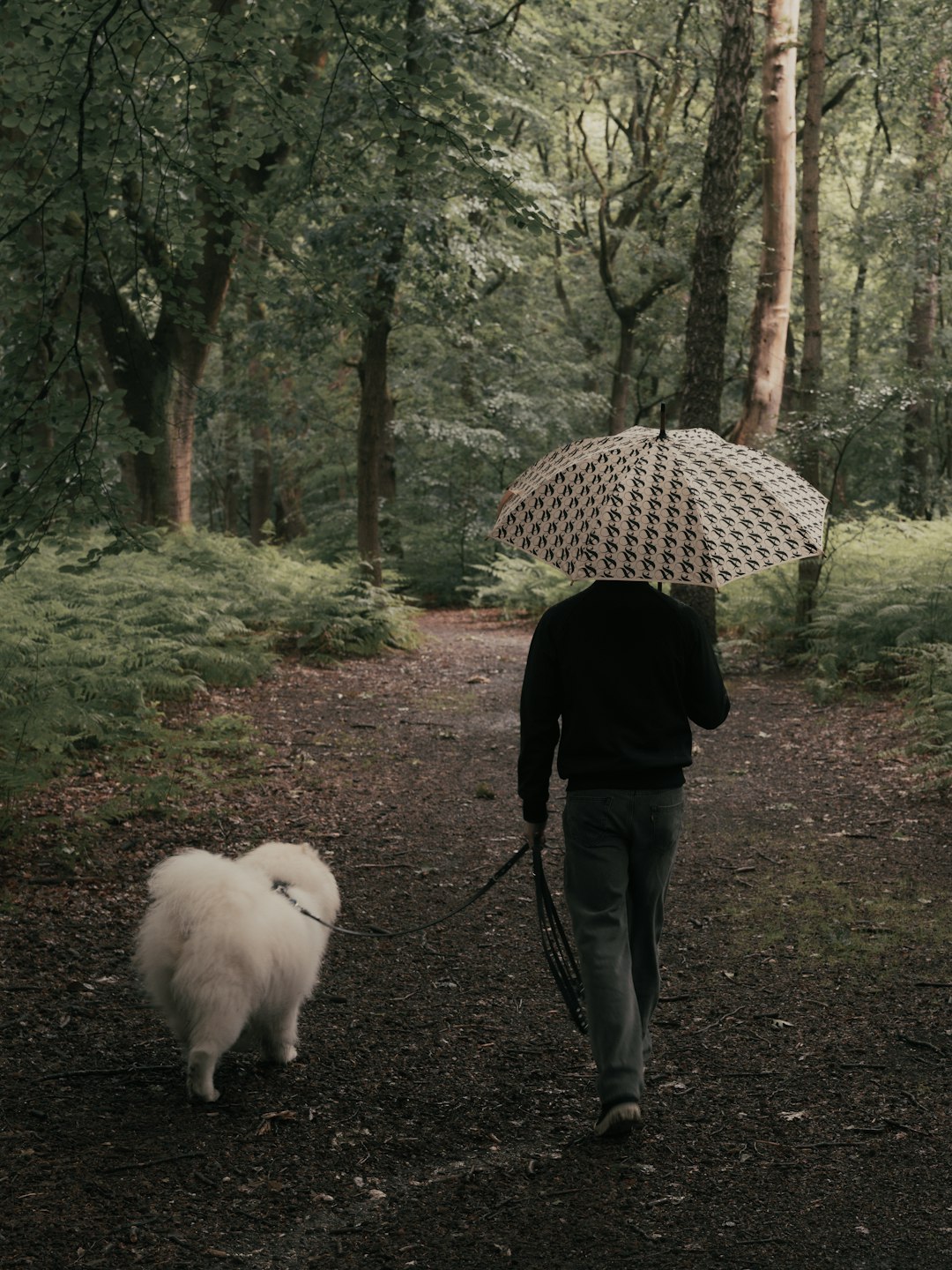
- Use an umbrella. Glamorous? No. Effective for some puppies? Absolutely.
- Choose the closest appropriate toilet area. Don’t add a five-minute wet walk when the actual goal is simply to pee.
- Use a real-grass toilet patch if you genuinely need an interim solution. This can be useful for apartment puppies, severe weather, or puppies who are becoming very distressed. I wouldn’t make it my first choice if outdoor toileting is your long-term goal, though. Treat it as management while you continue working on rain desensitisation.
When Rain Isn’t Really the Problem
If your puppy suddenly refuses to toilet outside in all weather, is frequently having accidents despite an established routine, seems painful when urinating, or is producing unusually small or frequent amounts of urine, that’s not something I’d write off as a training problem. Speak to your vet.
Likewise, if rain triggers genuine panic — shaking, frantic attempts to escape, refusing food, hiding, or distress that doesn’t improve when the rain stops — you may be dealing with a broader noise or storm fear rather than a simple dislike of wet paws.
Your Puppy Doesn’t Have to Love the Rain
That’s really the point.
I don’t need a rain-hating puppy to suddenly start dancing through puddles. I just need rain to become ordinary enough that they can walk outside, find their toilet spot, pee, get paid, and carry on with their day.
Start smaller than you think you need to, keep the pressure off, and practise when you aren’t in a rush. In most cases, that will get you much further than standing in the garden repeating “go potty” at an increasingly unimpressed puppy.



0 Comments