Play is an incredibly important part of our puppy’s development, socialisation and general well-being.
A lot of questions get asked about the appropriate nature of play, and whether their dog or puppy is taking it too far. These can be incredibly difficult things for someone without a trained eye to see or notice – or sometimes it just happens so fast that noticing, responding and reacting to those subtle signs can escape you before the puppies involved have escalated and someone’s feelings get hurt (let’s hope it’s just feelings!).
In this piece, I want to discuss with you why play is important, how it functions as part of your puppy’s development, as well as what to do if it’s not going correctly.
Then I’ve included a video and a break down of a play sessions between two of my dogs! Shelby and Indie are being my guinea pigs for this as they can give you a wonderful demonstration of mutual play, of good play with great manners.
Is Play Important For Puppies?
Yes! Massively!
Play is how puppies learn so much about their body, about how they move, about how other puppies and dogs move, or even how you, their wonderful human moves! It helps them develop muscle structure and helps them be the social animal they were born to be.
This is why meeting other dogs and other people is an important part of socialisation (but it isn’t all of it!), just remember we’re looking for quality exposures, not quantity of exposures to wonderful friendly dogs who are polite and mannerful.
Remember, we’re looking for quality exposures, not quantity of exposures
Ali Smith
What About Playing In Dog Parks?
Dog parks are a little hit and miss, it depends on when you go, why you go and the quality of the other owners within the park. Because, what you will learn as puppy grows, there is a lot of misconception about how to raise a puppy, there are a lot of opinions and not all are … well… correct? They may work but it’s often exposing unnecessary risks etc — but that’s another blog post!
I would preach caution because unless you’re a body language expert across the last count of akc recognised breeds (197 at this current stage), and a range of designer cross breeds, and then pure mutts in between… Then it can be a super messy place.
Remember, dog’s (especially puppies) often don’t understand how to mediate themselves – let alone eachother. This makes it very tough to get a positive experience out of Dog Parks.
What About Puppy Play Dates?
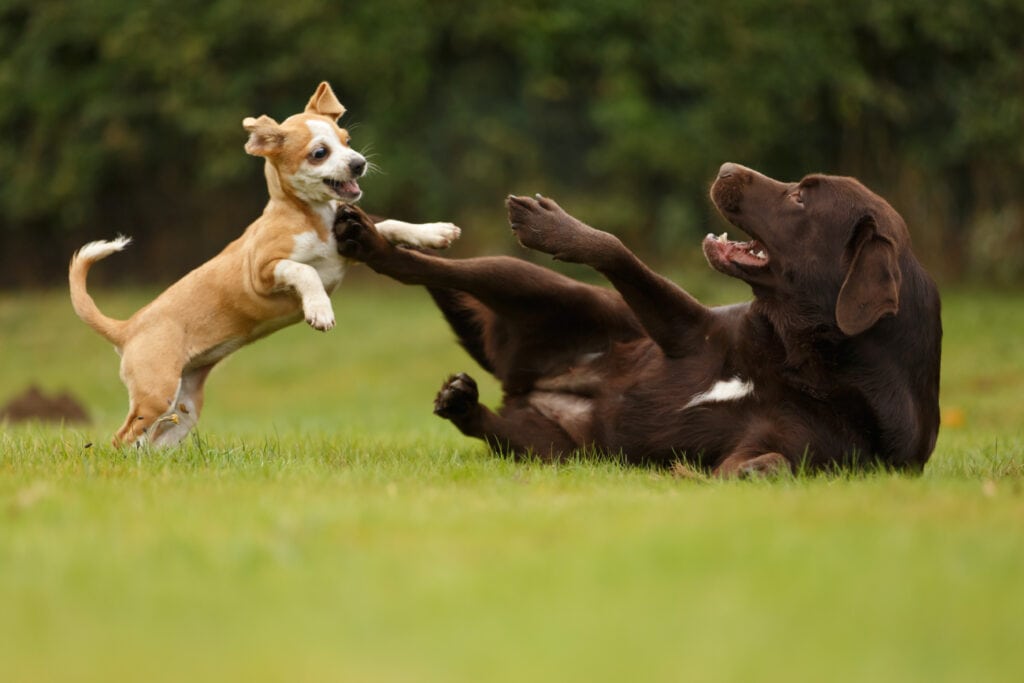
A much better idea. One on one? There’s a lot to be learnt, a whole host of fun to be had, and only one other person and dog to monitor.
This way you can easily monitor the interaction between your puppy and the other friend! You can also make these play dates bigger by arranging a few puppies to come along! Remember to think about dog shapes and sizes for your puppy’s socialisation benefits.
Get The Keys To
Unlocking Your
Best Puppy
Puppies are really complicated.
But I can give you the keys
Rebarkable Pupdates
are here to help you
and your puppy thrive
through the first year
and set you up for success
My Puppy Growled, Is This Still Play?
Most likely, yes. There are two different sorts of growl (if not more) but the easiest to distinguish are ‘play grumbles’ and actual attempts to intimidate. It’s incredibly rare that a puppy will try and intimidate – so most of what you’ll hear will be play grumbles. These can be caused by frustration (remember puppy needs to win when you’re playing!).
Why Does My Puppy Growl When Playing?
Basically? Because your puppy is into it. They’re really enjoying their play and you’re managing to engage so many of their natural patterns that they’re grumbling! That’s a real win in my books! I love getting to this stage with any dog or puppy, it really makes me smile.
Why Does My Puppy Bite When Playing?
It’s because you’re fun, unfortunately!
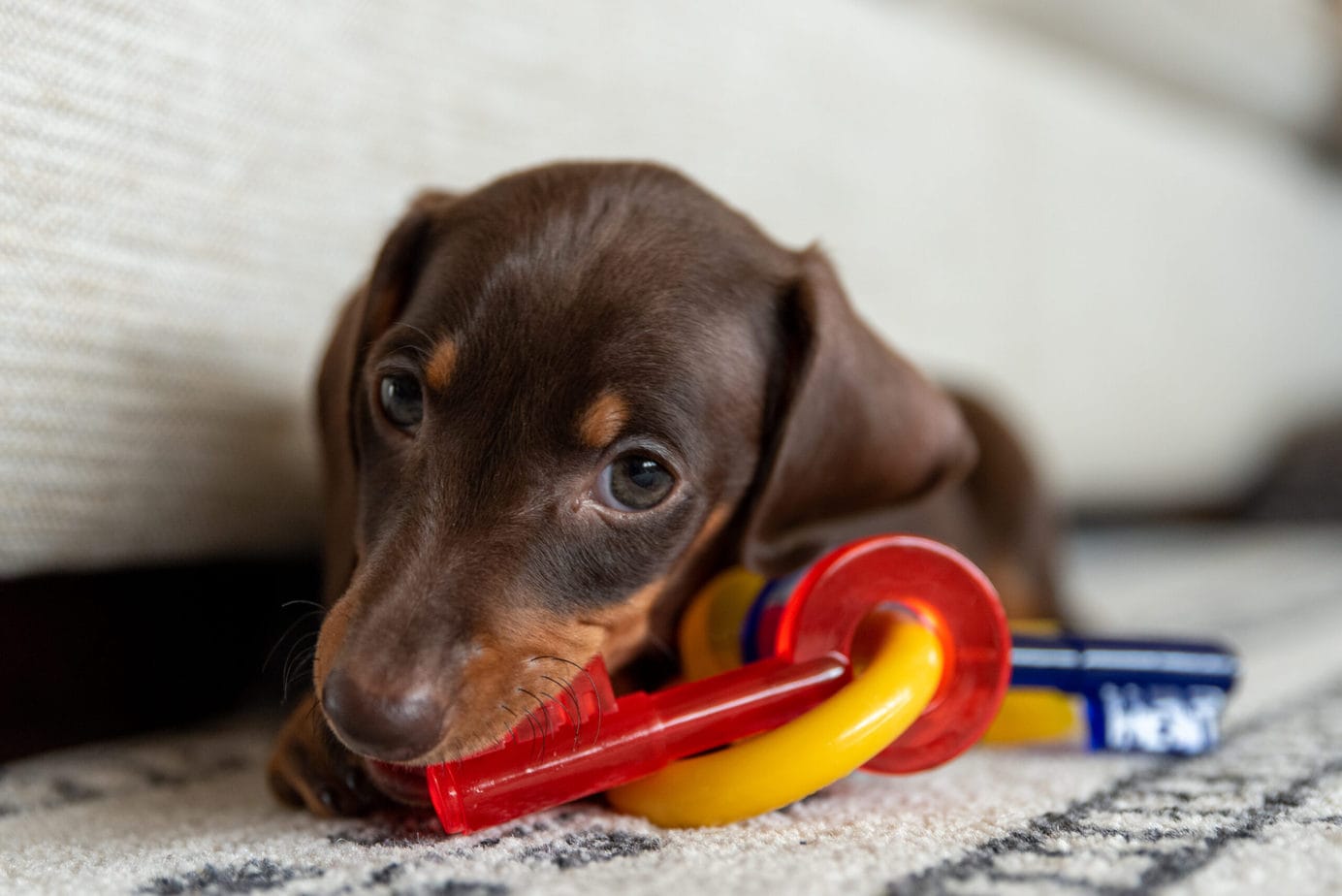
It can be tackled, it can be something you stop (and you should!). I find the best thing you can do is to redirect to a toy? Because if they want to play, you need to engage that play drive. Play is massively reinforcing for your puppy and for you! One of the best things you can do with your dog is to play with them. It’s awesome for your bond together too!
If you need more help with biting? Check out All About Painful Biting Puppy; The Why, The Do’s & The Don’ts.
What Should I Play With My Puppy?
There are some great staples like tug, fetch, hide and seek, tag (trust me it works rather well!) that work well between human and puppy, make sure to play to puppy’s level not yours. And let your puppy win often, and celebrate it with them – it certainly won’t make them bad tempered or aggressive, it’ll actually just give them a little more confidence.
What Should I Do when Play Goes Too Far?
I’ll break this down into human and dogs so that you know how to approach each situation.
To Humans
At this point, extracting the human or puppy is the best thing you can do. This disengagement is time for puppy to relax and you might want to give puppy a nap or a chew to create some down time, or continue your walk and encourage more relaxed engagement with their surroundings as opposed to those focused on you or another person.
To Dogs & Puppies
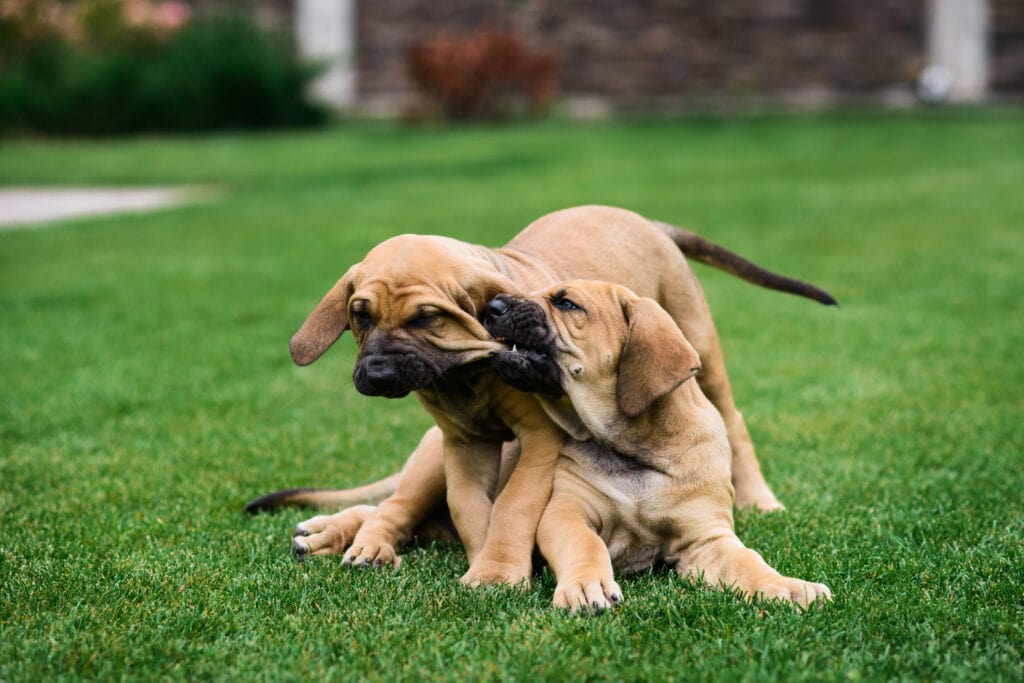
Try and remove puppy from the other dog or dogs, and give puppy a little break. It’s important here to consider that puppy is probably over stimulated, and shouldn’t be reprimanded for that. It’s natural for puppy to find other dogs exciting! You remember how it was when you played with the older kids? It’s very much the same for our pups, sometimes they need you to show them their limits.
What Is Good Play Between Dogs?
Any doggy professional will tell you that sometimes this line is a very fine line, and it doesn’t take much for any party involved to take it too far or accidentally hurt the other. Which is why there are certain signs that dogs give to one another that give the ‘go ahead buddy’ and the ‘hold up, enough’ signals.
The video here is an example of two large dogs who are playing politely – slightly different to your puppy but they should give you a good insight into the process that translates. I want to use it as an example to show you a few really key factors in the play habits domestic dogs show. I’ve slowed the video down a smidge so you can see things a little clearer.
Indie is the male grey shepherd type dog, and weighs about 40kg (90lbs) and Shelby is the red hound and weighs a good bit less at around 32kg (75lbs). There’s a solid difference in their weight and builds despite being similar in height.
A Guide To Body Language Within Puppy Play
Body language is something I try and avoid talking about – because it’s really difficult to do, because a still image could look like aggression when it’s actually playing or vice versa. So, I decided video was best! Let’s hit a few key aspects of this video for you so you can apply them yourself.
Vulnerability & Trust
Indie starts on his back and this is a very intentional thing on his part. Indie loves to play, and he’s very social and roughhousing is one of his favourites. Shelby takes a little more warming up or convincing (typical boy girl relationship, huh?) – so his laying on his back is a real “C’mon, come get me, I’m all weak and a super easy target right now!” which when coupled with some pawing gives Shelby the opportunity to begin the play with comfort. He trusts that she isn’t going to get him in a way he’s not comfortable.
There’s a continued exchange of who’s leading the play
At different stages in this video, who is leading the play changed. By ‘leading’ I mean the dog that’s doing what would be the ‘offense’ if it were a football game. At some points Indie leads, and others where Shelby leads.
This is really important to see because it gives each dog the chance to be in the ‘it’ (ever play that game when you were younger?) – this demonstrates that neither dog is trying to control the exchange or become overbearing to the other. Think of it like any sport of two sides! You’d almost always be closer to saying “Good game” if one side didn’t annihilate the other. The same goes with canine play!
Indie hampers himself
This means that there is a definite natural ‘hampering’ you can see going on here – you can see Shelby, several times put both paws on Indie’s back, but Indie knows he is headier than his sister and won’t do the same – occasionally one paw, but not for long. This shows that Indie wants to make the match as fair as possible, that he wants it to continue and that he knows Shelby can’t match him if he were to go at her as heavy as he can (because trust me! He can!). He’s making the game fair. This is really much more apparent when there’s a puppy involved, or a much smaller dog? But hopefully this gives you an idea.
When Indie Licks his Lips Shelby Backs Off
The butt is always friendly unless it’s gassy…
Ali Smith
The lick of the lips is an appeasement signal, it’s a little “oh, go easy” or “I wasn’t expecting that” when their confidence wanes a little, and you’ll notice suddenly she uses less teeth and is just kind of using the back of her head? That’s her way of encouraging Indie to keep playing and restoring the trust between them.
When Shelby freezes Indie gives a break in Play
Shelby freezes at various points during this video, they’re very subtle – but more visible with this slow down of the action. A freeze in motion is a sign of appeasement, which is Shelby’s way of saying she’s had enough of this for a bit, Indie recognises this and tags her back in so she can get him now by offering the non-toothy end of himself (The butt is always friendly unless it’s gassy…). This means that Shelby is willing to play again.
There are no real tail wags
This is something to really explain – so many people say “Oh, they’re only playing, their tail is wagging” as though the only time a dogs tail wags is when they’re happy. This is a huge misconception. Wagging tails don’t necessarily equate to happy puppies – that’s just one emotion your dogs tail can convey. They can convey things like alert, relaxed, anxiety and uncertainty, curiosity, and happy too. But that’s for another video, really!
Wagging tails don’t necessarily equate to happy puppies
Ali Smith
No intention to harm
Even when teeth meet skin, ears, or legs, it’s more of a “got your leg!” than a “CHOMP”. This sort of easy, non-threatening manner is a really easy way to see that neither dog means harm in this instance.
When play gets too much and Shelby ‘shakes off’ Indie realises a moment too late, tries to play and then realises she’s stopped.
Indie’s gone over Shelby’s boundary at around 3.20? She gives an air snap in the space between them and you see Indie back off. He’s listened to the fact she’s not comfortable, and Shelby was given the chance here to take the lead in the play. Indie gave her a quick moment, and she then shakes off.
A shake off is a universal indicator to dogs that ‘play stops now’. It’s a way that they literally “shake off” an emotion. But you’ll notice indie doesn’t actually listen initially and goes in to play again. Now, I’m not sure why Indie didn’t listen, but Shelby conveys it again, assumedly by eye contact and by freezing up a little, and Indie takes the hint. At 3.35 you’ll see Indie lick at the sides of Shelby’s mouth – an appeasement gesture in return, and then he shakes off too. And play ceased.
Body language is floppy (as well as half of the ears!)
Despite there being moments where either dog has the other’s whole head in his or her mouth, or a whole limb, notice the bounciness? There is a lack of rigidity in these little tussles.
There’s a lot of “You bite my neck? I’ll whip you with my butt” which means that neither dog is uncomfortable for very long. They’re de-escalating their own issues (with appeasement and listening to one another’s concerns) and they’re really communicating clearly with one another.
At the end, they part and no one is angry!
Both dogs have understood the game is over! This can be tough to understand for younger dogs, or dogs who haven’t had quite so much socialisation – if needed, this is definitely a time for guardians to step in and separate – even for a couple of minutes until one initiates play in another acceptable, light-hearted way.
So what can you learn from this? That it’s a really good idea for you to know a little bit about your dog’s body language, and about other dogs too. Knowing and understanding signs of appeasement is a great foundation for any parent, guardian or owner (no matter what you wish to be named!). This is one real-life exchange, and you can see how many subtle signs there are within that.
In real time? That was about 2 minutes and 30 seconds of play. Not much! But it’s definitely enough to show some very important skills are present in both dogs.
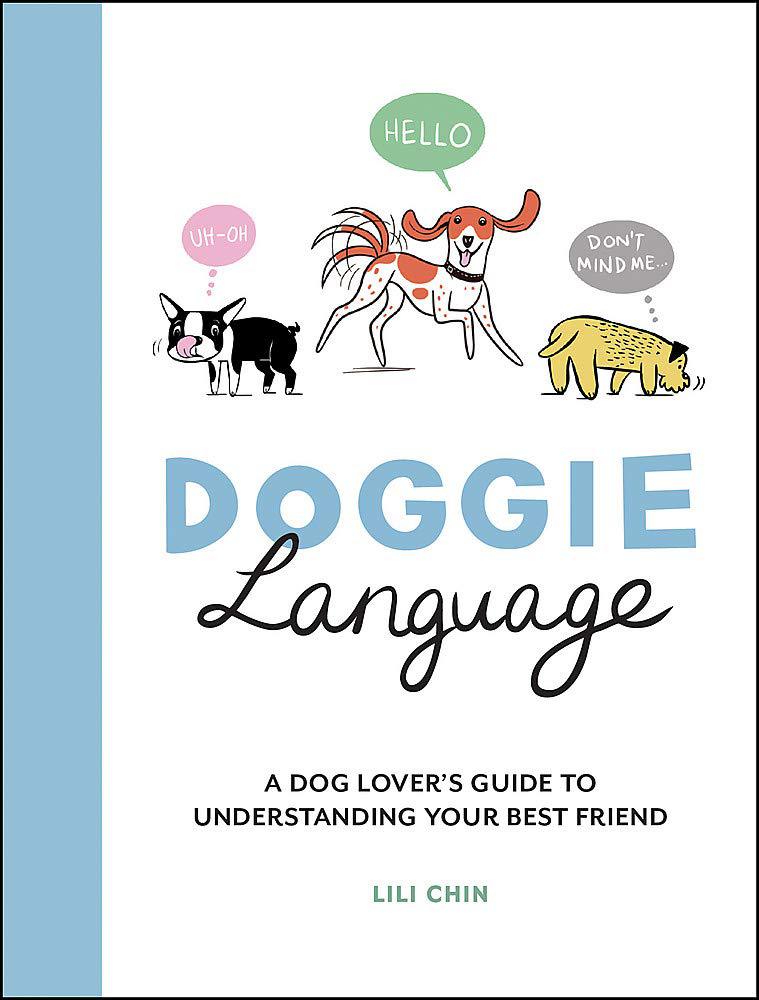
Become A Pro At Your Pup’s Body Language
I love this book, honestly, it’s one of the cutest little books in our industry (in my opinion) and yet, still one of the most informative.
This book is a pictorial dictionary of canine body language, and just gives the reader a whole new way to look at their dog, and other dogs. To me? It’s a wonderful way to get the insight you need into what your puppy is trying to tell you.
I hope that helps give a little insight into Well Mannered Play for dogs! And if you’re still struggling? Reach out to me and let’s chat about it!
0 Comments