
Dog car sickness is especially common in puppies, and it can show up as drooling, lip licking, yawning, whining, lethargy or vomiting long before a puppy is actually sick. The useful first step is working out whether you are dealing with physical motion sickness, fear of the car, or both. If your puppy has just been car sick, here’s what to do right now:
- Pull over safely and open the doors. Fresh air is the fastest reset. Let your pup stand on the ground, sniff around, and breathe. Even two minutes helps.
- Avoid a large meal immediately before travel. A very full stomach can make nausea harder to manage. For puppies, especially very young or small puppies, I would not use prolonged fasting as a blanket rule — meal timing should be sensible for the individual dog, and your vet can advise if motion sickness is severe.
- Stay calm and keep your voice low. Your puppy is already stressed. A neutral, quiet presence from you is the most helpful thing you can offer right now.
Pack a small “car sick kit” for every trip: a towel or two, paper towels, a leash, a small bottle of water, and a zip-lock bag for soiled items. It won’t prevent the problem, but it makes cleanup fast and keeps your stress level down, which your pup will notice.
Pro Tip: If your puppy vomits in the car, clean it up calmly and without fuss. No scolding, no sighing loudly, no big reaction. Owner behavior directly affects how anxious a puppy becomes about future trips, and a dramatic response can make the next ride harder before it even starts.
Table of Contents
- How do you know if it’s motion sickness, anxiety, or something medical?
- When should you see the vet about car sickness?
- What can you do right now to make one trip easier?
- How do you train a puppy to be calm in the car?
- What medications and supplements can help with car sickness?
- What’s the safest car setup for a puppy with motion sickness?
- Will your puppy grow out of car sickness?
- Rebarkable’s progressive car-comfort plan
- Key Takeaways
- The thing most owners get wrong about car sickness
- Rebarkable’s weekly training program can help with this
- Useful sources and further reading
How do you know if it’s motion sickness, anxiety, or something medical?
The answer matters because the fix is different for each one. Most puppies under a year old who get car sick are dealing with true motion sickness, not a behavioral problem. Their inner-ear structures aren’t fully developed yet, which means the brain gets conflicting signals about movement and balance. That’s the same reason kids in the back seat feel queasy on winding roads.
Common signs of motion sickness include excessive drooling, lip-licking, yawning, whining, pacing, lethargy, vomiting, and diarrhea. Symptoms typically resolve once the car stops, though severe episodes can take hours to fully pass.
Here’s a quick way to map symptoms to likely causes:
| Symptom | Most Likely Cause |
|---|---|
| Drooling, lip-licking, vomiting during motion | Motion sickness (inner ear) |
| Panting, shaking, whining before the car moves | Travel anxiety or negative conditioning |
| Symptoms in a parked, stationary car | Anxiety or prior bad associations |
| Sudden change in a dog that was previously fine | Possible medical issue — see a vet |
| Unsteady gait, head tilt, or loss of balance | Vestibular disease — see a vet promptly |
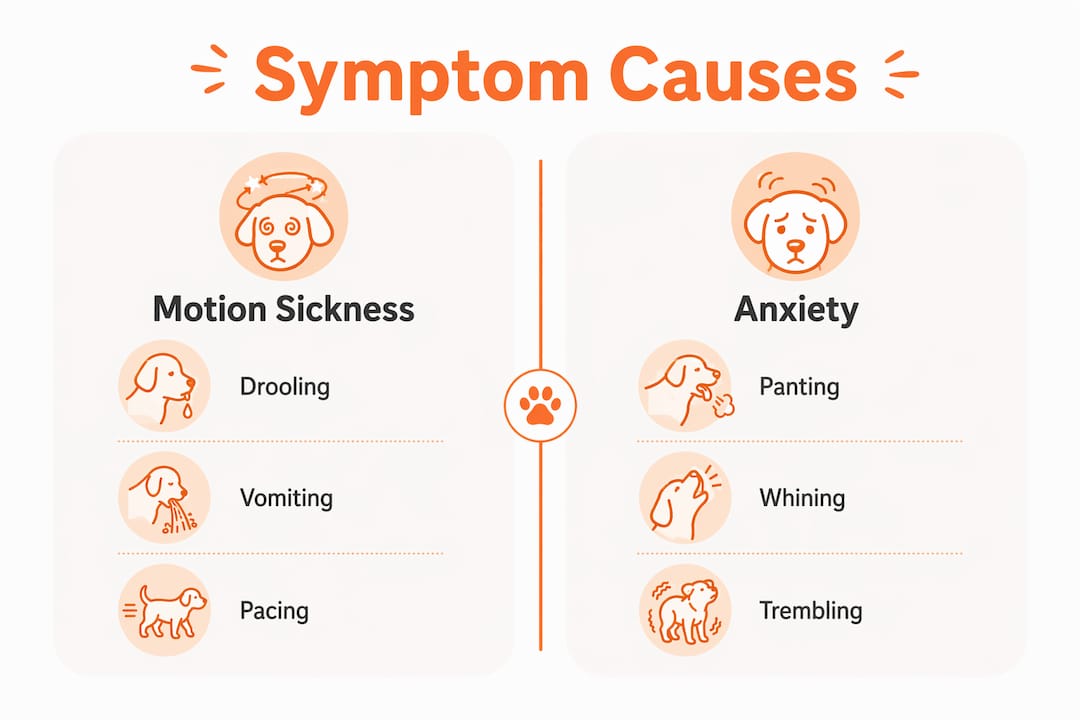
The timing of symptoms is your best diagnostic clue. If your puppy starts drooling only once the car is moving, motion sickness is the likely culprit. If the drooling and shaking start the moment you grab your keys or open the car door, behavioral conditioning has already set in — the car has become a stress trigger on its own. A simple test: sit with your puppy in a parked, running car for five minutes with no intention of driving. If symptoms appear there, anxiety is a significant piece of the puzzle.
When should you see the vet about car sickness?
See a vet promptly if you notice any of the following:
- Blood in vomit or stool
- Vomiting that continues after the car has stopped for more than two hours
- Sudden onset of symptoms in a dog that previously traveled fine
- Unsteady gait, head tilt, or circling (signs of vestibular disease)
- Symptoms that appear even when the car is parked and not running
- Any sign of pain, such as reluctance to move, crying when touched, or hunched posture
Your vet will typically start with a physical exam that includes an ear check (middle and inner ear infections can cause nausea and balance issues), a basic neurologic assessment, and a pain evaluation. If there’s reason to suspect something systemic, basic bloodwork may follow. Ruling out medical causes like ear infections, vestibular disease, gastrointestinal disease, or medication side effects is the right first step before committing to a behavioral plan.
Pro Tip: Before the appointment, jot down a quick timeline: when symptoms started, how long trips were, what the puppy ate beforehand, and whether symptoms appear in a parked car or only during motion. If your puppy vomited, bring a small sample in a sealed bag if possible. That information helps your vet narrow things down fast, and you won’t have to rely on memory in the exam room.
If getting to the vet is itself a problem because of how severe the car sickness is, it’s worth knowing that mobile veterinary services can come to you for an initial evaluation. For non-emergency questions, Dutch also gives you access to online veterinary care, which can be particularly useful when the very thing you need veterinary advice about is making the journey to the clinic difficult. This is an affiliate link, so Rebarkable may earn a commission at no extra cost to you.
What can you do right now to make one trip easier?
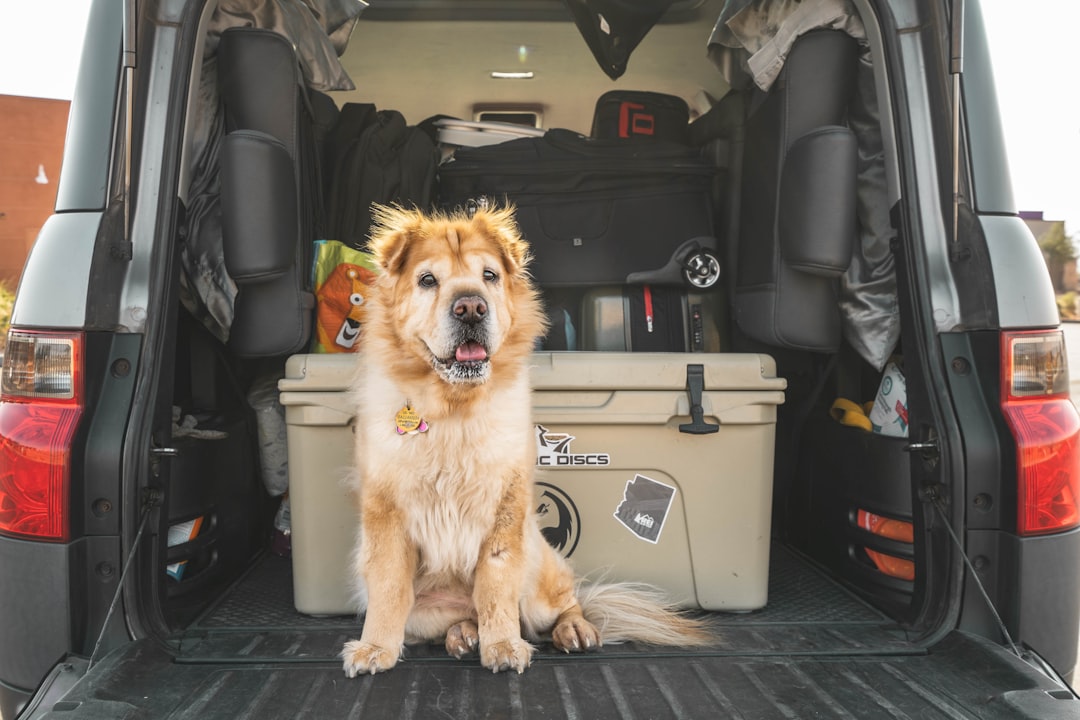
The fastest wins on any single trip are ventilation, positioning, and food timing. Apply all three before the next drive and you’ll likely see a difference.
| Action | What to Do | Why It Helps |
|---|---|---|
| Time food sensibly | Avoid a large meal immediately before travel; keep water available | May reduce nausea without applying a blanket fasting rule to puppies |
| Ventilate the car | Open windows a few inches; keep the car cool | Equalizes air pressure, reduces stuffiness |
| Choose a comfortable, safe position | Use a secure setup that gives your puppy as much comfortable movement as the vehicle safely allows | Different dogs cope better with different visual input and body positions |
| Drive smoothly | Use gentle acceleration, braking and turns, and keep speed within what your puppy can currently tolerate | Helps you control the intensity of the motion exposure |
| Take breaks | Stop regularly on longer trips | Fresh air resets the system |
| Bring a familiar item | A worn T-shirt, a favorite toy | Reduces anxiety through scent comfort |
A short walk or play session before the trip helps burn off nervous energy without tiring the puppy out completely. Keep the pre-ride routine calm and consistent — the same sequence of events each time helps the puppy predict what’s coming, which lowers anticipatory stress.
On safety: never hold your puppy in your lap while driving. A loose dog in a moving vehicle is a hazard for both of you. Use a secure setup that suits the car and the puppy. If you are comparing equipment, see Rebarkable Recommends: Puppy Harnesses and Rebarkable Recommends: Puppy Crates.
How do you train a puppy to be calm in the car?
My preference is to train car sickness out gradually wherever we can, rather than jumping straight to medication or simply avoiding the car. If travel is not essential, I would rather work below the puppy’s nausea threshold with very short, controlled exposures and build tolerance over time. If travel is vital — for veterinary care, relocation, family travel, or another unavoidable reason — then management and veterinary support may need to sit alongside the training so the puppy is not repeatedly pushed into feeling sick.
The training goal is not just to make the puppy “calm in the car.” It is to help their body and brain learn that small amounts of movement are manageable, while preventing repeated full-blown nausea from creating a stronger negative association with travel.
I also treat distance, time and speed as separate training variables. You do not have to increase all three at once. A puppy may cope well with a slightly longer journey at very low speed, but struggle if the same distance is covered faster. Likewise, you can keep the route and speed familiar while increasing the time by only a small amount. Changing one variable at a time makes it much easier to see what the puppy can currently tolerate.
One interesting thing I have seen in practice is that some dogs seem to travel better in electric vehicles. There is a small preliminary study in dogs that points in the same direction: dogs were more settled in an electric car than in a diesel car, and two dogs showing signs consistent with nausea appeared to improve in the EV. That is nowhere near enough evidence to say an electric car will fix motion sickness, but if you have access to one, it is a reasonable variable to try alongside the rest of the training. My suspicion is that the lower engine noise and vibration may be part of why some dogs cope better, but that is speculation rather than something we can currently claim as the mechanism.
Think of this as a progression rather than a timetable. The puppy decides how quickly you move through it:
- Start with the parked car. Let your puppy explore the car without the engine running and leave while they are still comfortable.
- Add the engine. Sit in the stationary car with the engine running and keep the exposure short enough that the puppy remains relaxed.
- Add a tiny amount of movement. This might be only a few feet at first. Keep distance, time and speed deliberately low.
- Repeat at an easy level. There is no need to make every session harder. Repeating a successful exposure is useful training in its own right.
- Increase one variable at a time. Add a little distance, time or speed only while the puppy is coping comfortably. If nausea signs increase, make the next session easier.
The key word in all of this is gradually. Rushing the progression is the most common mistake owners make. For me, heavy drooling is the clearest sign that we’ve gone too far: that is where I would stop the session rather than carrying on until the puppy vomits. If it is practical and safe, give the puppy some time outside of the moving vehicle to recover, then head home gently rather than turning it into another training attempt. Keep the return journey as easy as you can, and make the next session shorter or simpler. The aim is to work below that nausea threshold, then build distance, time or speed in very small increments.
One thing that makes a real difference: vary the destinations. If every car trip ends at the vet, your puppy will figure that out. Mix in trips to the pet store, a dog-friendly trail, or a friend’s house. The car becomes a predictor of adventure, not dread.
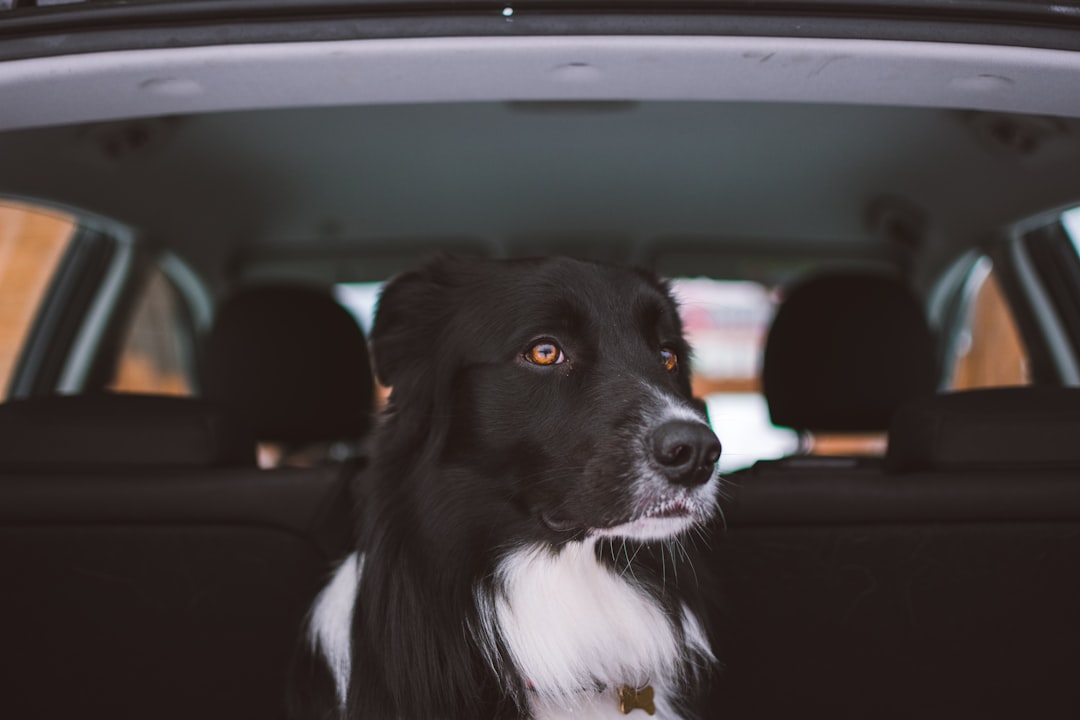
Pro Tip: Keep sessions short (5–10 minutes max in the early stages) and aim for 3–5 sessions per week rather than one long session. Frequent, brief, positive exposures build tolerance faster than occasional long ones. If you hit a rough patch, don’t push through it — regress one step and rebuild confidence before moving forward again.
What medications and supplements can help with car sickness?
My preference is to work on the car sickness gradually through training wherever travel is not essential. Medication becomes more relevant when the dog needs to travel before that training has had time to work, when nausea is severe enough that repeated journeys are likely to make the association worse, or when your vet feels medical support is appropriate. Any medication should be chosen with your vet based on whether the primary problem is physical nausea, anxiety, or both.
Cerenia (maropitant) is specifically licensed for preventing vomiting from motion sickness in dogs aged 4 months and over. It is prescription-only, and the timing and feeding instructions matter, so follow your veterinarian’s directions and the product label rather than treating it as a general travel remedy for every puppy.
| Option | Purpose | Timing | Vet Rx Required | Common Side Effects |
|---|---|---|---|---|
| Cerenia (maropitant) | Prevents motion-sickness vomiting | ~2 hours before travel | Yes | Mild sedation, drooling at injection site |
| Meclizine / dimenhydrinate | Antihistamine antiemetic | about two hours before travel | Discuss with vet | Sedation, dry mouth |
| Trazodone | Reduces travel anxiety | 1–2 hours before travel | Yes | Sedation, ataxia |
| Alprazolam | Reduces acute anxiety | 1–2 hours before travel | Yes | Sedation, paradoxical excitement |
| Ginger (supplement) | Mild antiemetic support | about two hours before travel | Discuss with vet | Generally mild |
| L-theanine | Calming support | Per product label | No (discuss with vet) | Minimal reported |
| Adaptil (pheromone spray) | Reduces anxiety | Apply about two hours before travel | No | None reported |
Supplements like ginger, L-theanine, and pheromone products are used by many owners and vets as adjuncts, but controlled studies are limited. They’re worth discussing with your vet, especially if you prefer to start with something non-prescription before moving to medication.
One timing note that catches a lot of owners off guard: anti-anxiety medications like trazodone sometimes need to be started the evening before travel to reach effective levels, not just an hour before you leave. Your vet will give you the right timing for whatever they prescribe. Never dose human antihistamines or anti-nausea medications without checking with your vet first — dosing and safety profiles differ significantly between species.
What’s the safest car setup for a puppy with motion sickness?
For car-sick dogs, I generally find that a little more freedom of movement can help them get comfortable and adjust their position, but the car itself usually dictates how much freedom is practical and safe. I would not choose a setup purely for motion sickness if it compromises restraint or crash safety. The aim is to give the dog as much comfortable movement as the vehicle and safety setup reasonably allow, then see how they respond.
| Setup | Freedom to Adjust Position | Safety Considerations | When It May Suit |
|---|---|---|---|
| Secured crate | Lower | Must be properly secured and appropriate for the vehicle | Dogs who already relax comfortably in a crate |
| Booster or contained seat | Moderate | Needs an appropriate safety restraint and stable base | Smaller dogs where the car setup supports it safely |
| Crash-tested harness restraint | Often higher | Must still prevent dangerous movement around the vehicle | Dogs who benefit from being able to shift position while travelling |
I would not assume one of these is automatically better for nausea. Some dogs want to lie down, some want to sit or stand, and some seem to benefit from being able to change position. The practical answer is to work within the safest options your particular car gives you, allow as much comfortable movement as you reasonably can, and watch the dog in front of you rather than forcing a particular orientation or view.
A few practical additions that make a real difference:
- Crack the windows a few inches to equalize air pressure and keep the car cool
- Place a familiar-smelling blanket or a worn piece of your clothing in the crate or seat
- Keep the radio low or off — loud music adds sensory load
- Use non-slip bedding so the puppy isn’t bracing against movement
- Have a leash clipped and ready before you open any car door
Never clip a leash to a collar in a moving car. If there’s a sudden stop, that’s a neck injury waiting to happen. A crash-tested harness clipped to the seat belt anchor is the right setup. For more on gear and containment options, the iPupPee puppy safety guide covers car-safety specifics in useful detail.
Will your puppy grow out of car sickness?
Many puppies outgrow motion sickness by around 12 months as their vestibular system matures. The inner ear structures that regulate balance develop over the first year of life, and once they’re fully online, the conflicting signals that cause nausea often stop. That’s genuinely good news for most puppy owners.
The factors that speed up improvement are regular positive exposure (the desensitization plan above), no underlying medical problem, and starting early. Puppies who only ride in the car for vet visits, or who have a few bad experiences and then avoid the car entirely, tend to take longer to improve because anxiety can compound the physical issue.
Some dogs do remain prone to motion sickness throughout their lives, particularly if there’s an underlying vestibular sensitivity. If your puppy is past 12 months and still struggling despite consistent desensitization work, that’s a good signal to revisit the vet conversation about longer-term medication support or a referral to a veterinary behaviorist.
Rebarkable’s progressive car-comfort plan
This is not a four-week deadline. Some puppies move quickly; others need much longer. The useful part is the order of the progression and the fact that you only make it harder while the puppy is still coping comfortably.
Stage 1: The car is just a place
- Approach and explore the parked car with no intention of driving.
- Let the puppy choose how close to get and whether to enter.
- Finish while they are still comfortable rather than waiting for stress to appear.
Stage 2: Add engine noise and vibration
- Sit in the stationary car with the engine running.
- Keep the exposure short and easy enough that the puppy is not becoming nauseous or worried.
- Repeat this stage as many times as needed before adding movement.
Stage 3: Add a tiny amount of movement
- Move only a very short distance at first.
- Keep speed low and the total time brief.
- If heavy drooling appears, stop the session, allow recovery outside the moving vehicle where practical, and head home gently.
Stage 4: Build tolerance
- Increase distance, time or speed in small increments.
- Change one variable at a time so you can see what the puppy is actually coping with.
- There is no need to progress every session. Repeating the same easy journey can be exactly the right thing to do.
Stage 5: Generalize to useful journeys
- Once short trips are comfortable, begin using the car for ordinary, pleasant destinations.
- Keep monitoring for nausea rather than assuming the problem is solved after a few good rides.
Pro Tip: Keep a simple log of distance, time, approximate speed and the first signs you notice. Heavy drooling is my clearest practical stop signal. The goal is not to tick off a calendar; it is to stay below the puppy’s nausea threshold and build from there.
Troubleshooting: if your puppy regresses significantly at any point, pause the plan and check in with your vet. Regression after initial progress can signal an underlying medical issue or that anxiety has become severe enough to warrant medication as an adjunct to training. A positive reinforcement approach throughout this plan is non-negotiable — punishment or frustration during car sessions will undo weeks of progress.
For more on building your puppy’s general emotional resilience alongside this plan, the Rebarkable crate training center is a solid companion resource.
Key Takeaways
Most puppies improve with immediate trip-time fixes plus a consistent desensitization plan, and many outgrow motion sickness entirely by 12 months as their vestibular system matures.
| Point | Details |
|---|---|
| Start with three immediate fixes | Keep the car cool and ventilated, avoid a large meal immediately before travel, and keep the journey calm and easy. |
| Know the vet red flags | Blood in vomit, symptoms in a parked car, sudden onset, or unsteady gait all warrant a prompt vet visit. |
| Build tolerance gradually | Move from stationary-car work to tiny journeys, then increase distance, time or speed one variable at a time. |
| Medication is a vet conversation | Use veterinary support when travel is necessary, nausea is severe, or your vet feels medication is appropriate; never dose human meds without vet guidance. |
| Follow the puppy, not the calendar | Repeat easy sessions as often as needed and only progress while the puppy remains below their nausea threshold. |
The thing most owners get wrong about car sickness
Here’s an honest take: the biggest mistake I see new puppy owners make isn’t skipping medication or using the wrong crate. It’s treating car sickness as a single problem when it’s almost always two problems stacked on top of each other.
The physical nausea comes first, usually in those early weeks when the puppy’s inner ear is still developing. That part often resolves on its own. But if those first few sick trips aren’t handled carefully, a second problem grows alongside it: the puppy learns that the car predicts feeling awful. And that learned fear is often harder to fix than the original nausea.
What I find genuinely underestimated is how much the whole experience around the car shapes what happens next. If your puppy vomits, keep the cleanup calm and matter-of-fact, but there is no need to withhold reassurance or comfort if they seek it. The important thing is not turning the moment into something frightening, frustrating or punitive. If the puppy is already worried about the car, we want to reduce that emotional load rather than add to it.
The other thing worth saying plainly: patience here is not optional. Some puppies move through this progression quickly and others need much longer. Some may also need veterinary support while the training takes hold, especially when travel cannot be avoided. The useful measure is not how many weeks it takes; it is whether the puppy is genuinely coping better without repeatedly being pushed into nausea.
Rebarkable’s weekly training program can help with this
Puppy car sickness can begin as a physical motion-sickness problem and then become tangled up with learned worry about the car. Rebarkable’s structured 52-week puppy training program delivers weekly lessons directly to your inbox, including the gradual exposure and positive reinforcement skills that can support the behavioral side of car travel alongside appropriate veterinary care when needed.

The program is built for busy owners who don’t have time to piece together advice from a dozen different sources. You get a clear, science-backed sequence: what to work on this week, how to know if it’s working, and what to do when it isn’t. The car comfort modules sit alongside crate training, socialization, and impulse control, so you’re building a well-rounded pup, not just solving one problem at a time.
If you’re not sure where to start, take a look at how puppy training costs break down, or head straight to Rebarkable to see the full program and subscribe. Your pup’s next car ride can be a lot calmer than the last one.
Useful sources and further reading
These are the sources used to support the medical and behavioral recommendations in this article, plus a few additional resources worth bookmarking:
- VCA Animal Hospitals: Motion Sickness in Dogs — Covers symptoms, recovery timelines, and when to seek veterinary care.
- American Kennel Club: Car Sickness in Dogs — Practical owner guidance on desensitization, behavioral conditioning, and medication options.
- Preventive Vet: Preventing and Treating Motion Sickness in Dogs — Detailed breakdown of Cerenia, supplement options, medical differentials, and car setup advice.
- Wisconsin Humane Society: Car Sickness — Concise, owner-friendly tips on trip-time fixes and containment choices.
- Merck Veterinary Manual: Motion Sickness in Dogs — Primary veterinary reference on the physiology of motion sickness and drug treatment categories.
- iPupPee: Traveling with Dogs Tips — Practical travel-safety guide covering gear, containment, and stress-minimizing tactics for longer journeys.
- Rebarkable: Crate Training Information Center — Rebarkable’s full crate training resource, directly relevant to safe car-crate use and desensitization steps.
Recommended
- 11 Ways To Get Your Puppy To Sleep More And Stop Being Cranky – Rebarkable
- Help! Our Breeder Says Mother Dog Is “Rejecting” Her 4–6 Week Puppies? – Rebarkable
- Help! My Puppy Keeps Eating Poop – Rebarkable
- Rebarkable Blog – Puppy training articles and posts.
0 Comments