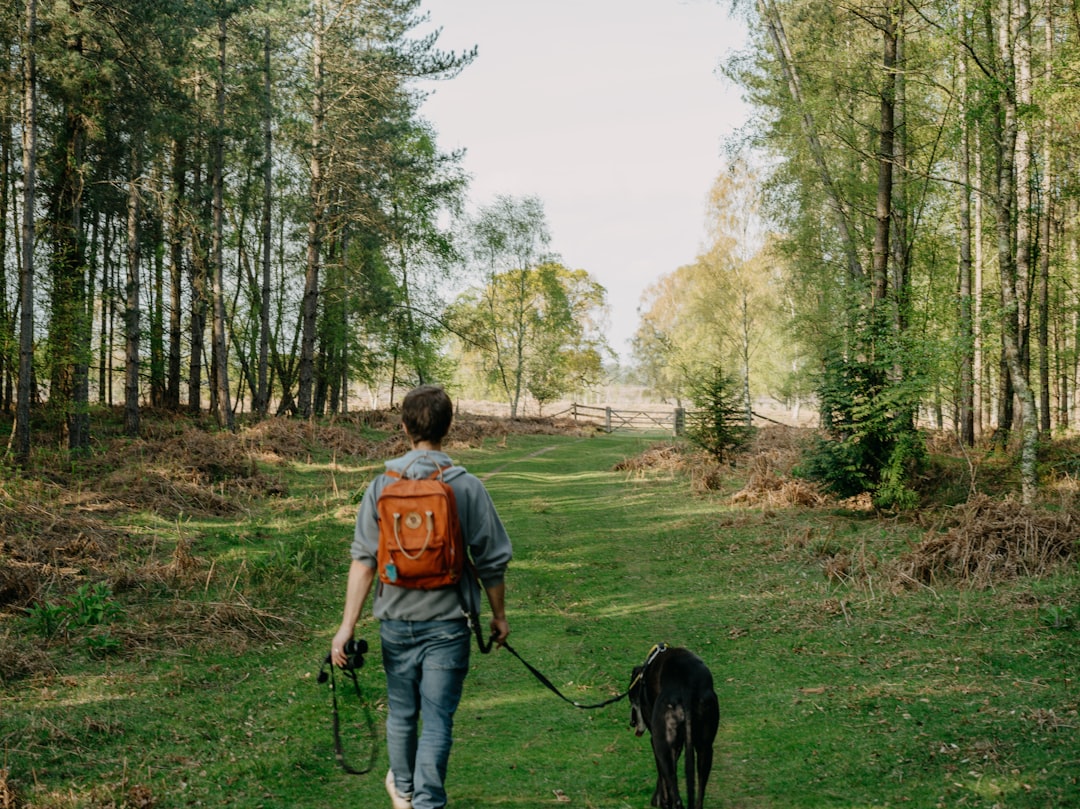
Indie, my original reactive dog, is the reason this subject is so personal to me. Living with him taught me very quickly that handing over a leash is not the same thing as handing over a routine.

I genuinely think one of the hardest parts of living with a reactive dog is finding somebody else you trust enough to hand over the leash. Holidays, weddings, family emergencies and work trips all eventually force the issue, but reactive dog guardians rarely get to leave a routine on the counter and hope everyone gets along. We know how much work has gone into helping our dogs feel safer, and we also know how quickly the wrong handling can create a setback.
I know that feeling very well. I’m a qualified dog trainer and behavior consultant, I work with reactive dogs regularly, and I still get nervous handing my own dog’s leash to someone else. There are days I even hesitate before handing him over to my husband, which probably sounds excessive unless you have lived with a reactive dog yourself. If you have, you already know the issue is not simply whether a sitter can feed your dog and get them outside. It is whether they understand your dog well enough to protect the progress you have made.
In a hurry?
The right sitter for a reactive dog is not simply someone who is “good with dogs.” Look for someone who understands reactivity, listens carefully, respects boundaries, allows the dog to choose interaction and is willing to complete several low-pressure meet-and-greets before taking over care.
Reactive dogs need understanding, not “handling”
The issue is not simply whether the sitter can feed your dog, take them outside or follow a written routine. It is whether they understand how much work has gone into helping your dog feel safer in the world, and whether they can avoid undoing that work while you are gone. One or two badly handled situations really can create a setback, especially when the dog is repeatedly pushed into the same reaction.
I am always slightly wary when someone tells me they can “handle” difficult dogs. Reactive dogs do not usually need someone to overpower them, outsmart them or prove they are not scared. They need someone who understands what they are communicating and knows how to respond without escalating the situation.
That difference matters. A sitter might be perfectly confident walking a strong dog but completely miss the lip licking, freezing, weight shifts or hard staring that tells us the dog is becoming uncomfortable. Another sitter may be quieter and less showy, but instinctively give the dog space, move slowly and wait for the dog to choose interaction. I would choose the second person every time.
| A good fit | A poor fit |
|---|---|
| Listens carefully to your instructions | Assumes experience with dogs means they know your dog |
| Ignores the dog initially if asked | Immediately reaches, stares or calls the dog over |
| Notices subtle body language | Waits for barking or growling before responding |
| Allows the dog to move away | Forces greetings or blocks escape |
| Uses management and distance | Talks about showing the dog who is boss |
| Respects your training plan | Decides to improvise once you leave |
Confidence can be useful, but empathy and observation are more important. The best pet sitter for a reactive dog is not the person who insists they can cope with anything. It is the person who listens carefully, respects the guardian’s instructions, notices small changes in the dog’s body language and does not take it personally when the dog says no.

The first meeting is really an interview for the sitter
Most people think the first introduction is about seeing whether the dog likes the sitter, but I am usually watching the sitter more closely than the dog. I want to see whether they can follow simple instructions without trying to prove they know better.
If you explain that your dog does not like being reached over, do they immediately lean in and try to stroke the top of the dog’s head? If you ask them to ignore the dog at first, can they do that, or do they keep calling the dog over because they are desperate to make friends? If you explain that your dog needs distance, do they respect that without questioning it?
These things tell you far more than a polished profile or a list of five-star reviews. If someone cannot follow your guidance while you are standing right there, they are unlikely to do it consistently once you have left.
If you are still at the stage of building a shortlist, Care.com can be a useful place to look for pet sitters, but I would still treat the profile as a starting point rather than proof that someone is right for a reactive dog. Interview them properly, check their experience and make the meet-and-greet part of your decision.
The first meeting also gives your dog a chance to gather information without being pressured into interaction. We ask far too much of dogs when we expect them to greet every new person immediately. Many reactive or anxious dogs would rather watch, sniff, listen and decide in their own time whether this person feels safe. That is not avoidance or stubbornness. It is sensible information gathering.
Trainer’s tip: The first introduction is not about whether your dog instantly likes the sitter. It is about whether the sitter can follow instructions and remain predictable.
Boring is often exactly what you want
Some of the best introductions I have seen have been incredibly uneventful. The sitter comes in, sits down, talks to the guardian and mostly ignores the dog. Nobody reaches, nobody stares, nobody tries to lure the dog closer and nobody creates a performance out of the meeting. The dog is free to move around, investigate or keep their distance.
Eventually, the dog may come over for a sniff and then walk away again. That might not look like much, but for a reactive dog it can be an excellent first interaction. The dog made the choice, nothing bad happened and the sitter remained predictable.
Reactive dogs often do best with people who are calm and, frankly, a little bit boring. Predictability creates safety. A sitter who moves slowly, follows the same routine and does not force social interaction is usually much easier for a worried dog to understand than someone who is overly enthusiastic.
Do not make the first meeting the handover
The first introduction should not happen the day before you leave. If your dog is anxious, reactive or has a bite history, you need enough time for the sitter to become familiar before they are expected to take over.
Several short meetings are generally more useful than one long one. The first visit might involve nothing more than the sitter sitting in the room while your dog watches from a distance. On the next visit, the sitter might toss a few treats without approaching. Later, they might pick up the leash, walk around the house or join you for part of a walk.
The point is not to rush through a checklist. It is to build a history of safe, predictable experiences. Each successful visit makes the sitter less unfamiliar, and that familiarity can make the eventual handover much easier.
There is no magic number of meetings because dogs vary enormously. For one dog, two or three introductions may be enough. For another, you may need weeks of short visits before the sitter can safely take over. The dog’s behavior should determine the pace, not the date of your flight.
Should you meet at home or somewhere neutral?
There is no universal answer because reactivity is not one-size-fits-all. The right location depends on what your dog finds difficult.
If your dog is worried about strangers entering the home, it can help to meet outside first and walk home together. That changes the picture completely. Instead of the sitter appearing suddenly in the dog’s space, they arrive as part of the group.
On the other hand, if your dog finds the outside world stressful, meeting at home may be far easier. Home may be the one place where they feel settled and able to think. The guardian usually has the best sense of which environment gives the dog the greatest chance of coping well, and that should guide the decision.
What signs show that your dog is coping well?
People often look for a wagging tail, but I care much more about whether the dog looks relaxed. A wag can mean many things, including tension, uncertainty or over-arousal.
I would rather see softer muscles, normal breathing, sniffing, taking food, looking away from the sitter, choosing to lie down or moving around the room without constantly monitoring the person. A dog who can disengage from the sitter is often doing better than one who stares at them continuously.
The real sign of progress is that the dog starts making choices. They may choose to approach, move away, sniff, rest or investigate. Once a dog feels able to make decisions rather than simply react, you are moving in the right direction.
What signs mean they need more time?
Dogs are usually very honest about discomfort, but people often miss the quieter signs. Lip licking, turning the head away, freezing, refusing food, excessive panting, pacing or constantly watching the sitter can all suggest that the dog is not ready.
You may also notice that the dog appears to settle but remains physically tense, with all four feet underneath them and their weight ready to move. That is very different from a dog who flops onto one hip and genuinely relaxes.
Growling is not the first warning. It is usually a later one. By the time a dog growls, they have often already tried to communicate in several quieter ways. A good sitter will respect the growl, create distance and think about what caused the dog to feel unsafe. They will not punish the dog for giving useful information. That same principle is why I do not recommend using punishment in dog training, particularly with dogs who are already worried.
Practice the things the sitter will actually need to do
Once the dog is comfortable with the sitter being present, practice the real tasks that will matter while you are away. This might include picking up the leash, clipping on a harness, opening the back door, preparing food, moving around the house or taking the dog into the yard.
There is no point spending the whole introduction asking the dog to sit or shake paws if the difficult part is the sitter walking through the hallway or reaching for the leash. Training should match real life.
It is also worth rehearsing the full routine while you are still there. Let the sitter arrive, prepare the dog, complete a short walk or yard break, return home and settle the dog again. That gives everyone a chance to identify problems before the sitter is on their own. Thoughtful management matters here because it reduces the chance that either the sitter or the dog ends up in a situation they cannot handle safely.
It is also worth sending the sitter a written plan that includes triggers, safe walking routes, emergency contacts, feeding instructions, medication details, equipment and what to do if your dog becomes overwhelmed. Do not rely on memory for anything safety-critical.
My reactive-dog sitter handover checklist
If I were handing over one of my own reactive dogs, this is the information I would want written down rather than left to memory:
- Known triggers: dogs, people, children, bikes, delivery drivers, visitors, handling, noises or specific locations.
- Early warning signs: what your dog looks like before they bark, lunge, freeze or panic.
- Safe walking routes: including places to avoid and times of day that are usually quieter.
- Equipment: exactly which harness, lead, muzzle or backup attachment to use and how each item fits.
- Door routine: how to enter and leave without creating an escape risk or a confrontation at the doorway.
- Visitor rule: whether anybody else is allowed into the home while you are away. For many reactive dogs, the safest answer is simply no.
- Dog-dog contact: whether the sitter should avoid greetings entirely. I would never leave this vague.
- What to do after a reaction: where to create distance, whether to head home, and how much decompression your dog usually needs.
- Food and medication: exact amounts, timings and any handling issues around bowls or medication.
- Bite history and near misses: what happened, what the trigger was and what prevented or ended the incident.
- Veterinary details: normal vet, emergency vet, insurance information and permission for treatment where appropriate.
- Your emergency contact: ideally someone local who already knows the dog.
I would also write down what the sitter should not do. No surprise dog-park trip, no introducing them to a friend, no changing equipment because something else feels easier, and no deciding this is the perfect opportunity to test whether the dog is “over” a trigger.
Muzzle training can be part of sensible preparation
If your dog has a bite history or you are genuinely concerned they may bite, a properly introduced basket muzzle can add an important layer of safety. This should not be treated as a last-minute emergency measure or something you put on the dog for the first time when the sitter arrives.
Muzzle training should be gradual and positive, so the dog is comfortable wearing it before it is needed. A muzzle does not replace good handling, careful introductions or appropriate management, but it can reduce risk and help everyone feel more confident. My guide to the different types of dog muzzles explains which designs are suitable for walking, training and longer periods of wear, and my recommended dog muzzles can help you choose an appropriate option.
It is important that the sitter understands the muzzle too. They should know how to put it on correctly, check the fit and recognize that a muzzled dog still needs space. The muzzle is not permission to push the dog further than they can cope with.
If your dog has a bite history, you must disclose it honestly. Hiding that information puts the sitter, the dog and potentially members of the public at risk. It also prevents the sitter from deciding whether they are genuinely qualified and comfortable taking the booking.
A trainer or behavior consultant can make the process easier
A qualified trainer or behavior consultant can help set up introductions, coach the sitter and create a practical plan for the dog’s care. This can be especially helpful when the dog has multiple triggers, a bite history or a complicated routine.
The trainer can explain the dog’s body language, identify likely pressure points and help everyone agree on what to do if something goes wrong. That removes a lot of guesswork. The sitter knows what is expected, the guardian has more confidence and the dog receives consistency.
Consistency is one of the most valuable things you can give a reactive dog. The more predictable their care is, the easier it is for them to feel safe. The IAABC consultant directory can be useful when you are looking for an appropriately qualified professional, while the AVSAB position statements provide helpful guidance on humane, evidence-based behavior care.
Do not wait until the week before your trip
If your dog has significant reactivity, anxiety or a bite history, start looking for a sitter long before you actually need one. It can take time to find the right person, and it can take even longer for the dog to build a genuine relationship with them.
The goal is not to find someone your dog can tolerate for a weekend. It is to find another person who understands how to keep your dog safe, protect the progress you have made and respond appropriately when your dog feels uncomfortable.
A good sitter can become a genuinely valuable part of your dog’s support system. They can give you more freedom, reduce stress around travel and make it possible for your dog to receive care from someone they already know and trust.
Frequently asked questions
Can a reactive dog stay with a pet sitter?
Yes. Many reactive dogs do very well with a sitter once the person has been introduced gradually and understands the dog’s triggers, body language and management plan. The question is not whether the dog is reactive, but whether the sitter is the right fit for that specific dog.
Should I board my reactive dog instead?
That depends on the dog. Some reactive dogs cope better staying in their own home with a familiar sitter, while others do well in specialist boarding designed around low-stress handling and individual care. Standard busy kennels are often difficult for dogs who are triggered by unfamiliar people, barking or close proximity to other dogs.
How many meet-and-greets should we do?
There is no set number. Plan enough short meetings for your dog to become comfortable with the sitter entering the home, moving around, handling equipment and completing the care routine. For some dogs that may be three visits; for others it may take several weeks.
Should my reactive dog wear a muzzle with a sitter?
If your dog has a bite history or there is a credible risk of a bite, a properly conditioned basket muzzle can be sensible. The muzzle should be introduced positively well before the booking and should never be used as a substitute for space, management or careful handling.
Can a Rover sitter care for a reactive dog?
Possibly, but the platform someone uses does not tell you whether they understand reactivity. Assess the individual sitter’s experience, references, handling methods and willingness to follow your instructions. Do not rely on a profile description alone.
Do I need to tell the sitter about previous bites?
Yes. Always disclose any bite history, near misses and known triggers. The sitter has a right to understand the risk before accepting the booking, and complete information is essential for creating a safe care plan.
What should I do if my dog growls at the sitter?
Do not punish the growl or force the interaction to continue. Increase distance, identify what made the dog uncomfortable and slow the introduction down. Growling is useful communication and should be treated as information.
Final thoughts
Living with a reactive dog often means planning earlier and thinking more carefully than other dog guardians have to. That can be frustrating, but it is also part of advocating for the dog in front of you.
The right sitter will not expect your dog to become instantly social. They will not take caution personally, and they will not push past boundaries in an attempt to prove a point. They will listen, observe and let trust develop at the dog’s pace.
That is what you are looking for. Not someone who can “handle” your dog, but someone who understands them.
If you are working through reactivity yourself, Ali’s Rebarkable Reactivity Guide covers body language, management, confidence building and the practical steps that make daily life easier.





0 Comments