If your puppy was doing brilliantly with toilet training and has suddenly started peeing in the house again, don’t assume they’ve forgotten everything. A few accidents can happen because you’ve increased their freedom a little too quickly, their routine has changed, they aren’t as reliably house-trained as they seemed, or something emotional or medical has changed.
The useful question isn’t “Why is my puppy being naughty?” It’s what changed just before the accidents started? That usually tells us whether we need to tighten up toilet training, change the environment, reduce stress or speak to a vet.
Why Is My Puppy Peeing in the House Again? Quick Check
| What you’re seeing | What I’d consider first | What to do |
|---|---|---|
| Accidents started after giving your puppy more freedom | Training isn’t fully generalised yet | Reduce freedom temporarily and rebuild the toilet schedule |
| They keep returning to the same indoor spot | Residual urine scent and habit | Use an enzymatic cleaner and prevent unsupervised access |
| Accidents happen mainly when they’re alone | Management, timing or possible separation-related distress | Check how long they’re being left and look at their behaviour while alone |
| They pee during frightening or overwhelming moments | Fear-related urination | Reduce pressure and help them feel safe; don’t punish the accident |
| They’re suddenly peeing frequently, straining, leaking or drinking more | A medical problem | Contact your veterinarian |
First, Let’s Discuss What It’s Not.
- Spite. Your puppy isn’t peeing indoors to get back at you.
- “They know they’re not supposed to.” Toilet training isn’t a moral rule. Puppies learn where we want them to toilet through repetition, reinforcement and management, and that learning can be less reliable than it first appears.
- A communication failure on your puppy’s part. It’s our job to provide enough toilet opportunities and learn the individual signals our puppy gives us.
- Automatically, territorial marking. Dogs can urine-mark, including indoors, but a puddle from a young puppy who has recently gained more freedom is much more likely to be an ordinary toilet-training problem. Look at the amount, location and context before deciding it’s marking.
It’s so easy to get in our head and think that our dogs are doing something to get back at us, but honestly? It’s almost always way more simple than this… Actually, there’s even a concept here.
The Disney Dog Concept
A lot of people fall into this trap is a myth. This was a concept that Jean Donaldson raised in Culture clash (a dog training classic! Worth the read, also in audiobook by the way!), that Disney created dogs that are capable of grand schemes, of rescue missions, of revenge plots.
Don’t get me wrong, I love my disney dogs, but we have to remember that that level of personification is fiction. We feel like they’re so much more intelligent (and particularly emotionally intelligent!) than they truly are. Dogs are wonderful, and I’ll be the first one to say that with you, but it’s important to remember that they don’t do things to deliberately make us mad. That’s just not in their scope of abilities.
Now that we know what it isn’t, let’s have a look at the reasons your puppy keeps peeing in the home, there’s a few possible reasons, so make sure that you figure out which of these is the right reason.
Note: most of these apply to a new pet coming into your home, even if they’re older dogs or an adult dog!
1 – Your puppy is experiencing some regression
Most Likely, Your puppy is experiencing some regression. and let me tell you, that potty training regression is totally normal. Take a step back in your training, reinstall your potty schedule, turn up the positive reinforcement, add in bathroom break if you’re seeing accidents around the same time.
Remember to watch your puppy! They’ll show you when they need potty breaks, sometimes we just have to be observant, and other times? We have to remember that positive reinforcement is the way we shape successful toilet training! Up the treats, up then enthusiasm, and before you know it, your dog will have conquered their toilet training issues.
2 – You took up the pee pad
The sudden change of just removing a pee pad may result in inappropriate urination around the home that can be confusing for dog owners. It’s usually a good idea, if you’ve trained puppy to use pads the first step is to move the pad. If the pad moves, and your puppy still pees on the pad, then you’ve got your pad training right! Now it’s a case of move it out of the house slowly and transition your puppy to the outdoors.
If your puppy doesn’t know the pad has moved, and they simply pee where the pad was? Then it’s highly likely that to achieve the goal of training our puppy to go for their bathroom breaks outside? Then it’s usually easiest to just start again.
Tip: If you’re looking at pads, I’d sincerely look at some of the natural alternatives because it makes the transition from indoor to outdoor infinitely easier. They’re also great for senior dogs, or dogs with medical problems who’ve never peed on pads.
3 – They’re not as far along in toilet training as you thought.
It’s really easy to think that you’ve done it.
You get a few days of success, and then very quickly you ease up on the toilet training variables… and presto. You see your puppy pee again, right in the middle of the kitchen. Oops!
This is one of the most common reasons that “good behavior” disappears. The reward stops before your puppy is convinced this is the correct thing to do. So keep rewarding!! Even when you think they’ve got it? Keep going a little longer just to be sure.
4 – Their Management Changed
Often the puppy hasn’t regressed as much as the environment has changed. Maybe the crate or playpen is being used less, doors between rooms are open, or your puppy now has access to the whole downstairs. That extra freedom gives them more opportunities to wander away and toilet without you noticing the signals.
You don’t need to crate a puppy to toilet train them. Use whatever humane management works for your household—supervision, baby gates, a puppy pen, tethering to you when appropriate, or a comfortable crate your puppy has been positively introduced to. The goal is simply to prevent repeated accidents while you rebuild the habit of toileting outside.
5 – Punishment Has Confused The Situation
The biggest mistake you can make is to punish your puppy for peeing in the crate or in the home. What punishment actually does is tell your puppy that they cannot do that very specific thing, in that very specific spot. So, it could become “Mom doesn’t like me peeing on the rug, but peeing behind the sofa is fine”, “Dad likes when I pee in the garden, but not when I pee in my crate, so here is where I’ll pee”.
This of course is a little personification, but it makes a big difference to understand that our dogs are situational and environmental learners. So punishment may look effective initially, but overall it’s not the way to get there.
If you want to understand a little more about how positive reinforcement works vs punishment works? This explains it nicely – just a warning though, its a little dog-trainer-nerdy-technical.
6 – They’re Struggling When Left Alone
If accidents happen specifically while your puppy is home alone, first check the simple explanation: are they being left longer than they can comfortably hold their bladder? If the timing should be manageable but your puppy is also pacing, vocalising, panting, scratching at exits or otherwise distressed, separation-related anxiety is worth considering.
Urination alone isn’t enough to diagnose separation anxiety. A camera can help you see what your puppy is actually doing after you leave. If you see distress rather than an ordinary toilet-training accident, work on home-alone confidence rather than punishing the pee.
7 – Something Changed
While you may be able to identify some of the things that changed in your puppy’s life. This might be something as being in a new home or new environment, because toilet training isn’t always an easily transferrable skill.
A move, a new household member, a different work schedule, boarding, a change in where your puppy sleeps or simply giving them access to unfamiliar rooms can disrupt a previously successful routine. Toilet training also doesn’t automatically generalise perfectly from one environment to another.
If something changed around the time the accidents started, temporarily make the routine more predictable again: more frequent toilet trips, closer supervision and enthusiastic reinforcement when your puppy toilets in the right place.
8 – It could be a UTI
The most common of the medical reasons your puppy might have started causing them to pee in the home again. A urinary tract infection (UTI) is a common cause of house training problems in puppies. If your puppy has a UTI, she may experience frequent urination, straining to urinate and blood in the urine.
If your puppy is urinating much more frequently, straining, appearing uncomfortable, licking around their urinary opening more than usual, or you see blood in the urine, contact your veterinarian. A urine sample and examination can help determine whether a UTI or another urinary problem is involved; treatment depends on what your vet finds.
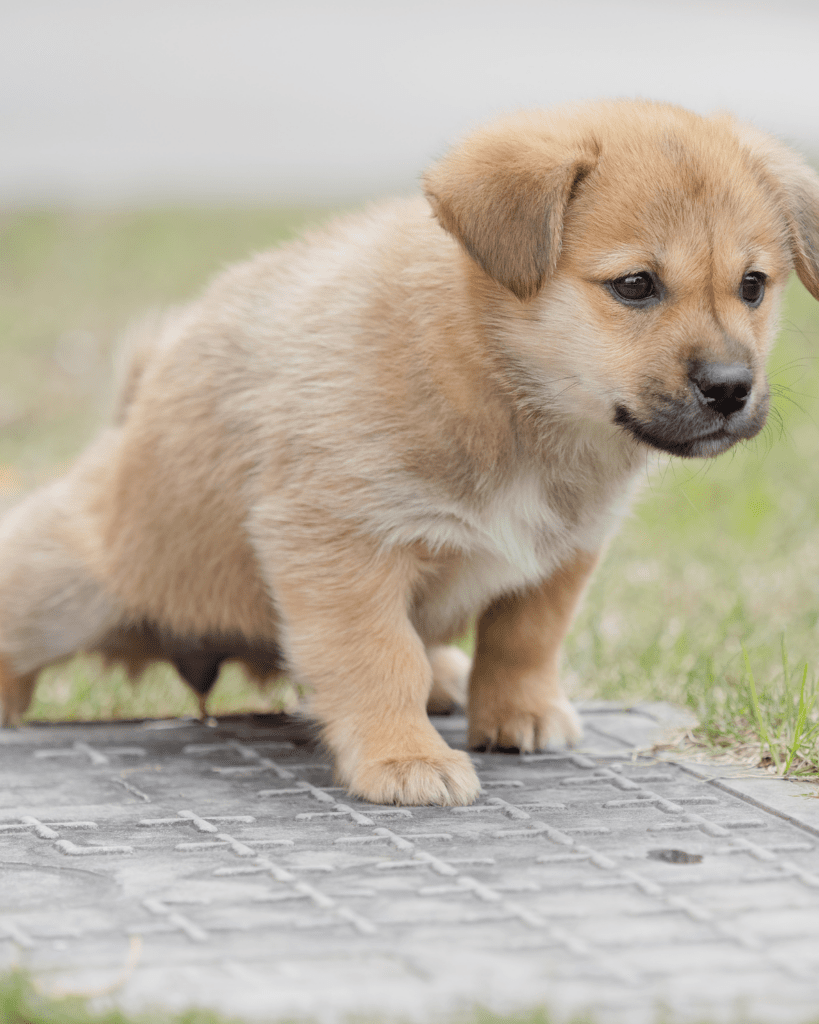
9 – Loud Noises or Fear
If your puppy is afraid of something, they may pee. For example, if you have a loud thunderstorm or fireworks going on outside, and your dog is scared of the noise, they might urinate inside out of fear. This can also happen if a stranger comes into your house unexpectedly–your pup may not know who this person is and become frightened by their presence.
If the accidents cluster around thunderstorms, fireworks, visitors or another frightening event, treat the fear rather than the urine. Give your puppy distance and a safe place to retreat, avoid forcing them toward the scary thing, and use food, play or other things they genuinely enjoy at an intensity where they can still cope.
10 – Another Health Problem Has Changed Their Toileting
A UTI isn’t the only health issue that can change a puppy’s toilet habits. Increased thirst, digestive illness, pain, medication and other medical problems can all alter the pattern you thought you knew. Pay attention to the whole puppy, not just the puddle. Other changes worth discussing with your vet include:
- Not eating or drinking
- Diarrhea (a runny poop)
- Vomiting (throwing up)
- Lethargy
If you see any of these symptoms in your dog, take him to the vet as soon as possible (especially if they’re young!) so they can figure out if there are underlying medical conditions or health problems that are preventing your pet what’s going on and give him treatment if necessary!
11 – Insufficient Cleaning
puppies are creatures of habit, so, if your toilet trained dog is still peeing in one particular spot then you may well need to start ensuring that you’re using a good enzymatic cleaner to get up the smell, because if they can smell this was acceptable, they’re more likely to repeat it, and it’s a surprisingly common issue!
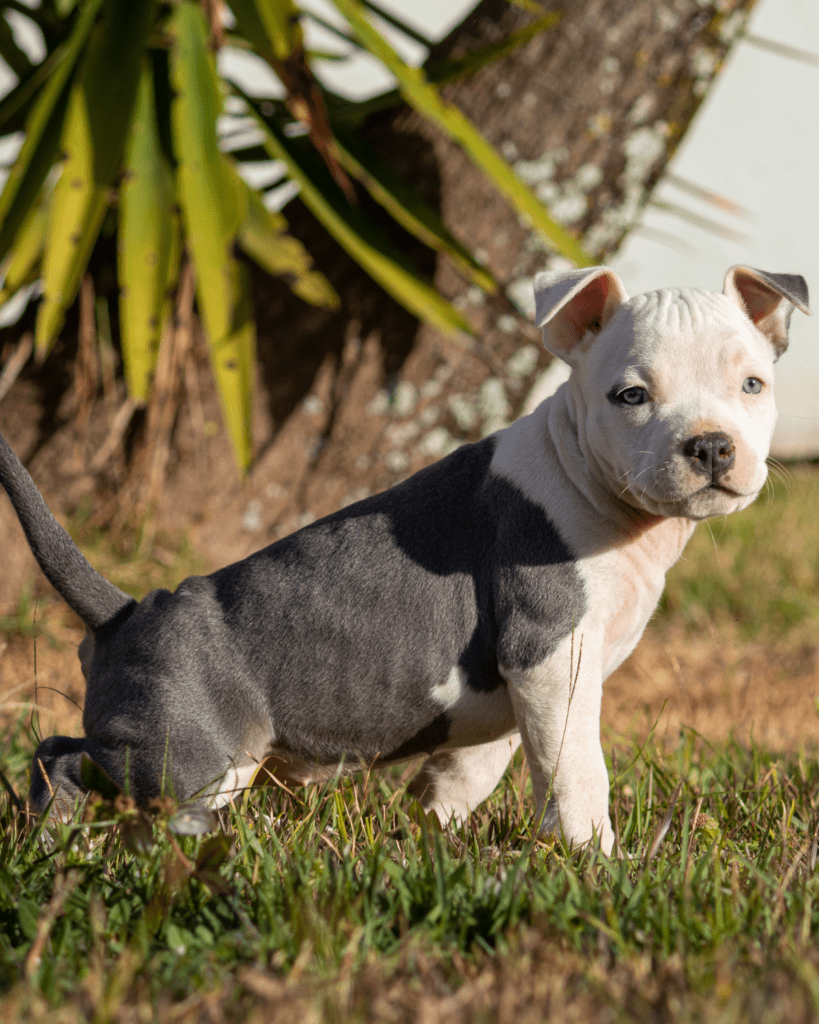
What If My Puppy Pees When They’re Scared or Excited?
If your puppy urinates during a frightening interaction, when someone raises their voice, or during a wildly exciting greeting, that may be emotion-related rather than a failure of ordinary toilet training. Look at their body language and the context. I explain the difference between excitement, fear and ordinary accidents in why puppies sometimes pee on people.
Either way, don’t punish the urination. Reduce pressure for a worried puppy, lower the intensity of greetings for an over-excited puppy, and keep reinforcing the toileting behaviour you actually want.
How to Get Toilet Training Back on Track
- Rule out a health change if the regression is sudden, frequent or otherwise unusual.
- Temporarily reduce freedom indoors so you can supervise closely and prevent rehearsal of accidents.
- Increase toilet trips, especially after waking, eating, drinking, playing and exciting events.
- Reward outdoor toileting generously even if you thought your puppy had already mastered it.
- Clean accidents with an enzymatic cleaner so residual urine scent doesn’t keep drawing your puppy back.
- Don’t punish mistakes. If you find a puddle after the fact, simply clean it. If you catch your puppy starting to go, calmly get them outside if you can.
If you need the fundamentals again, my puppy toilet-training do’s and don’ts walks through the process from the beginning.
Adult & Senior dogs.
If you have an older dog, this is more likely to be related to health issues such as kidney disease, cushing’s disease, bladder infection and a whole host of other things. So, if this is a new behavior beyond the occasional accident, it might be worth chatting to your vet.
The Bottom Line on Puppy Toilet-Training Regression
A puppy starting to pee in the house again doesn’t mean your training has failed. Often you’ve simply moved one variable too quickly—more freedom, fewer toilet breaks, less supervision—or your puppy hasn’t generalised the skill as completely as you thought. Go back a step, make the right choice easy and reward it again.
If the change is abrupt, frequent, accompanied by discomfort or increased thirst, or just doesn’t make sense in the context of your training, treat that as a reason to speak to your veterinarian rather than trying to train through a possible medical problem.
Need to reset the training itself? Start with my puppy toilet-training guide, and use the steps above for a week or two before increasing your puppy’s freedom again.

Author, Ali Smith
Ali Smith is a professional, qualified, and multi-award winning trainer is the founder of rebarkable. She has always believed animals deserve kindness and champions force free methods. Believing that dog guardians will all choose the kindest options if proper information is provided, she aims to help all dog guardians who need it and make dog training as accessible as possible
Ali lives win Maryland, US with her husband and her three dogs.


0 Comments