I feel like doodles have somehow become one of the most divisive subjects in the dog world.
On one side, they’re marketed as the perfect family dog: friendly, clever, adorable, low-shedding and supposedly blessed with the best qualities of two breeds. On the other, you’ll find people insisting that every doodle is neurotic, every doodle breeder is unethical and nobody should be deliberately breeding mixed-breed dogs at all.
I don’t really agree with either camp.
I’m a professional dog trainer and behaviour consultant, and I’ve worked with purebreds, purpose-bred crosses, doodles, accidental mixes, backyard-bred dogs and some dogs whose family tree is anybody’s guess. I’ve met absolutely lovely doodles. I’ve met difficult doodles. I’ve met beautifully bred purebred dogs and appallingly bred registered ones.
The label on the dog doesn’t tell me nearly as much as people seem to think it does.

So, What Actually Is a Designer Dog?
“Designer dog” is an informal term usually used for an intentionally bred cross between two established breeds. Labradoodles, Goldendoodles, Bernedoodles, Cockapoos, Cavapoos and Frenchtons are familiar examples. If you’re considering one of the smaller Poodle crosses specifically, I also have a guide to Cavapoos and Cavoodles.
Doodles are specifically crosses involving a Poodle. And despite the way they’re sometimes discussed online, “doodle” isn’t one single type of dog. A Labrador crossed with a Standard Poodle is a very different genetic proposition from a Cavalier King Charles Spaniel crossed with a Miniature Poodle, for example.
That’s important, because crossing two breeds doesn’t allow you to order individual traits from a menu. Genetics doesn’t work like: Golden Retriever friendliness + Poodle coat + whichever size looks cutest on Instagram.
Why Do People Love Doodles?
Well… look at them. I understand it.
Many doodles are sociable, funny, bright, trainable dogs. Depending on the cross, they can be fantastic at agility, scent work, assistance work, tracking and plenty of other activities. I’ve worked with some really lovely ones.
The problem isn’t that people like doodles. The problem is that demand became enormous, and enormous demand creates a very profitable market for people who are much better at selling puppies than breeding dogs.
The Real Problems With Doodles and Designer Dogs
Almost everything I’m about to criticise can happen in purebred dogs too. That’s worth saying right at the beginning. Doodles haven’t invented bad breeding.
But there are some problems that are particularly visible in this market.
1. Demand Makes Bad Breeding Very Profitable
When families are willing to pay thousands for a particular cross, colour or size, people will produce puppies to meet that demand. Some will do it carefully. Plenty won’t.
That’s where puppy mills, backyard breeders and high-volume breeding operations thrive. Pretty websites, waiting lists and a cute name don’t tell you whether the parents have appropriate health testing, whether temperament has been considered, how the puppies are raised, or whether the breeder will take responsibility for that dog for the rest of its life.
And to be very clear, exactly the same thing happens when German Shepherds, Golden Retrievers, French Bulldogs or any other purebred dog becomes fashionable.
2. “Hybrid Vigour” Isn’t a Substitute for Health Testing
Crossbreeding can increase genetic diversity, but that does not mean a mixed-breed puppy automatically escapes inherited disease.
If both parent breeds are vulnerable to a particular condition, crossing them doesn’t magically delete that risk. And even where their risks differ, the puppy can inherit problems from either side.
A responsible breeder should know the health concerns relevant to both parent breeds and complete the appropriate testing before breeding. A DNA panel alone isn’t necessarily enough either; depending on the breeds involved, proper screening may include hips, elbows, eyes, cardiac testing and other breed-specific assessments.
“It’s a crossbreed, so it’s healthier” is marketing. I want evidence.
3. Temperament Isn’t Mix-and-Match Either
This is probably the part that matters most to me as a trainer.
People are sometimes sold the idea that a cross will conveniently inherit the easiest characteristics of each parent breed. But puppies inherit combinations of genes, and behaviour is influenced by genetics, prenatal environment, early development, learning and experience.
If you’re crossing an Australian Shepherd with a Poodle, for example, you need to be prepared for traits from both sides — not just a clever fluffy dog. That may mean sensitivity, intensity, movement-chasing, high arousal, retrieving, environmental awareness or a dog who needs substantially more thoughtful training and enrichment than the family expected.
Good breeders reduce uncertainty by knowing their lines, selecting stable parents and making thoughtful breeding decisions. They don’t promise you a genetic pick-and-mix.
4. The Hypoallergenic Promise Is Often Oversold
This is one of my biggest frustrations with doodle marketing.
No dog can honestly be guaranteed not to trigger allergies in every person. People can react to proteins found in dander, saliva and urine as well as material carried on the coat. A dog that sheds less may be easier for some allergy sufferers to live with, but “low shedding” and “hypoallergenic” are not the same promise.
And with a cross, coat type and shedding can vary — even between littermates. If allergies are a major factor in choosing your dog, don’t buy a puppy because somebody confidently wrote “hypoallergenic” on their website.
5. Coat Care Can Be a Shock
The teddy-bear coat people fall in love with can require a lot of maintenance.
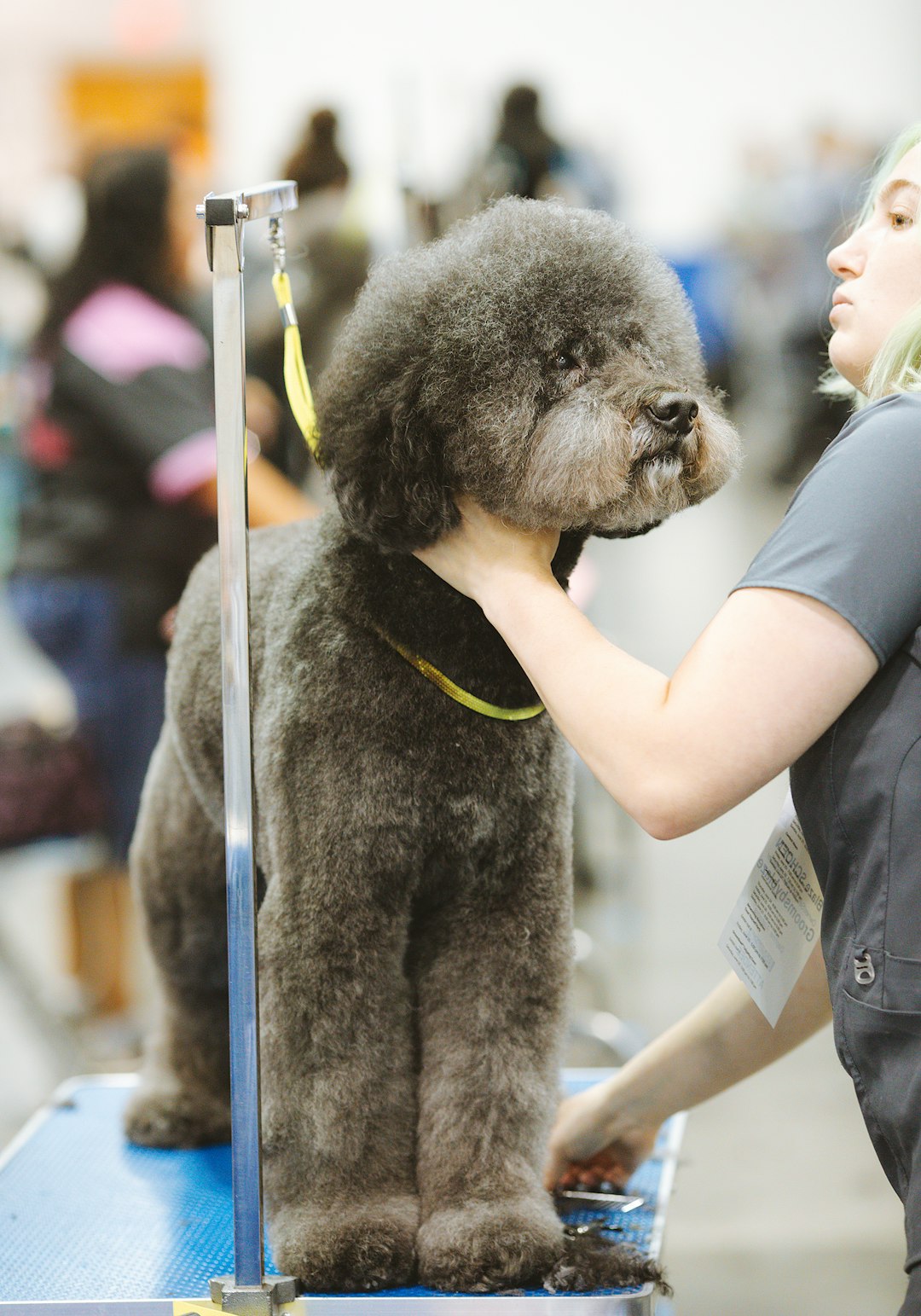
Poodle-cross coats vary, but many need regular professional grooming plus thorough brushing and combing at home. Matting isn’t just cosmetic. Tight mats pull on skin, trap moisture and can become genuinely painful.
This is also where the endless doodle-owner-versus-groomer arguments tend to start. The owner was sold an “easy, non-shedding coat” and the groomer is now trying to explain why the dog needs to be clipped short because the coat is matted to the skin.
That’s not fair on the owner, the groomer or, most importantly, the dog. If you’re living with a Poodle cross, my guide to what your groomer wants you to know about matted doodles goes into this in much more detail.
6. Aesthetics Can Overtake Suitability
Colour, size and that fluffy face are very easy to sell. They’re also pretty low on my list of things I’d use to choose the dog I’m going to live with for the next decade or more.
I want to know what those parent breeds were developed to do. I want to know their energy, sensitivity, sociability and likely behavioural tendencies. I want to know whether that fits the actual household.
A dog can match your sofa beautifully and still be completely wrong for your life.
Can Doodles Be Responsibly Bred?
Yes. Absolutely.
I know that will annoy part of the dog world, but I don’t think “it’s a crossbreed” is a serious ethical argument by itself.
We deliberately breed dogs for purposes all the time. Working-dog people cross breeds. Sport-dog people cross breeds. Assistance-dog programmes have deliberately used crosses. A pedigree isn’t what makes a breeding ethical; the decisions around producing those puppies do.
For me, a responsible doodle or designer-dog breeder should be able to show you much more than two apparently healthy pets and some adorable puppy photos.
- A clear reason for the breeding. What are they actually trying to produce, beyond puppies that sell?
- Appropriate health testing on both parents. That means testing relevant to each parent breed, not simply saying “vet checked” or waving around a generic DNA panel.
- Thoughtful temperament selection. The parents should be dogs whose behaviour genuinely makes them appropriate to reproduce.
- Knowledge of their lines. Good breeding isn’t just about the two dogs standing in front of you.
- Good puppy raising. Early handling, appropriate exposure, sensible socialisation and an environment that supports development matter.
- Honest expectations. No guarantees of the “best of both breeds,” a particular adult temperament or a magically allergy-proof coat.
- Careful puppy placement. Breeders should care whether an individual puppy actually suits the home buying them.
- Lifetime responsibility. If one of their dogs needs to be rehomed, I want a breeder who wants to know about it and will help.
Would I expect exactly the same things from someone responsibly breeding Golden Retrievers? Yep. I’ve written more about responsible breeding practices and breeding age, because ethical breeding decisions start long before two dogs are paired.
But Doodles Don’t Have an AKC Breed Standard
Correct — and most designer crosses aren’t recognised as breeds by the American Kennel Club.
That does mean you don’t necessarily have the same established breed standard, closed stud book, multigenerational predictability or traditional breed-club infrastructure that comes with an established purebred breed.
That is a legitimate consideration. It isn’t proof that ethical breeding is impossible.
I’d much rather buy a thoughtfully bred cross from somebody doing meaningful health testing, selecting for temperament and standing behind every puppy than a poorly bred purebred whose breeder happens to have registration papers.
Are Purebred Dogs Better Than Doodles?
No. Not automatically.
A well-bred established breed can give you greater predictability in size, coat, structure and behavioural tendencies, and I think that predictability is genuinely valuable when you’re choosing a dog.
But “purebred” and “well bred” are not synonyms.
AKC registration tells you about the dog’s registration and ancestry within that system. It is not a gold star saying the breeder made every decision ethically, completed every health test I’d want, produced excellent temperaments or raised the puppies brilliantly. If you’re unsure what those papers actually do tell you, see my guide to what AKC or kennel club registration really means.
I’d take the well-bred doodle over the badly bred purebred every single time.
What About Wally Conron and the Labradoodle?
Wally Conron’s name gets thrown into almost every argument about doodles. While working with the Royal Guide Dogs Association of Australia, he bred a Labrador Retriever with a Standard Poodle while trying to produce a guide dog suitable for a client whose husband had allergies.
He later publicly expressed regret about what followed the Labradoodle’s popularity, particularly the explosion of indiscriminate crossing and unscrupulous breeding.
I think there’s an important distinction there. The cautionary tale isn’t simply “crossing a Labrador and a Poodle was evil.” It’s what happens when a market takes a dog, turns it into a trend and starts producing puppies faster than good breeding decisions can keep up.
Can You Adopt a Doodle?
Of course. Doodles and other designer crosses do end up in shelters and rescues, just like purebred dogs and every other mix.
I wouldn’t assume a rescue doodle will be a blank slate or automatically easier than another rescue dog. Ask about the individual dog in front of you: their behaviour, health, grooming tolerance, history where known, and what sort of home they actually need.
So, Should You Get a Doodle?
Maybe! That’s probably less dramatic than you expected.
I don’t want people choosing doodles because they’ve been promised a perfect, hypoallergenic family dog. I also don’t want people rejecting an excellent dog or an excellent breeder purely because somebody on the internet says intentionally bred crosses can never be ethical.
Look at the actual dogs being bred. Look at the health testing. Look at temperament. Ask what the breeder is trying to produce and why. Ask what happens if the puppy isn’t right for you. Ask about grooming. Ask about the less convenient traits from both parent breeds.
And then be brutally practical about whether that dog fits your life.
Because the biggest problem with doodles isn’t that they’re doodles. It’s that we’ve somehow managed to turn a dog into both a status symbol and a culture war — when what we should be talking about is whether we’re breeding and choosing dogs responsibly.
0 Comments