If you’re wondering how to train a coonhound, the first thing you need to understand is that you are competing with equipment you simply do not possess.
Further reading: related guidance from Rebarkable
You do not have a coonhound’s nose. You cannot smell where a deer crossed the trail several hours ago, and you probably don’t find whatever died in the woods nearly as interesting as they do.
That doesn’t mean coonhounds are untrainable. Far from it. But they aren’t naturally biddable in the same way as a Labrador or German Shepherd—and expecting them to behave like one is usually where the frustration begins.
I’m a professional dog trainer, and I share my life with two senior coonhounds, Lucy and Shelby. Recall was by far the hardest thing to teach them, but the same principle applies to almost everything you train a coonhound to do:
You need to build a long, consistent history of being worth listening to.
Not just this time. Not perhaps next time. Every time.
Coonhounds Aren’t Stubborn—They’re Doing Exactly What We Bred Them to Do
People often describe coonhounds as stubborn, disobedient or difficult to train. I don’t think that gives them nearly enough credit.
Coonhounds were bred to work a considerable distance from their person, independently problem-solving anything from a raccoon to a mountain lion—and recalling you with their howl.
From Rebarkable
Want the training steps laid out for you?
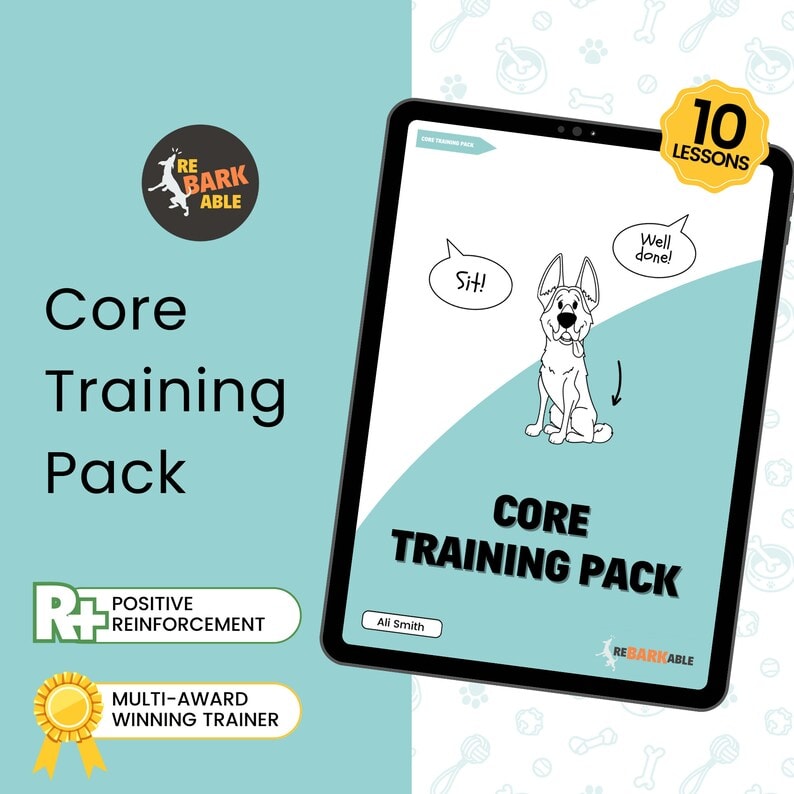
My illustrated Core Skills guide turns positive-reinforcement training into clear, practical exercises you can follow at home.
Get the Core Skills GuideDigital download · Instant access via Etsy
Their job wasn’t to stare adoringly at a handler and wait for the next instruction. It was to pick up a scent, follow it over difficult terrain, make decisions independently and tell the humans where to find them.
Then we bring them into our homes and act surprised when they don’t naturally wait beside our knee for further instructions.
People expect coonhounds to behave like robots. Ironically, they are remarkably robot-like—they’re simply programmed to follow scent, chase prey and put it up a tree.
That independence isn’t a training defect. It’s the feature that made them excellent at their original job.
Why Training a Coonhound Feels Different
Many popular pet breeds have been selectively bred for generations to work closely with people. Some have also had generations of breeding that gradually softened their working traits and made them easier to live with as companion dogs.
Coonhounds, as a group, haven’t moved nearly as far from working dog to pet. Plenty are still actively bred and used for hunting. Some coonhounds living as pets are even failed, retired or discarded working dogs.
Their instincts are right there at the surface.
That doesn’t mean you can’t train one. It means you have to stop treating their natural behavior as a personal insult and start working with the dog in front of you.
1. Become the Most Rewarding Thing in Their Environment
This is the most important coonhound training tip I can give you.
You need to prove that you are more valuable than their nose and more rewarding than following their instincts—time after time after time.
That requires a lot of reinforcement.
Initially, you need to reward generously and consistently. As your dog develops a strong history of responding, you can gradually vary or reduce some rewards. But I’ll be honest: I’m not particularly interested in eliminating food rewards just to prove that I can.
If it costs me a cookie worth approximately one cent to help ensure my dog comes back, I’m paying the cookie.
Reliability is considerably more valuable to me than winning an imaginary argument about whether my dog “should” respond without food.
2. Match the Reward to the Difficulty
Not every behavior deserves the same paycheck.
Coming inside from a quiet yard is relatively easy. Turning away from a deer when every part of your coonhound’s brain is screaming that this is the most important event of the week is not.
I keep ordinary treats for everyday training, but I save chicken hearts and liver treats for the big-prey moments. Deer are our primary challenge, so disengaging from one earns something genuinely worthwhile.
If you want that sort of reward without prepping organ meat yourself, Vital Essentials freeze-dried meat treats are a very practical option for this kind of high-stakes training. This is an affiliate link, so I may earn a commission if you buy through it, at no extra cost to you.
Think of rewards as a sliding scale:
- Everyday cookies for easy behaviors in familiar environments
- Better treats for new skills or moderate distractions
- Exceptional rewards for prey, powerful scents and genuinely difficult decisions
If the environment raises the difficulty, you need to raise your offer.
3. Build Attention Before Asking for Anything Else
If your coonhound is completely absorbed in a scent, repeatedly shouting “come” probably won’t produce a recall. What it can do is teach them that “come” is background noise they’re free to ignore.
I start by using the dog’s name to ask for attention.
The moment I get that attention, I mark it enthusiastically with “Yes!” or “Good girl!” Then I give the recall cue, make myself exciting and cheer them all the way back to me.
Name → attention → praise or mark → “Come!” → cheer them back → reward generously
The cheering on the way matters.
Returning from prey isn’t necessarily one simple decision. Your coonhound may be choosing you over the scent again with every step they take. I want to support that choice all the way back rather than standing silently and waiting to see whether they complete the job.
4. Don’t Waste Your Recall Cue
Only use your recall cue when you have a reasonable chance of getting a response.
That may mean beginning indoors, moving into a securely fenced area and eventually practicing outside on a long line. Distance, scent and wildlife should be added gradually rather than throwing your dog into the hardest possible environment and hoping enthusiasm will carry you through.
If your dog is already fully committed to chasing something and you have no realistic way to interrupt them, repeating “come” fifteen times won’t improve your recall.
It simply gives them fifteen opportunities to rehearse ignoring you.
5. Use a Long Line
A long line gives your coonhound room to explore and make choices without giving them complete freedom before the training is ready.
It also helps prevent the glorious self-reward of disappearing into the woods after a scent. Every successful chase strengthens the behavior, whether you intended to reinforce it or not.
The long line isn’t there for dragging your dog back to you. It’s a safety tool that allows you to practice attention, check-ins and recall while preventing the environment from repeatedly paying your dog better than you do.
6. Let Them Use Their Nose
You will not improve your coonhound’s behavior by pretending they shouldn’t be interested in scent.
Sniffing is enriching, regulating and an enormous part of how these dogs experience the world. Instead of constantly battling it, incorporate it into your training.
You can use permission to sniff as a reward: ask for a simple behavior or check-in, mark and reward it, then release your dog to investigate the scent.
Scent games, tracking activities and structured opportunities to follow trails give that instinct somewhere appropriate to go. A fulfilled coonhound is generally easier to live with than one whose guardians spend every walk trying to stop them from being a coonhound.
7. Reward Voluntary Check-Ins
Don’t wait until you need something to become relevant.
Whenever your coonhound voluntarily looks back, approaches you or checks where you are, acknowledge it. That might mean praise, a treat, a quick game or permission to return to sniffing.
You’re teaching them that keeping you in the picture is worthwhile, even when the environment is interesting.
8. Keep Training Clear and Worthwhile
Coonhounds are intelligent, but endless repetition can quickly convince them that your training plan is not particularly relevant to their day.
Keep sessions relatively short and give each repetition a purpose. Make it obvious what earned the reward and allow breaks for sniffing and movement.
Positive reinforcement training doesn’t mean waving food around and hoping for the best. It means creating clear consequences that make the behavior you want worth repeating.
9. Don’t Confuse Independence With a Lack of Bond
Your coonhound may love you enormously without constantly awaiting your next instruction.
Biddability and affection aren’t the same thing.
A dog who independently explores, follows scent or makes their own decisions isn’t necessarily less bonded to you. They’re behaving in a way that makes perfect sense for their genetics.
The goal isn’t to erase that independence. It’s to build communication strong enough that they can disengage from the environment and cooperate when it matters.
10. Use Management Alongside Training
Lucy and Shelby have developed useful recall skills, but I still use management.
Training and management aren’t opposites. Good guardians use both.
- Secure physical fencing
- Gates that latch reliably
- Long lines in unfenced areas
- Properly fitted escape-resistant harnesses
- Identification tags
- A genuine GPS tracker rather than relying solely on a crowdsourced Bluetooth tag
Our hounds wear Fi GPS collars because we live in a remote, densely wooded area. Training reduces the likelihood of an escape becoming a disaster; sensible equipment provides another layer of protection when humans, gates or circumstances fail.
Can Coonhounds Ever Have a Reliable Recall?
Yes—with an asterisk.
A coonhound can develop a very good recall through careful training and an enormous reinforcement history. But you should also remain realistic about genetics, the individual dog and the environment.
A recall demonstrated in the yard isn’t automatically ready for a deer disappearing into the woods. Reliability has to be built gradually across locations, distances, distractions and scent conditions.
Some coonhounds may eventually earn carefully selected off-leash freedom. Others may require a long line or secure fencing throughout their lives.
That isn’t a failure. Success means keeping your dog safe while giving them an enjoyable, appropriately enriched life—not proving that every dog can meet the same arbitrary standard.
The Real Secret to Training a Coonhound
Training a coonhound isn’t about becoming stricter, louder or more determined than their instincts.
It’s about understanding what they were designed to do and building an equally powerful history of reinforcement for working with you.
You cannot expect to become more interesting than a deer through sheer force of personality. But you can repeatedly teach your dog that paying attention, responding and returning to you produce excellent outcomes.
Be clear. Be consistent. Reward well. Cheer them all the way back.
And pay the cookie.


![Why You Shouldn’t Use Punishment in Dog Training [2026]](https://rebarkable.com/wp-content/uploads/2023/04/why-we-dont-use-punishment-in-dog-training-400x250.png)
0 Comments