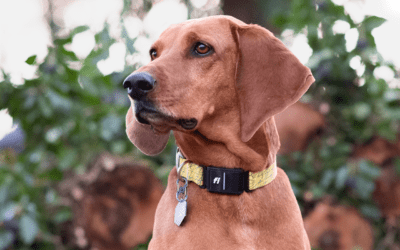
Shelby, my Redbone Coonhound, used to struggle badly with fireworks and thunderstorms. This is the case study version of what helped — and what I would change now.
Before training, Shelby could pace, pant, drool, vocalize, refuse to settle and become extremely distressed.
What Helped Shelby Most
- gradual sound desensitization;
- pairing low-level noise with food and play;
- letting her choose her safest resting place;
- closing curtains and reducing visual stimulation;
- using soft furnishings and background sound;
- doing useful activity earlier in the day; and
- staying with her instead of expecting her to cope alone.
The Biggest Lesson: Follow the Dog
I originally planned around the crate because Shelby liked her crate. On the actual night, she preferred the sofa in the kitchen.
That mattered more than following my original plan perfectly.
What I Used With Shelby: CBD as Part of Her Fireworks Plan
CBD was genuinely part of Shelby’s fireworks plan at the time, and I don’t want to rewrite that history just because I would frame it more carefully now.
Shelby was around 75 lb, and I used the Austin & Kat tincture I already knew she tolerated. I started below the product’s normal serving amount, watched her response, and built up gradually before the main fireworks window. On the evening itself, I used the higher end of the manufacturer’s guidance for an unusually stressful event.
That worked well for Shelby as one part of a much bigger setup: training, environmental management, food, play, a safe resting place and human company.
This is a case study, not a dosing guide. CBD products vary enormously in concentration and formulation, and what was appropriate for Shelby should not be copied onto another dog or another product. If you’re considering CBD, particularly alongside other medication or for a dog with significant anxiety, talk to your veterinarian first.
I’d also be more cautious now about presenting CBD as the main intervention. Evidence for canine anxiety is still limited compared with established veterinary treatment options, and a dog experiencing true panic deserves a proper veterinary conversation rather than relying on an over-the-counter calming product alone.
Training Was the Long Game
The improvement did not come from one fireworks night. We had already been working on noise sensitivity using low-level recordings and positive associations.
That preparation made management on the actual night much more effective.
Why I Still Like This Case Study
It shows something important: the plan does not have to be perfect to help.
You can adjust the room, the activity, the food and the level of support based on what the dog is telling you.
Bottom Line
Shelby did better because we lowered the intensity, gave her choice, supported her and had already done training before the event.
That is still the part I would replicate.



0 Comments