Buying a dog brush should be simple. Then you start looking and suddenly you’re choosing between slickers, pin brushes, rubber curries, undercoat rakes, de-shedding blades and half a dozen tools that all promise to remove an alarming amount of hair.
The problem is that there really isn’t one best dog brush. There’s the best brush for your dog’s coat, the best tool for the job you’re trying to do, and the best option your dog can actually be comfortable being groomed with.
I’m a dog trainer and behaviour consultant, and I’ve also spent years living with a German Shepherd who can seemingly produce another dog’s worth of fur during shedding season. My grooming kit is pretty simple: I want tools that work without unnecessarily damaging the coat, and I want the grooming process to remain something the dog can cope with.
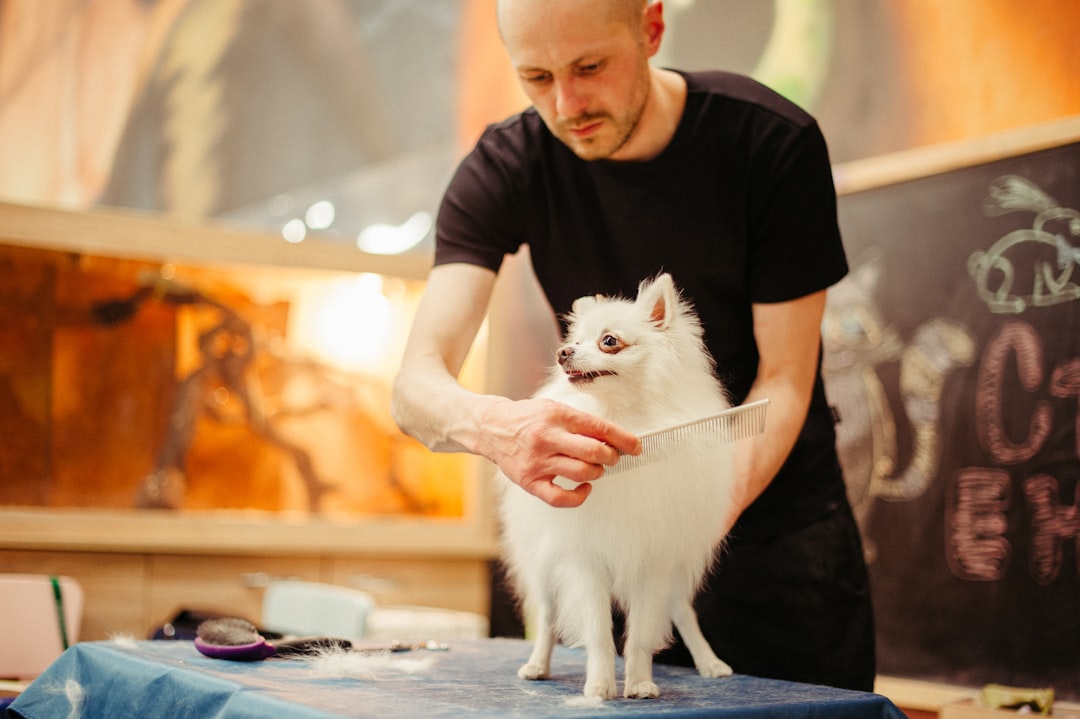
The dog brushes I actually recommend
- Best slicker brush: Chris Christensen slicker brush
- Best for short coats and bathing: Kong Zoom Groom
- Best for heavy double coats: an appropriate undercoat rake
- Best finishing and checking tool: a coarse or metal grooming comb
- Useful general brush: Pet Teezer
- What I avoid: Furminator-style bladed de-shedding tools
The right choice still depends on the dog. The AKC’s guide to dog brush types makes the same basic distinction: slickers suit many medium, long and curly coats, rubber brushes are particularly useful for short coats, and undercoat rakes are designed to reach loose coat beneath the outer layer.
Best slicker brush: Chris Christensen
If I’m buying a slicker brush, Chris Christensen is my pick. This is particularly the type of brush I want for doodles, Poodles and other curly, fluffy or longer coats where you need to work through the coat properly rather than simply collect loose surface hair.
Slicker brushes use lots of fine pins to separate the coat, remove loose hair and work through smaller tangles. But technique matters just as much as the brush itself. You don’t need to dig those pins into your dog.
Work in sections, use sensible pressure and pay particular attention to friction points such as behind the ears, around collars and harnesses, under the arms, on the legs, around the belly and through the tail. The AKC also advises using a light touch with slickers because pressing too hard can be uncomfortable for the dog.
Best brush for doodles: slicker + comb
If you have a doodle, I wouldn’t actually tell you to buy one brush. I’d tell you to buy a good slicker and a metal comb.
Brush through the coat in sections with the slicker and then check your work with the comb. If the comb glides through, brilliant. If it keeps catching, you haven’t finished that section yet.
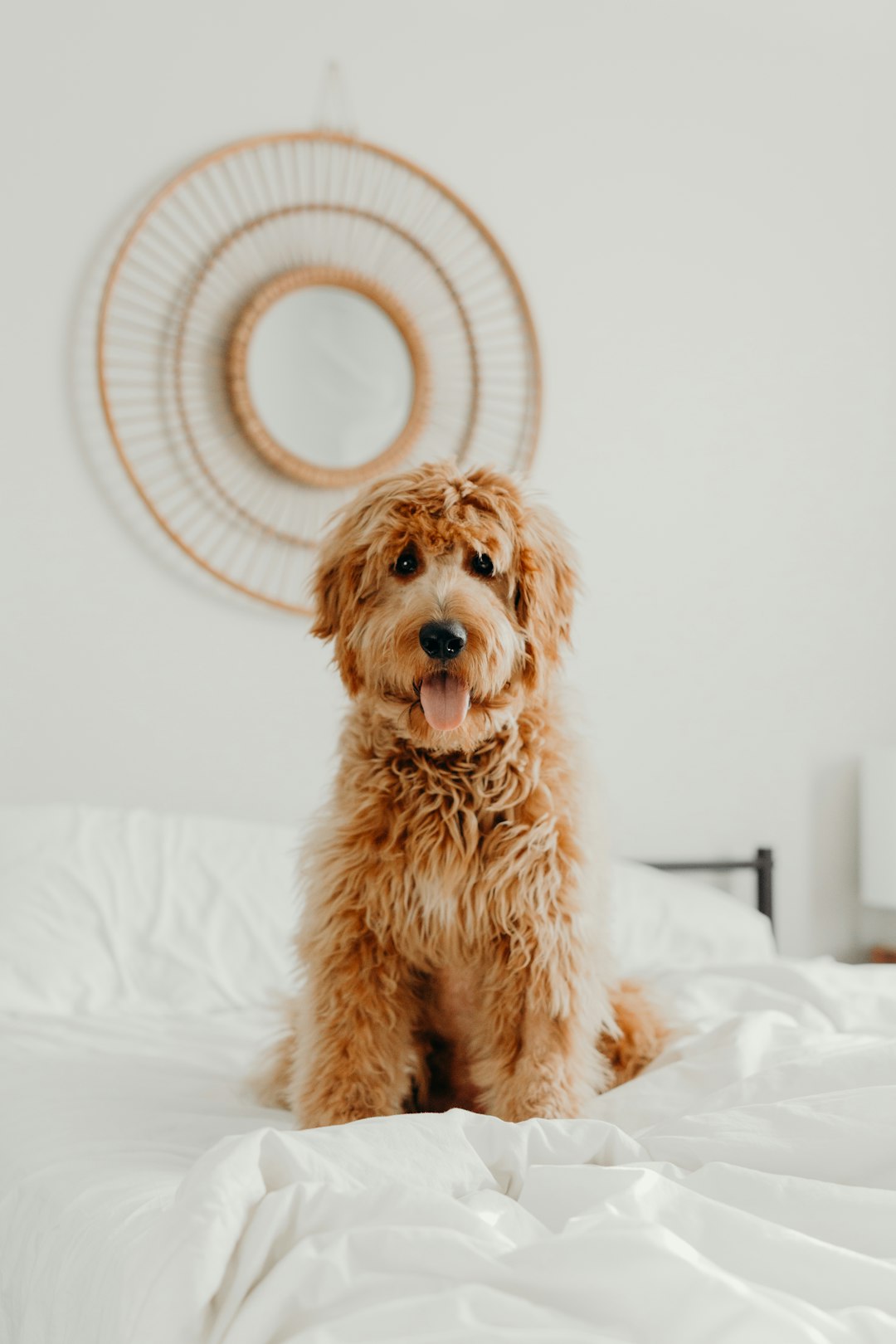
With curly coats, surface brushing can be deceptive. The outside can look fluffy and lovely while matting develops underneath. That’s why I’m much more interested in whether the comb can actually move through the coat than whether the dog looks freshly brushed from across the room.
I go into this in much more detail in Your Matted Doodle: What Your Groomer Wants You To Know. Tight matting pulls at the skin, and there comes a point where repeatedly trying to preserve coat length is no longer the kind option. If you’re dealing with widespread or close-to-the-skin matting, speak to a professional groomer.
Best brush for a German Shepherd or other double-coated dog
German Shepherd owners know the cycle. You groom them. They shed. You groom them again. Somehow they produce another German Shepherd worth of fluff.
You cannot stop a double-coated dog from shedding, and you shouldn’t be trying to remove the undercoat entirely. The aim is to help remove coat that is already ready to come away.
For my own German Shepherd grooming I use a combination of tools rather than expecting one brush to do everything. I’ve written separately about containing German Shepherd shedding, but the short version is: undercoat rake for the bulk of the loose undercoat, Zoom Groom for guard hairs and bathing, and a coarse comb for tails and more delicate areas.
Undercoat rake
This is what I like for the main bulk of brushing. During a heavy seasonal shed, an undercoat rake can work through loose fluffy undercoat beneath the guard hairs. Choose a rake appropriate to your dog’s coat length rather than assuming the biggest or most aggressive teeth are automatically better.
There is a balance to be struck. Over-grooming can be just as problematic as under-grooming. The goal isn’t to keep brushing until you can no longer extract another strand of hair.
Kong Zoom Groom
I’ve used the Kong Zoom Groom for years, and I particularly like it for guard hairs and for the bathing process. It’s a flexible rubber grooming tool, and it’s one of those simple products that does its job without trying to be dramatic about it.
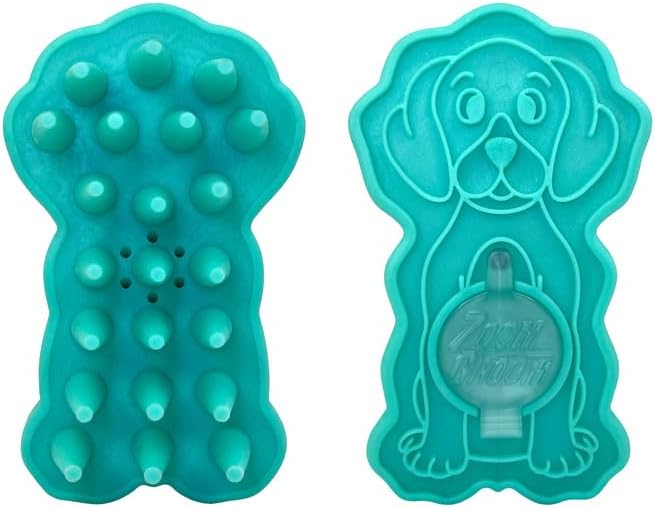
Rubber brushes are especially useful on short coats because they loosen dead surface hair without needing to penetrate a thick coat. They’re also useful when bathing because you can work shampoo through the coat as you massage.
Coarse or metal comb
I like a coarse comb around tails and more delicate areas, and a metal comb is invaluable as a final check on coats that tangle. It doesn’t need to be glamorous. It just needs to move comfortably through the coat without snagging.
Best brush for short-haired dogs: Kong Zoom Groom
For a lot of short-coated dogs, I’d skip the elaborate grooming hardware and use a rubber brush. The Zoom Groom is the one I’ve personally used and would reach for.
It’s particularly useful for loose surface hair and guard hairs, and I also like that it can feel significantly less intense than immediately introducing a dog to wire pins or metal teeth. That can make it a useful starting point for a dog who is uncertain about grooming.
This is another area where coat type matters more than marketing. The AKC’s home grooming guidance recommends choosing tools according to coat texture and length rather than trying to use one universal brush across every dog.
What about the Pet Teezer?
The Pet Teezer is another brush I’ve used alongside the Zoom Groom. It can be a useful general grooming brush where you want something less intense than an undercoat rake or traditional slicker.
That said, if I were specifically buying a slicker today, I’d choose Chris Christensen. I don’t think every dog owner needs to collect fifteen brushes. A small number of tools that each have a clear job is plenty.
Why I don’t recommend Furminators
This is one opinion that hasn’t changed for me: I avoid Furminators and similar bladed de-shedding tools.
They can remove an impressive amount of hair. That’s precisely why they produce those satisfying before-and-after piles of fur. But a huge pile of fur does not automatically equal successful grooming.
My concern is that these types of tools can pull or cut healthy hairs as well as removing dead coat, including the guard hairs you actually want to remain. That particularly bothers me with double-coated dogs, whose outer coat has an important job.
I’m much happier using an appropriate undercoat rake, rubber grooming tool and comb than aggressively stripping coat simply because a tool continues removing hair.
Don’t over-groom your dog
Under-grooming can allow loose coat, knots and mats to build up. Over-grooming can irritate the skin and damage the coat. More brushing is not always better.
If you’ve been repeatedly going over the same area because hair keeps coming away, consider whether you’re still removing loose coat or simply continuing because the tool allows you to.
For a useful second opinion on double coats, the AKC’s double-coated dog grooming guide also emphasises brushing the coat rather than scraping the skin and using tools appropriate to the coat.
What if my dog hates being brushed?
This matters just as much to me as choosing the brush.
Grooming doesn’t need to involve holding your dog still and completing the entire coat in one heroic session. I use cooperative care: teaching the dog what is happening, making the process predictable and allowing tolerance to build gradually rather than forcing it.
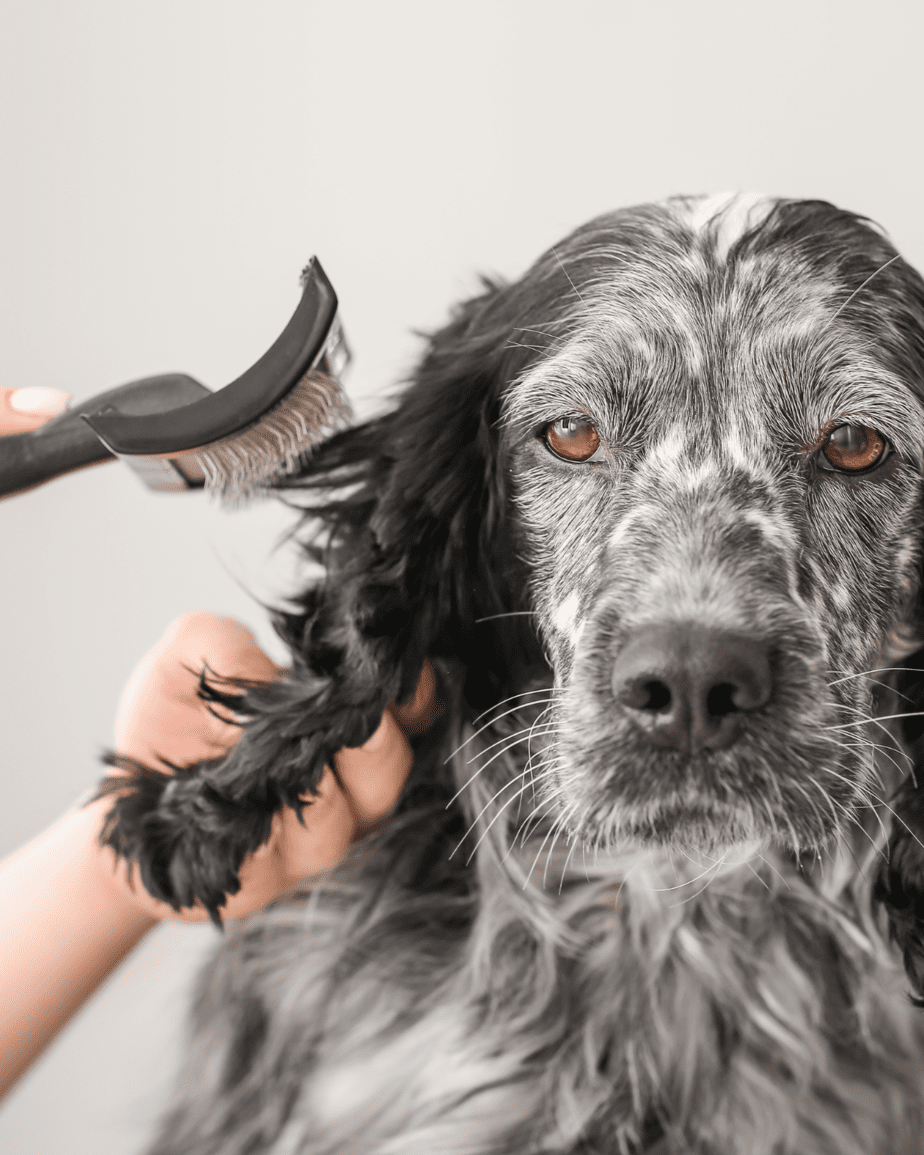
One method I’ve used with Indie is extremely simple. We go to a designated grooming spot and I start with a small number of brush strokes.
“Three.” Brush. “Two.” Brush. “One.” Brush. Then praise and reward.
For Indie, that reward can be a ball throw. Once the dog understands the pattern and is comfortable, perhaps you progress to four strokes. Then five.
You do not need to groom the entire dog in one session. A little successful grooming is far more useful than turning the whole thing into a fight.
If you want to build this properly, read my 10 Steps to Achieving Cooperative Care For Your Dog. The same principles apply to brushing, nail care, vet handling and other husbandry tasks.
Introduce grooming tools before you desperately need them
If you have a puppy or a dog who already dislikes grooming, don’t wait until their coat desperately needs attention.
Introduce the brush. Reward them. Touch it gently against the body. Reward them. Do one brush stroke. Reward. Build gradually.
You can also use a particular mat or grooming location to make the process more predictable. Focus first on the areas that are most important and keep sessions short enough that your dog can actually succeed.
Watch their body language, too. Moving away, freezing, repeatedly turning toward the brush or escalating attempts to stop the interaction are information, not inconveniences to overpower. My Ladder of Canine Aggression (or Communication) is useful if you want to get better at spotting the earlier signals.
When to stop brushing and call a groomer
If you’re dealing with significant matting, particularly tight mats close to the skin, professional help is often the kinder option.
Mats pull against the skin and can be uncomfortable. Repeatedly trying to comb or brush through severe matting isn’t automatically kinder simply because it avoids shaving the coat.
A good professional groomer is maintaining your dog’s welfare, not merely creating a pretty haircut. Sometimes that means the coat needs to come off. Hair grows back.
Which dog brush should you buy?
If you want my actual shortlist:
- Curly, doodle or fluffy coat: Chris Christensen slicker + metal comb.
- German Shepherd or heavy double coat: undercoat rake + Kong Zoom Groom + coarse comb.
- Short-haired dog: Kong Zoom Groom.
- General gentle brushing: Pet Teezer.
- Heavy seasonal shedding: an appropriate undercoat rake rather than trying to strip increasingly large quantities of coat.
- Furminator/de-shedding blade: not something I recommend.
The best grooming kit isn’t necessarily the one with the most tools in it. Pick tools that suit the coat, learn how to use them properly, and remember that the dog underneath all that hair gets an opinion about the process too.

0 Comments